
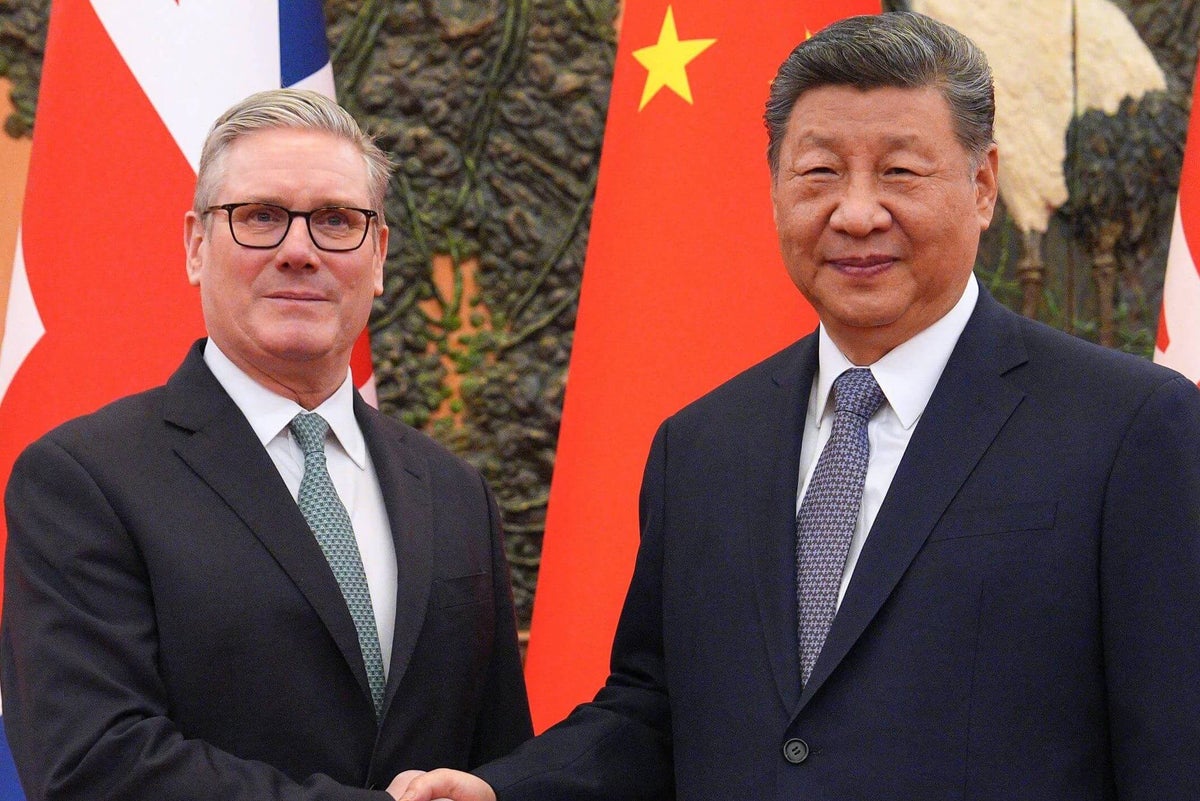
By any measure, it has been a landmark meeting of international leaders.
Sir Keir Starmer has become the first Prime Minister of the United Kingdom to visit China in eight years this week, seeking to strengthen trade relations and forge a “more sophisticated” relationship with counterparts in Beijing.
That brought a lengthy meeting with China’s president Xi Jinping on Thursday. Given the fraught geopolitical climate, that summit could have been tense but instead of an olive branch, Starmer presented his counterpart with a Premier League match ball flown 5,000 miles from London.
The Athletic looks at how the UK government is hoping English football can build bridges between the countries.
Why has football been a point of discussion between the UK and Chinese leaders?
Small talk typically comes before the serious political stuff on occasions like these, and an attempt to find common ground between the two leaders brought the focus to football. And one ball in particular.
According to widespread reports from UK journalists travelling with Starmer, the UK Prime Minister arrived in Beijing armed with one of the yellow Puma match balls used in Sunday’s Premier League fixture between Arsenal and Manchester United, a game he had attended at the Emirates Stadium.

Sir Keir Starmer attends Arsenal’s defeat to Manchester United (Mike Egerton/PA Images via Getty Images)
It was reportedly presented to Xi ahead of a formal summit and lunch in the Great Hall of the People, with China’s president widely known to be a Manchester United supporter. The Financial Times said the ball had been signed by the players involved.
The Athletic has contacted Downing Street for comment.
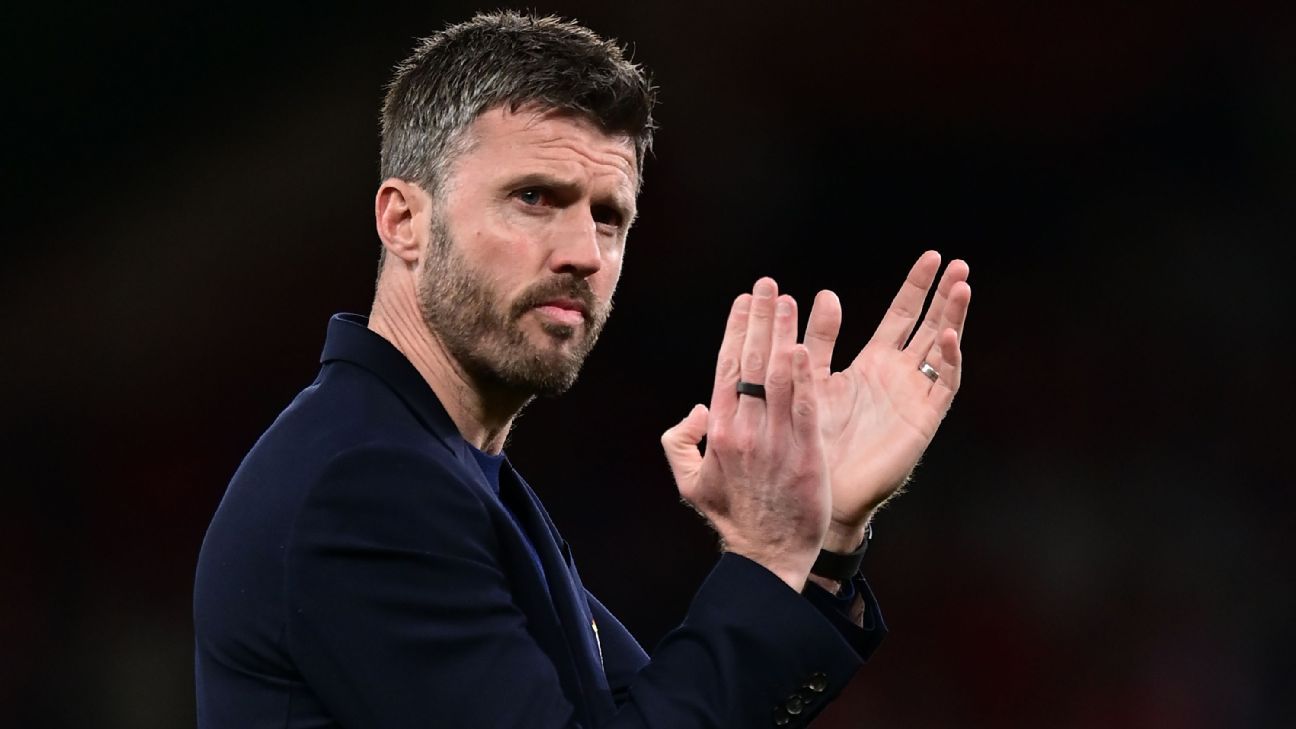
Call it a diplomatic gesture that will likely have appealed to Xi after United won a dramatic game 3-2 to extend their winning start under interim head coach Michael Carrick.
Starmer, meanwhile, will not have found the same enjoyment from that high-profile clash. The 63-year-old is a lifelong supporter of Arsenal and a long-standing season-ticket holder with the club.
Why does Xi also follow Manchester City and Crystal Palace?
Xi’s affection for Manchester United may have been reasonably well known, but more surprising was the revelation — widely reported in the UK — that he told Starmer he also has a fondness for Arsenal, Manchester City and Crystal Palace.
Xi famously toured Manchester City’s training complex when visiting the UK in 2015, posing for an awkward selfie taken by Sergio Aguero alongside then Prime Minister David Cameron.
.@aguerosergiokun: “Thank you for the selfie, President Xi” 感谢能与您自拍,习主席!#CFAStateVisit pic.twitter.com/4du2zIaacY
— Manchester City (@ManCity) October 23, 2015
A few months after it was announced that China Media Group (CMG) had bought a 13 per cent stake in City Football Group, the parent company that owns Manchester City, during a period that saw Birmingham City, West Bromwich Albion, Reading, Southampton and Wolverhampton Wanderers all come under Chinese ownership.
Xi’s last trip to Manchester saw him given a tour of the Etihad Campus by City’s chairman Khaldoon Al Mubarak, who has subsequently become a special envoy to China on behalf of the UAE. Xi also met Manuel Pellegrini, Patrick Vieira, Vincent Kompany and Toni Duggan — then star of City’s women’s team — after also visiting the National Football Museum in central Manchester alongside former City and China midfielder Sun Jihai.
That might also explain Xi’s liking for Crystal Palace. Sun and Fan Zhiyi were considered trailblazers when they became the first Chinese players to sign for an English club in 1998, both joining Palace, who were then in the English second tier.
The bonds built in signing Sun and Fan also spawned two club tours to China under Steve Coppell in 1999 and 2000, with their first game for the club — against Norwich City in October 1998 — reportedly being watched by 300million people in their home country.

Fan Zhiyi was a cult hero at Crystal Palace (Phil Cole /Allsport)
Is the Premier League often used by the UK to help trade talks?
Yes. It is common on these trips for UK-based businesses and organisations to join political figures, taking the opportunity for new partnerships to be forged.
The Prime Minister’s office said a delegation of “nearly 60” had flown with Starmer to China for this one, and The Athletic has learned that the Premier League was among them this week. The league engaged with the delegation through its office Beijing, which opened in 2024.
It all underlines the soft power of the Premier League brand in international dealings.
The exponential growth of English football’s top division has generated interest around the globe and made it among the best known UK exports of this century.
It is not unusual for delegates of the Premier League to join political figures in trade missions overseas, where broadcast rights have overtaken those to a domestic audience.
The Premier League did not begin its life in 1992 as a platform to progress international diplomacy but, as the topics covered during Starmer’s landmark meeting with Xi proved, it has become a touch point of Englishness.




Leave a Reply