
A shape emerges from the dark: rotund, slow moving, somewhat prehistoric. A hippo lifts its head under the amber wash of a streetlight and stares at our family in a safari vehicle parked a careful distance away.
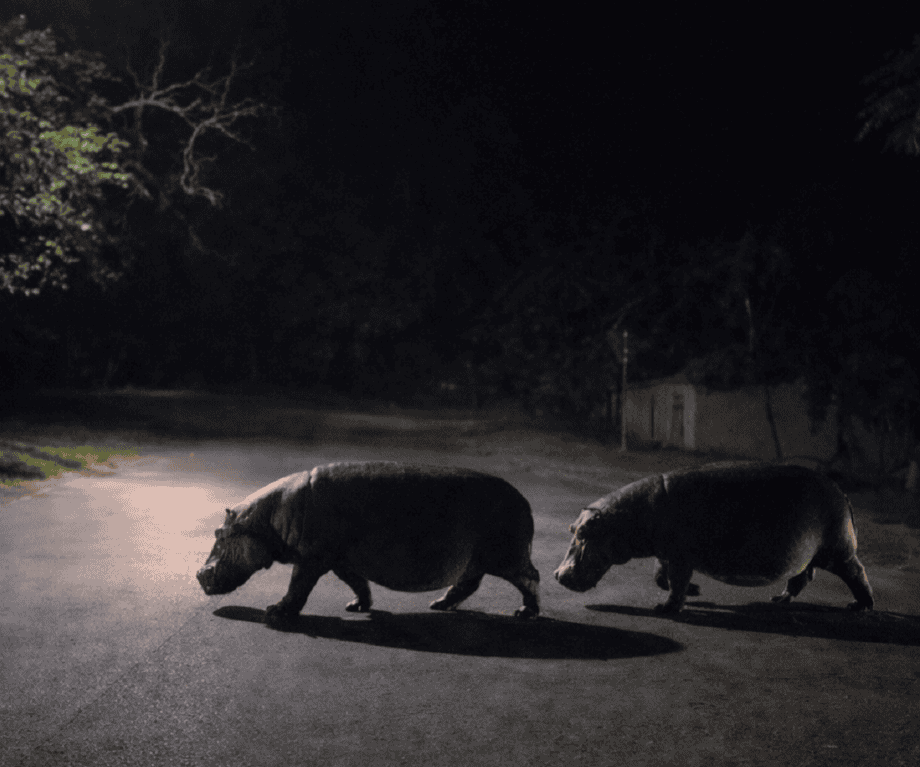
In South Africa’s St Lucia, this is not an extraordinary sight. It is Tuesday night. And for families visiting this small coastal town on the edge of the wild, this is often their first encounter with Africa’s wildlife, not deep in a reserve, but metres from a pavement.
Where is St Lucia?
St Lucia sits at the gateway to South Africa’s iSimangaliso Wetland Park just a couple hours’ drive north from Durban in the KwaZulu Natal province. iSimangaliso itself is a vast mosaic of estuary, coastal forest, wetlands and ocean that has earned global conservation status and stretches all the way up to the border of Mozambique. A short drive inland from here lies Hluhluwe–iMfolozi Park, the oldest proclaimed reserve in Africa and home to the Big Five: lion, leopard, elephant, rhino and buffalo.
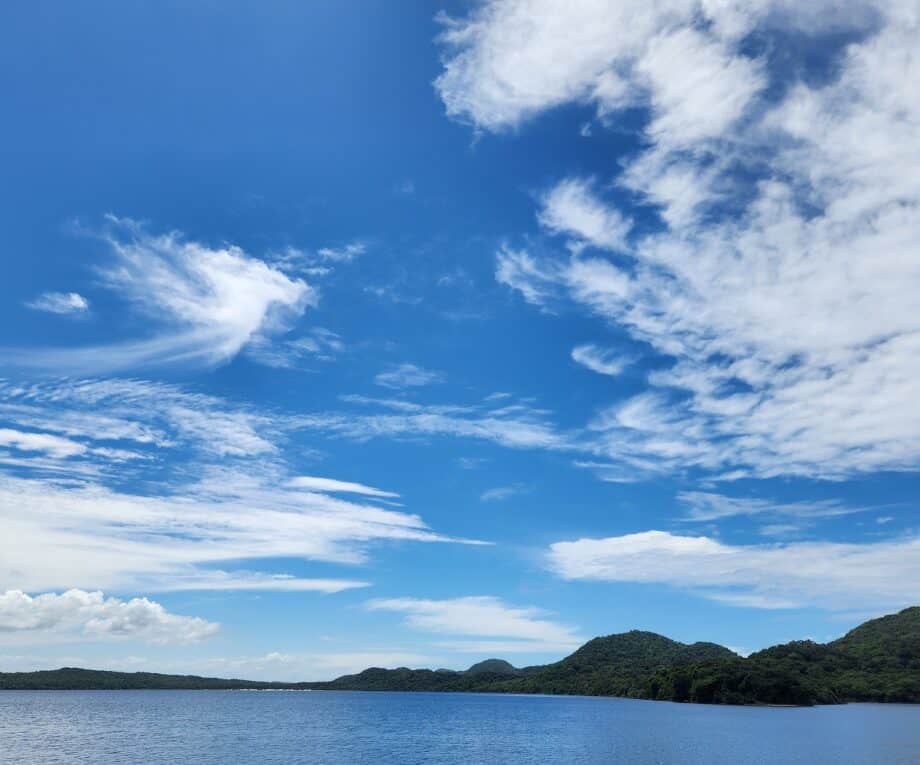
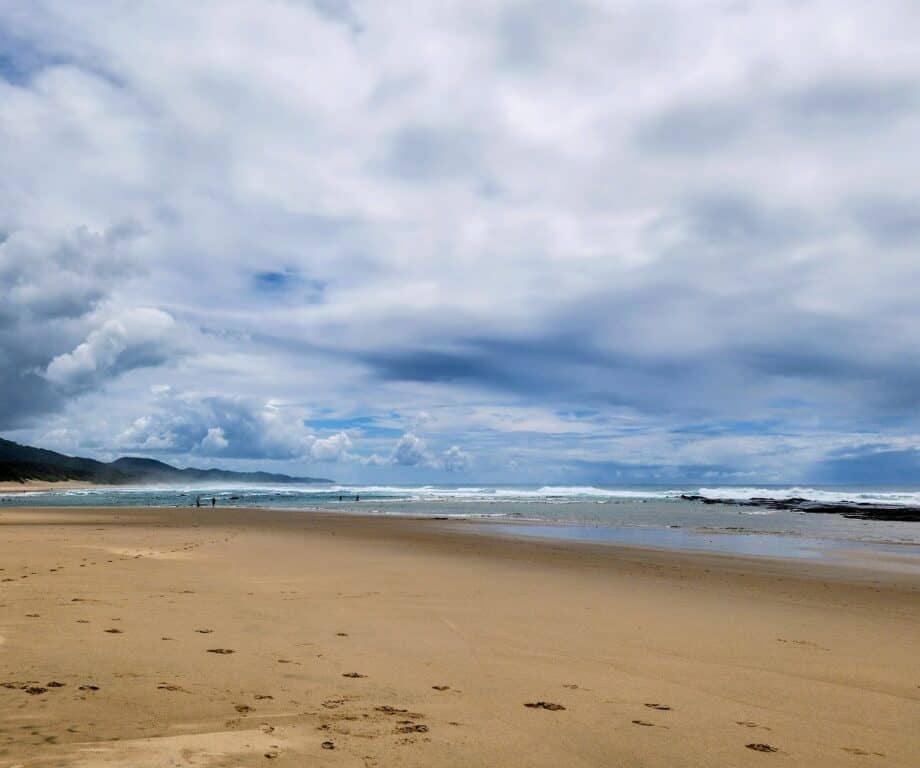
Few places offer this type of bush and beach combination. You can spend the morning spotting cheetah or scanning distant hills for elephant and the evening walking on the beach or searching suburban streets for hippos grazing outside guesthouses. And for one local family, that contrast became not just a lifestyle, but a business model.
He is South African, trained as a guide, with an anti-poaching background and most at home in the bush. She is British, drawn first by travel and then by something more permanent. Years ago, they used to escape to St Lucia for date weekends together, drawn by the estuary’s stillness and the small-town feeling. Eventually, they stayed. Then came three children.
And with children, their view of the wilderness shifted.
A Brit and a South African in the bush
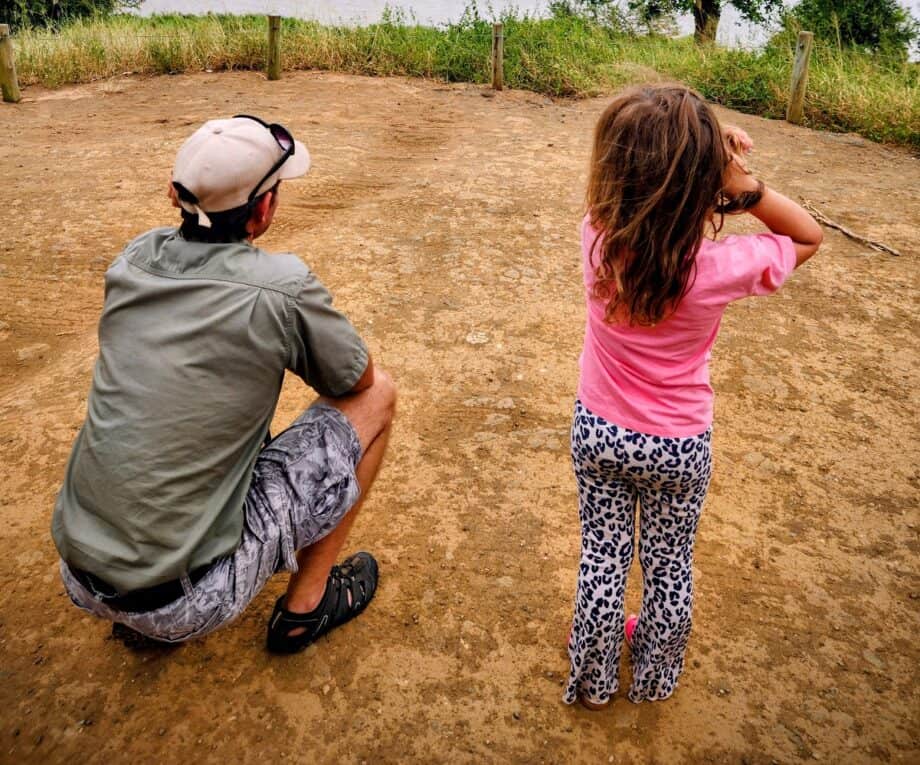
Raising their own children in St Lucia forced the couple to reconsider how the safari experience and a visit to St Lucia could work for families. They had a dream to make this pretty wild area less intimidating, more inclusive, and accessible to the smallest visitors. They also wanted to show that conservation and a true love for nature begins with being exposed to it at a young age.
As mass tourism grows more polished and more hurried, there is something quietly radical about slowing down for families and it’s in this niche that The Little Bush Baby Co. was born. They knew when to take the kids out to see the hippos emerging from the estuary and shuffling onto lawns to graze. They knew how long a toddler could sit still before a game drive turned from magical to meltdown. Everything they created grew from lived experience, not a marketing plan. What they offer now are outings that feel less like tours and more like being invited along on a family day out.
Big five safaris in Hluhluwe-iMfolozi
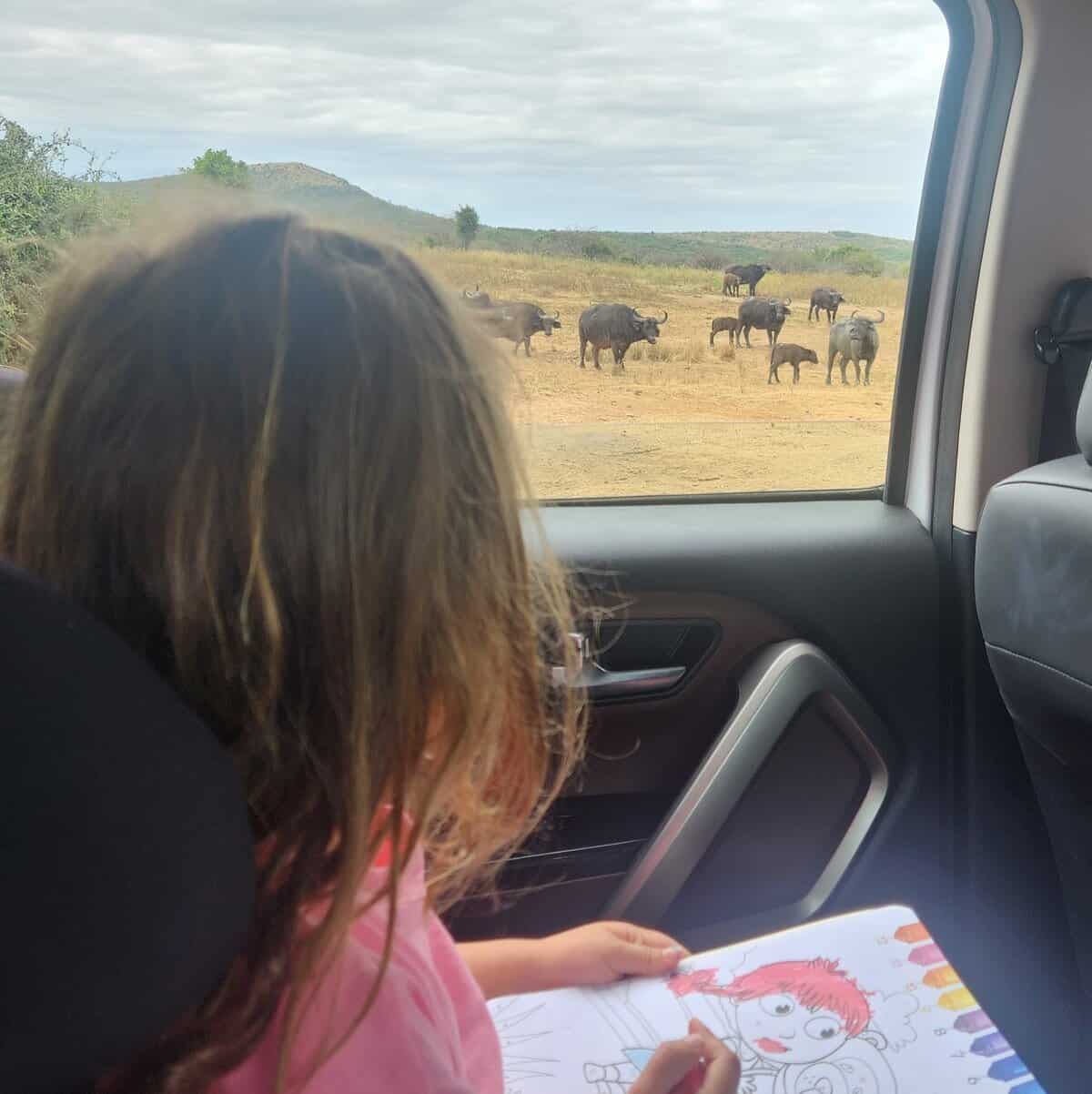
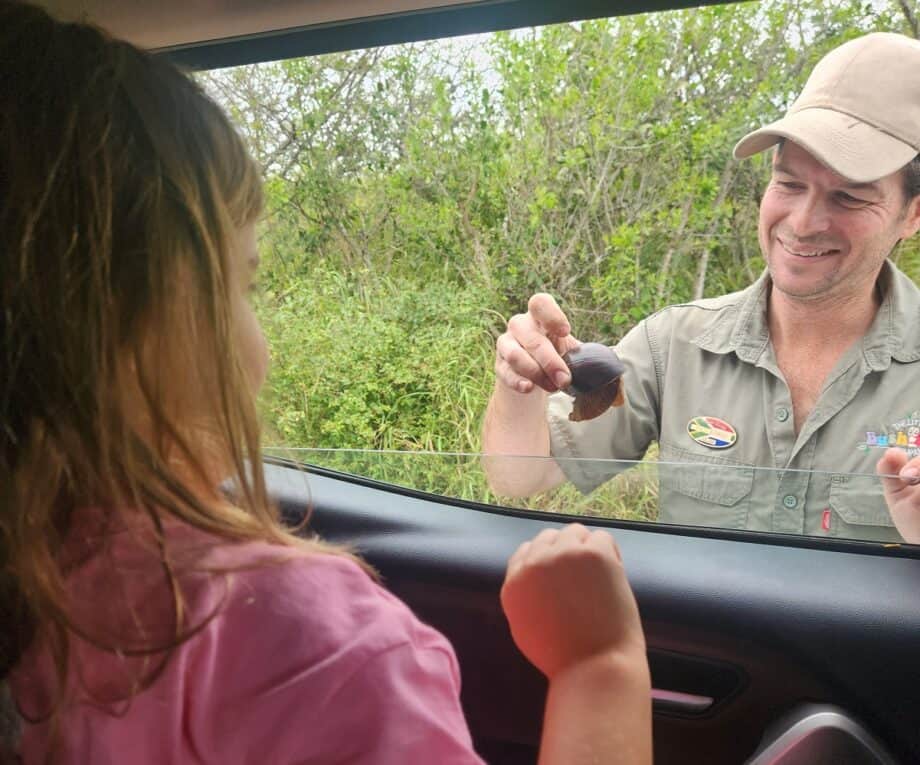
The core of their offering is the Little Beach Bums safari into the iSimangaliso wetland park which combines wildlife viewing with beach time and the Little Adventurers Big Five Safari into Hluhluwe-iMfolozi park. We chose to do the classic safari experience, with some trepidation. Because usually Big Five safaris are built around patience. Pre-dawn departures. Long hours in open vehicles. Quiet scanning of ridgelines. Technical explanations about habitat, spoor and wind direction.
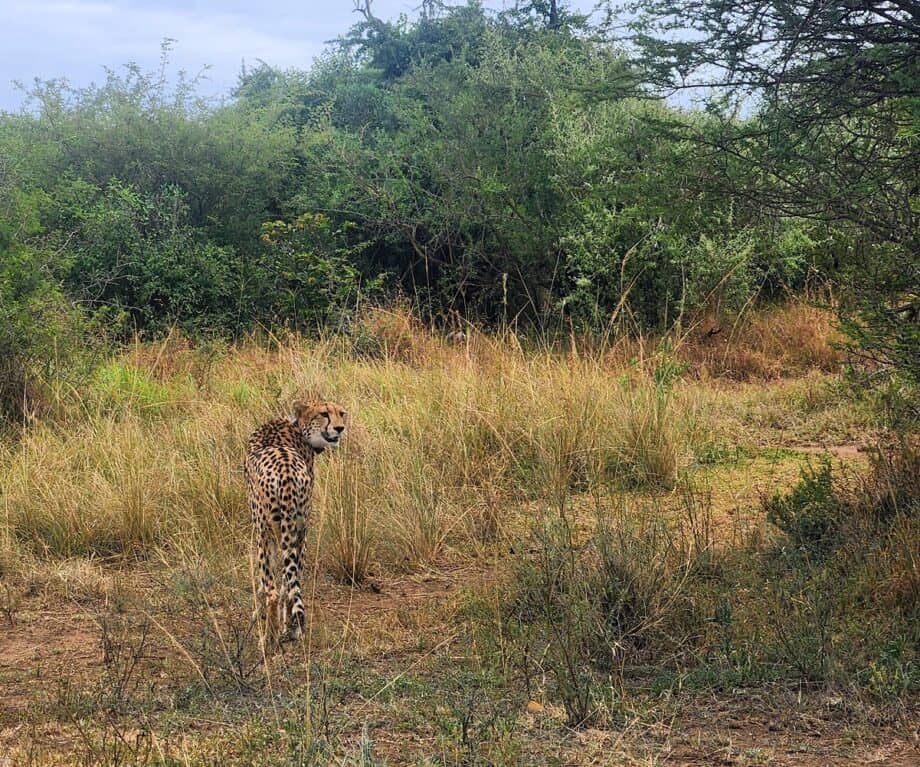
In Hluhluwe–iMfolozi Park, the rewards can be extraordinary, and they go beyond the Big Five. Think a cheetah crossing the road or hyena slinking away from a carcass. But the structure of the experience often requires adult stamina and attention spans. Thus, many places don’t even allow children on their safari tours. Perhaps they are afraid of the questions, the wiggles, the noise, the sudden need to eat, or pee.
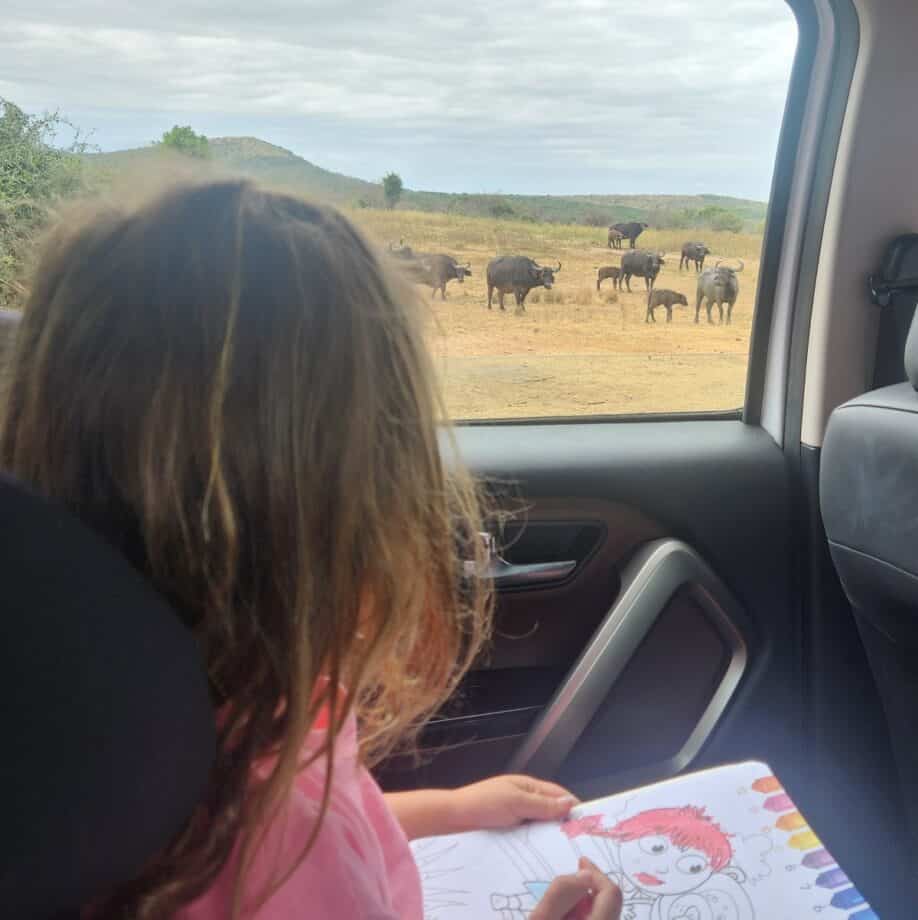
That is where The Little Bush Baby has found its niche. The family-focused drive we enjoyed was structured differently from other operator’s full day game drives. We enjoyed short bursts with plenty of planned breaks. They provided binoculars that were small enough for little hands. And instead of “be quiet”, they asked, “What do you think that sound is?” Rather than delivering encyclopaedic detail, they turned sightings into stories. Snacks and toys flowed whenever needed. There was encouragement for questions mid-sighting. And with an enclosed car rather than an open-safari vehicle there was room for noise. And with just us and our family with the guide, the experience was deeply personal.
Everything you need to plan your trip in 2026
Returning to St Lucia
But it was after sunset, back in St Lucia itself, that the Little Bush Baby’s innovative thinking was fully realised with their recent introduction of a family night drive. Night drives here are not long expeditions into remote bush. They unfold along quiet roads and sandy verges where hippos can be spotted grazing in the dark in the centre of town. Here an open-safari vehicle provides everyone with the thrill of being out at dark, while also allowing the sounds of the frogs to take full centre stage as millions of stars twinkle overhead. The company’s namesake, bushbabies, can be seen in the branches and a hippo’s bulk in the dark is both comic and colossal.
By the end of the evening, as we drove back past quiet pavements and shadowy gardens, our kids were whispering like seasoned bush babies themselves. The hippo under the streetlight was no longer just a spectacle, it was part of a bigger world they had been gently invited into.
And that, perhaps, is what this couple have brought to this wild part of South Africa. They have taken a place that can feel wild and overwhelming and made it feel personal, intimate, and possible, for even the tiniest of travellers.

Janine Avery
Janine Avery is a travel writer from Cape Town, South Africa. She is a lover of all things nature and loves to explore new places, enjoying any form of travel from basic tenting to lazing in luxury lodges.
Did you enjoy this article?
Receive similar content direct to your inbox.
Please enable JavaScript in your browser to submit the form








Leave a Reply