
January 18, 2026
2 min read

Key takeaways:
- Ophthalmologists must be “all in” on interventional glaucoma to see results.
- Christine Funke, MD, presented a step-by-step consensus on how to implement interventional glaucoma treatment into practice.
WAIKOLOA, Hawaii — To yield the benefits of interventional glaucoma treatment, ophthalmologists need a roadmap for how to implement it, according to a speaker here.
At the Hawaiian Eye 2026 meeting, Christine Funke, MD, said that acceptance of interventional glaucoma (IG) has been a slow process, likely due to lingering doubts about whether it is best for patients.

Image: Eamon N. Dreisbach | Healio
“I’m starting to wonder: How heavily do we believe in IG? Are we really ‘all in’ as a community, or are we skirting issue and not really using it in practice?” she said. “I think that if you’re not seeing every single patient that has that diagnosis of glaucoma and discussing with them IG as an option, then you’re not really in.”
According to Funke, even the most compliant of patients experience diurnal IOP fluctuation when treated with topical therapies. However, data supports IG therapies such as selective laser trabeculoplasty as a more effective option for managing high IOP and stabilizing diurnal curve fluctuations, two modifiable risk factors for glaucoma treatment. But while data supports IG, the process of implementing it may be overwhelming.
“And so, that’s when a group of us got together to start to create a consensus,” Funke said. “Because if we can have a consensus amongst all of us, especially those who are doing a strong amount of IG, hopefully that can help guide other people in their journey towards following that IG-like mindset, which we all believe to be very important.”
Published in Expert Review of Ophthalmology, the first key pearl from the protocol is to use medication only as a supplemental treatment. Next, ophthalmologists should prioritize noninvasive treatments for patients with disease severity ranging from ocular hypertension through moderate glaucoma.
“From there, you can start to talk about procedural pharmaceuticals, because we know medications work,” Funke said. “They just don’t work that well when somebody is in charge of it themselves. So, we wanted to take that portion out of the hands of the patients and right into the eye.”
The next step, according to Funke, is to consider tissue-sparing minimally invasive glaucoma surgery (MIGS).
“We’re talking about stenting, canaloplasty, etc.,” she said. “We are not doing any direct destruction of the trabecular meshwork or beyond downstream. Then, we can go into tissue-disruptive MIGS and, finally, we will consider doing some more medication before we move on to more traditional therapy.”
Patients with severe glaucoma may require more aggressive treatments initially, such as procedural pharmaceuticals, and filtering surgery should be considered as a last resort for preventing irreversible optic nerve damage.
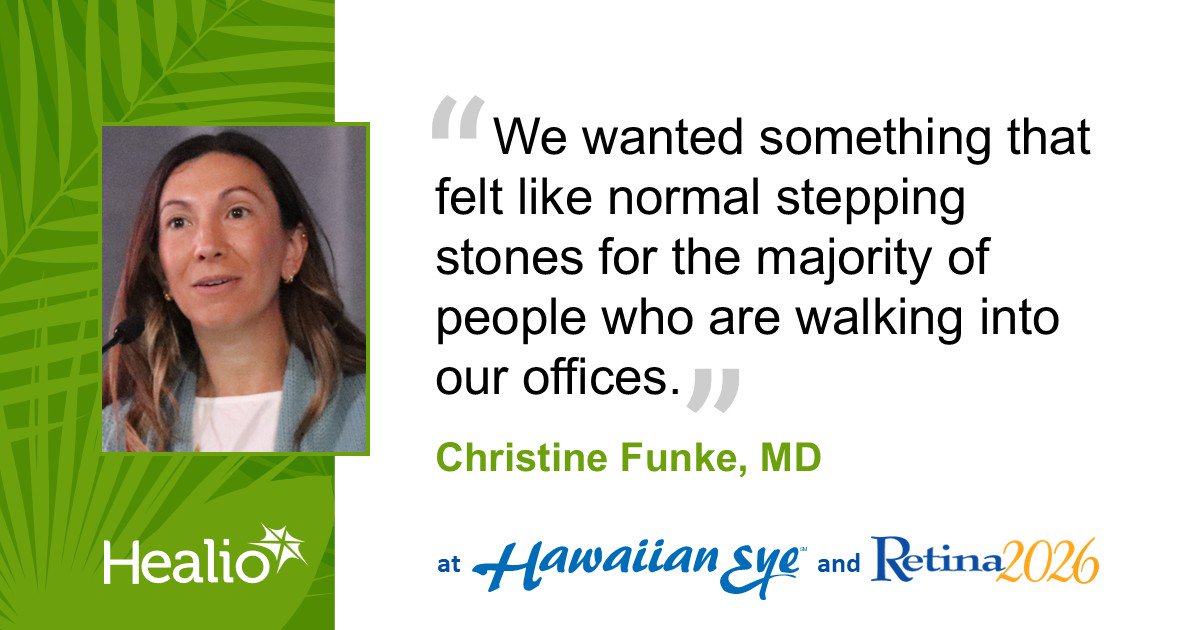
“These are generalities, kind of like a roadmap or guideline that you can use and modify appropriately,” Funke said. “But again, we wanted something that felt like normal stepping stones for the majority of people who are walking into our offices.”
Sources/Disclosures
Source:
Funke C. Where there is a protocol there is a way. Presented at: Hawaiian Eye 2026; Jan. 17-23, 2026; Waikoloa, Hawaii.
Reference:
Disclosures:
Funke reports reports having financial disclosures for AbbVie, Alcon, Dompé, Elios, Glaukos, New World Medical, Nova Eye Medical, Sight Sciences and Théa Pharma.

Ask a clinical question and tap into Healio AI’s knowledge base.
- PubMed, enrolling/recruiting trials, guidelines
- Clinical Guidance, Healio CME, FDA news
- Healio’s exclusive daily news coverage of clinical data
<


Leave a Reply