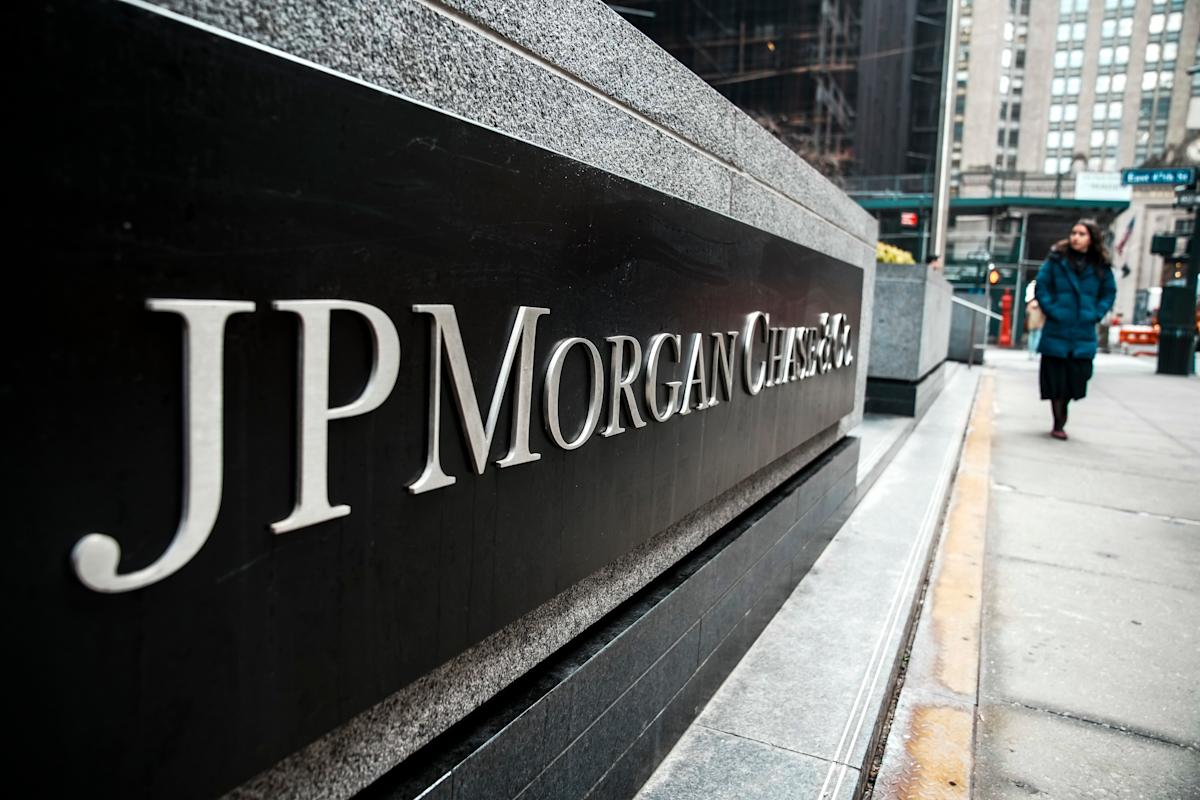
(Bloomberg) — The post from @realDonaldTrump landed at precisely 7:23 a.m. Inside JPMorgan Chase & Co. (JPM), the final piece of Project Eagle was a go.
For weeks, JPMorgan bankers had anxiously watched events in the Middle East as they worked to sell the financing for the biggest leveraged buyout ever, the $55-billion private equity takeover of video-game giant Electronic Arts Inc. (EA) And by Sunday, March 22, there was still the possibility that the US would target energy infrastructure in Iran and send markets into a tailspin.
So a collective sigh went up the next morning when President Donald Trump abruptly announced on social media that he would postpone any strike for five days. Word went out inside the bank: go — now.
The stakes for the Wall Street lender – and the big investors it was lining up — were high. The volatility in the markets, coupled with souring sentiment over software borrowers, had complicated the timing of the deal, according to people with knowledge of the matter. The concern was that failure to sell all of the loans and bonds might stall not only the EA deal but the rest of the $100 billion in M&A debt financing Wall Street is working on this year.
How JPMorgan pulled off the deal, code-named Project Eagle, is part of a broader story of how Wall Street has navigated this war. While the markets gyrate, bankers have had to parse every Truth Social post or statement on Air Force One to spot openings for multibillion-dollar deals, and then move as quickly as possible.
At JPMorgan, Trump’s post on March 23 provided the final push to go ahead with plans to offload $6.4 billion in bonds and wrap up a $8.125 billion leveraged loan sale that started a week earlier, said the people with knowledge of the matter, asking not to be identified discussing private deliberations.
JPMorgan, which initially lent $20 billion to support EA’s acquisition by Saudi Arabia’s Public Investment Fund, Silver Lake and Jared Kushner’s Affinity Partners, went into the deal feeling upbeat. From Jamie Dimon down, bankers were impressed by EA’s ebullient Australian chief executive, Andrew Wilson, the people said.
At the bank’s conference in Miami Beach this month, Wilson and EA’s chief financial officer Stuart Canfield began making the rounds with investors who peppered the company with questions about artificial intelligence.
The objective: lock down at least $500 million from each of 10 big accounts like State Street Corp. and Invesco Ltd.
The EA executives fielded questions about AI vulnerability — a worry that has pummeled software company valuations this year. Would-be buyers of the debt wanted to know how EA was different, and the pair explained that AI was conjuring projects that could actually accelerate the video game maker’s growth, people familiar with the discussions said. Coding video games with AI assistance is a boon for a company that spends hundreds of millions on research and development for games.
Within hours, the job was done. Wilson and Canfield sat down with Dimon personally before flying back to EA’s headquarters in Redwood City, California.
But with the war intensifying, markets were on edge. Bankers could delay the deal, but no one knew if the situation in the Middle East – and the markets – would take a turn for the better or the worse.
Over Zoom, in the early hours of March 16, JPMorgan, EA, and its buyers made the call to plow ahead. The bank launched the loan tranches that day.
Then came the nervous weekend of March 21-22 – and the social media post from the president, before the bond sale hit screens on March 23.
From Monday to Wednesday, teams worked through three timezones to place the debt, with more than 500 accounts chasing a piece of the deal, the people familiar said.
The bankers fluctuated at least a couple of times over the makeup of the borrowing, which was ultimately skewed toward loans a second time in a move that would give EA greater flexibility to cut its debt pile sooner if it has the cash to do so.
JPMorgan offered EA’s loans at a discounted price of 98.5 cents on the dollar. Its dollar-denominated bonds also served up more yield than similarly-rated debt. Coming out of the worst month for total returns in US leveraged loans since 2022, the size of the deal, the war’s effect on oil prices and its inflationary pressures all factored into the concessions given to get the deal done, the people said.
Ultimately, investor demand flooded in at more than $50 billion for the $15 billion debt sale, according to the people familiar with the details. The bonds and loans popped on their first day of trading, indicating that investors had gotten a good deal.
Representatives for JPMorgan and EA declined to comment for this story. A representative for PIF, Silver Lake and Affinity didn’t provide comment.
JPMorgan was able to “squeeze in” the debt sale for EA by taking advantage of a sliver of calm in rocky markets, David Kinsley, a senior portfolio manager at Impax Asset Management said in an interview.
“The immediate term is so influenced by the conflict in the Middle East and how that unfolds,” Kinsley said. “But if you step back, you see that demand for these deals has generally been good. It hasn’t been a question of access to capital markets, but the pricing.”
Certainly, the mood has shifted since medical device maker Hologic Inc. kicked off the year with a $8.75 billion debt financing that won the tightest margins for a buyout loan since the financial crisis.
The road ahead for other LBOs appears rocky. One of JPMorgan’s other deals, for example, was paused last week — software company Qualtrics International Inc. halted investor talks over a $5.3 billion debt deal after failing to win over investors worried about AI disruption and a secondary market slump in its existing loans.
The bank is also leading a roughly $4.7 billion loan sale for Clayton Dubilier & Rice’s acquisition of bubble wrap inventor Sealed Air Corp., with commitments due next week. In addition, the company is selling $2.45 billion of junk bonds.
The big question is whether investors can stomach billions more in new debt after EA.
©2026 Bloomberg L.P.






Leave a Reply