Mortgage rates don’t just affect your monthly housing payments — they can influence your ability to move and upsize your home. Two households with similar incomes and home values can have radically different financial flexibility, simply because of timing.
An article in Fortune suggests that today’s housing market has split homeowners into three distinct mortgage classes, largely based on when they locked in their rate (1).
Based on Realtor.com research, Fortune divides American mortgage holders into three groups: the “elite” class (with a sub-3% rate), the “golden handcuff” class (3% to 5%) and the “new reality” class (above 6%) — it’s unclear why the 5% to 6% group is excluded from the analysis (2).
What Fortune describes as a “caste system” is tied to the broader lock-in effect, where homeowners with a low rate refuse to sell only to borrow at a higher rate, which has squeezed housing inventory.
For those in the “new reality” class, a difference in rate can dramatically shape their monthly costs and mobility — not to mention long-term wealth building — regardless of their financial discipline.
Only 20% of mortgage holders fall into the “elite” class as of the third quarter of 2025, according to Realtor.com, citing Federal Housing Finance Agency data. Members of this class likely bought or refinanced during a period in the pandemic when rates were ultra-low.
“The relatively high share of households with ultra-low mortgage rates means that the typical homeowner would see their monthly mortgage payment increase by nearly $1,000 should they choose to sell and buy a median-priced home in today’s high-price, high-rate market,” Realtor.com senior economic research analyst Hannah Jones wrote for the platform.
The “golden handcuff” class makes up the majority of mortgage holders at 48.6%. Of those, 31.5% hold mortgages with rates between 3% to 4%, while 17.1% hold mortgages with rates between 4% and 5%. That means about 69% of mortgage holders have a rate of 5% or lower, contributing to the overall lock-in effect.
The “new reality” class — which makes up 21.2% of mortgage holders — is locked into loans at 6% or higher.
Despite the lock-in effect, the U.S. housing market is still seeing some movement. The share of homeowners with a rate of 6% or higher increased between the third quarter of 2024 and the third quarter of 2025. Jones points to “big-life events” such as having kids, getting married or getting divorced as reasons for keeping the “market in motion.”
Read More: The average net worth of Americans is a surprising $620,654. But it almost means nothing. Here’s the number that counts (and how to make it skyrocket)
Some industry experts believe the housing market is starting to balance out and, in some local markets, even moving into buyer’s territory. If so, it’s unlikely we’ll see ultra-low pandemic-era rates any time soon.
Indeed, mortgage rates — while slowly trending downward — continue to hover just above the 6% mark. Zillow’s 2026 housing market forecast expects rates to hold above 6% through 2026 (3), while Fannie Mae’s February 2026 housing forecast expects the rate to hover around 6% in 2026 and 2027 (4).
Understanding which mortgage class you fall into can help you make smarter decisions about refinancing, moving or staying put. This starts by understanding how much mortgage you can actually afford. You can use an online mortgage calculator to figure out how much your mortgage would change at a different rate.
A common rule of thumb is that your mortgage payments (including principal, interest, taxes and insurance) shouldn’t exceed 28% of your pre-tax monthly income. Or, your total debt — including credit card, student loan and car loan debt — shouldn’t exceed 36%.
For some homeowners, it might mean staying put if the higher rate would push you over those thresholds. But in other cases — say, you’re relocating for a job or you’re starting a family — moving may still make sense, even with higher rates.
Empty nesters, too, may need to downsize (in this case, lower property taxes, home insurance and utility bills could offset higher mortgage payments). Or, seniors may need to move from a multi-storey home to a bungalow or condo so they can age in place with more convenience.
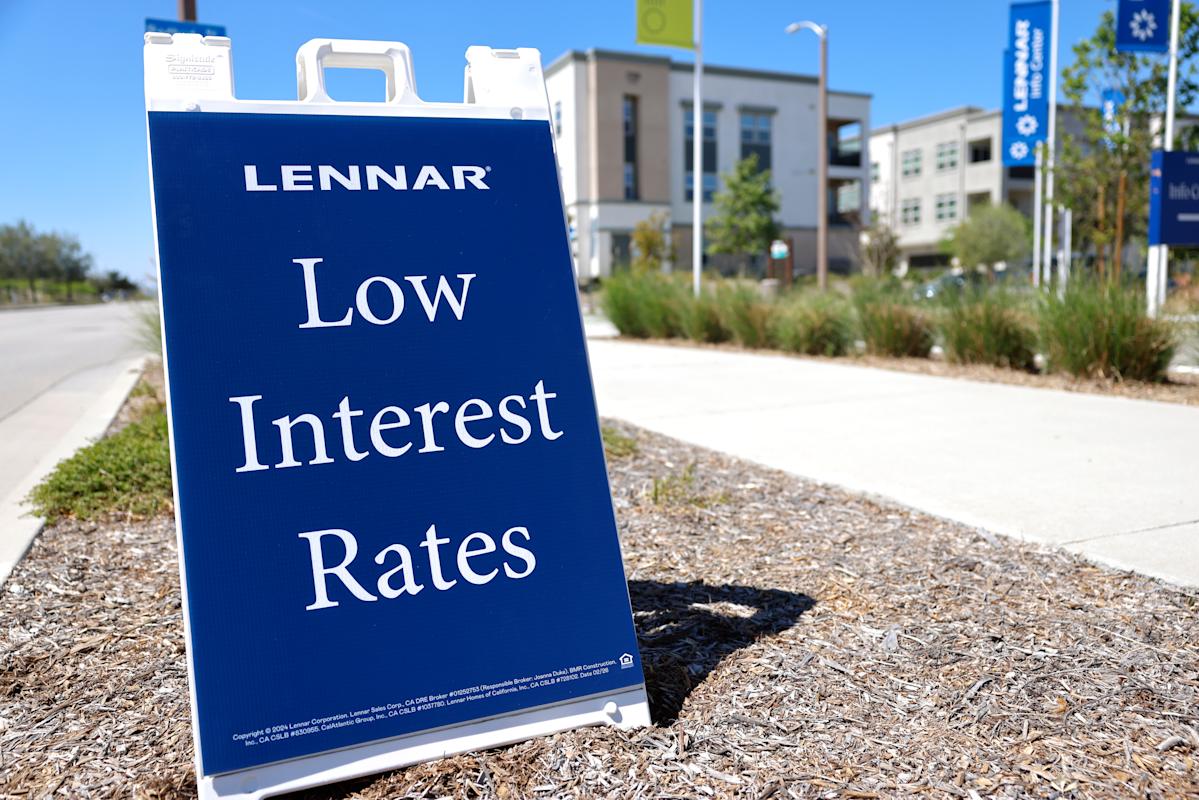
There are a few other options to lower housing costs. Making a larger down payment will lower monthly payments, and you pay less interest overall. It may also be possible to take over the seller’s mortgage, if the seller has an “assumable” mortgage (e.g., FHA, USDA or VA loan), meaning the homeowner can transfer the outstanding mortgage to the buyer. If you’re looking to buy a newly built home, many builders offer rate buydowns, as well as other incentives such as closing cost credits.
There are now slightly more “new reality” mortgage holders than “elite” ones. And while the rate lock-in “remains substantial,” Realtor.com’s Jones says this shift “marks a meaningful inflection point” as new buyers enter the market and more households swap their low rate for a higher one.
Join 250,000+ readers and get Moneywise’s best stories and exclusive interviews first — clear insights curated and delivered weekly. Subscribe now.
We rely only on vetted sources and credible third-party reporting. For details, see our editorial ethics and guidelines.
Fortune (1); Realtor.com (2); Zillow (3); Fannie Mae (4)
This article provides information only and should not be construed as advice. It is provided without warranty of any kind.










Leave a Reply