


Key takeaways:
- Vagal nerve stimulation has only recently entered mainstream rheumatology.
- Rheumatologists must address gaps in knowledge to effectively integrate emerging device-based therapies into clinical care.
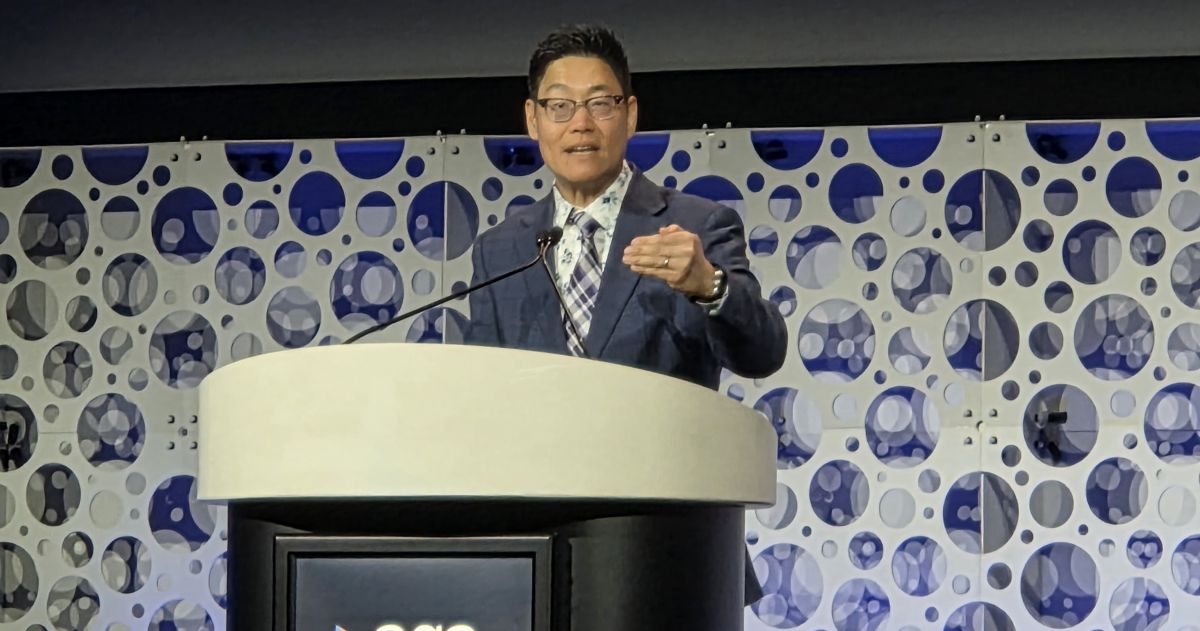
DESTIN, Fla. — Vagal nerve stimulation represents a new frontier in the management of rheumatoid arthritis, according to a presentation at the Congress of Clinical Rheumatology East.
“Regardless of how one views vagal nerve stimulation and the SetPoint device, the reality is that we now have an FDA-approved, nonpharmacologic therapy for treatment-resistant rheumatoid arthritis,” Leonard H. Calabrese, DO, RJ Fasenmyer chair of clinical immunology at Cleveland Clinic, and chief medical editor of Healio Rheumatology, told Healio. “It has met the required endpoints in sufficient patients to satisfy the FDA’s burden of proof.”

According to Calabrese, the nonpharmacologic nature of vagal nerve stimulation (VNS) is a defining advantage.
“This represents a tectonic shift in how we conceptualize immune-mediated inflammatory diseases,” he said. “It demands that rheumatologists expand their knowledge base to include the rapidly advancing field of neuroimmunology, much as we did with cytokine biology a generation ago. At present, there are substantial gaps in our understanding of the neuroimmune axis.”
As part of his presentation, Calabrese delivered a focused minicourse on neuroimmunology for practicing rheumatologists. He noted that although the science has been evolving for more than 2 decades, it has only recently begun to penetrate mainstream rheumatology.
One area that has received insufficient attention is placebo and nocebo biology, he said.
“The placebo effect is not deception,” Calabrese said. “Both placebo and nocebo responses are mediated, at least in part, through immune modulation, underscoring the fundamental integration of the brain and immune system.”
He added that rheumatology has historically treated placebo responses as a nuisance variable in clinical trials, rather than as a window into biologically meaningful mechanisms relevant to patient care.
Over the past 5 years, a series of what Calabrese termed “black swan” discoveries have further reshaped researchers’ understanding of the neuroimmune interface. These discoveries include evidence that immune responses can be encoded in the brain and reactivated independently of antigenic exposure. This concept has been described by Asya Rolls, PhD, of Tel Aviv University, as “immunological memory engrams,” or “immunograms,” Calabrese said.
Emerging, parallel work additionally suggests that central nervous system signatures may serve as predictive biomarkers, according to Calabrese. He highlighted recent data demonstrating that pain-related functional MRI patterns can predict response to biologic therapy, as shown in a controlled trial of a TNF inhibitor by George Schett, MD, and colleagues.
Where VNS will ultimately fit within RA treatment algorithms remains an open question, he added.
“We are at the beginning of the beginning,” Calabrese said. “Identifying the right patient population will require time, experience and a deeper understanding of the modality’s strengths and limitations.”
According to Calabrese, some clinicians have expressed concern about the relatively slow onset of effect observed with VNS, with continued improvement extending well beyond the 12-week controlled phases of clinical trials. However, he challenged the expectation that neuromodulation should mirror the kinetics of targeted pharmacologic therapies.
“Why would we expect one minute per day of vagal nerve stimulation to produce the same temporal response as a biologic agent?” he said.
Calabrese also pointed to the longstanding use of implanted VNS in refractory seizure disorders, where optimal therapeutic benefit may not be realized for many months, underscoring both the established safety profile and the distinct temporal dynamics of this modality. He counseled rheumatologists to approach VNS with the same rigor applied to any emerging therapy, developing a clear understanding of its therapeutic profile and underlying mechanism of action.
“This is no different from how we have learned to integrate targeted therapies into our practice,” he said. “The difference is that this one emerges from an entirely new domain of therapeutic science.”
In the near term, Calabrese suggested that ideal candidates for VNS may first include patients who cannot tolerate immunosuppression or those who decline targeted therapies.
“It will take time to define the full clinical impact of this first approved vagal nerve device,” he said. “But there is little doubt that neuroimmunology and immune-mediated inflammatory diseases represent a field still at the very beginning of its evolution.”
For more information:
Leonard H. Calabrese, DO, can be reached at CALABRL@ccf.org.
Perspective
Back to Top

I was riveted by Dr. Calabrese’s lecture on “Psychoneuroimmunology 101” as he provided clarity to patient experiences I had witnessed but struggled to explain.
He reviewed animal studies of Pavlovian conditioning observed to manipulate neuroendocrine and immunomodulatory functions, potentially a way to reduce inflammation and provide therapeutic benefits. Perhaps this is how placebo works.
Many drugs have failed to come to market due to high placebo responses. Could this be related to neuroimmunology and prior conditioning? Maybe there is a totally different pathway generating responses in the placebo patients.
Neuroimmunology is a budding area for rheumatologists. Dr. Calabrese made several points about the vagus nerve and its potential role in reducing inflammation. Currently, rheumatologists are skeptical about the vagal nerve stimulator device approved for moderate to severe rheumatoid arthritis, but neuroimmunomodulation would explain why it would be effective.
How exciting if we could tap into this old pathway as a new means to augment our traditional therapies to help IMID patients.
Kathryn Dao, MD, FACP, FACR
Disclosures: Dao reports no relevant financial disclosures.
Sources/Disclosures
Source:
Calabrese LH. Psychoneuroimmunology 101; How will vagal nerve stimulation affect the rheumatologist’s practice. Presented at The Congress of Clinical Rheumatology East; April 30-May 3, 2026; Destin, Florida (hybrid meeting).
Disclosures:
Calabrese reports being a medical advisor for OpenEvidence, as well as professional relationships with AbbVie, AstraZeneca, Bristol Myers Squibb, Galvani, Genentech, GlaxoSmithKline, Janssen, Novartis, Regeneron, Sanofi and UCB.

Ask a clinical question and tap into Healio AI’s knowledge base.
- PubMed, enrolling/recruiting trials, guidelines
- Clinical Guidance, Healio CME, FDA news
- Healio’s exclusive daily news coverage of clinical data
<








Leave a Reply