
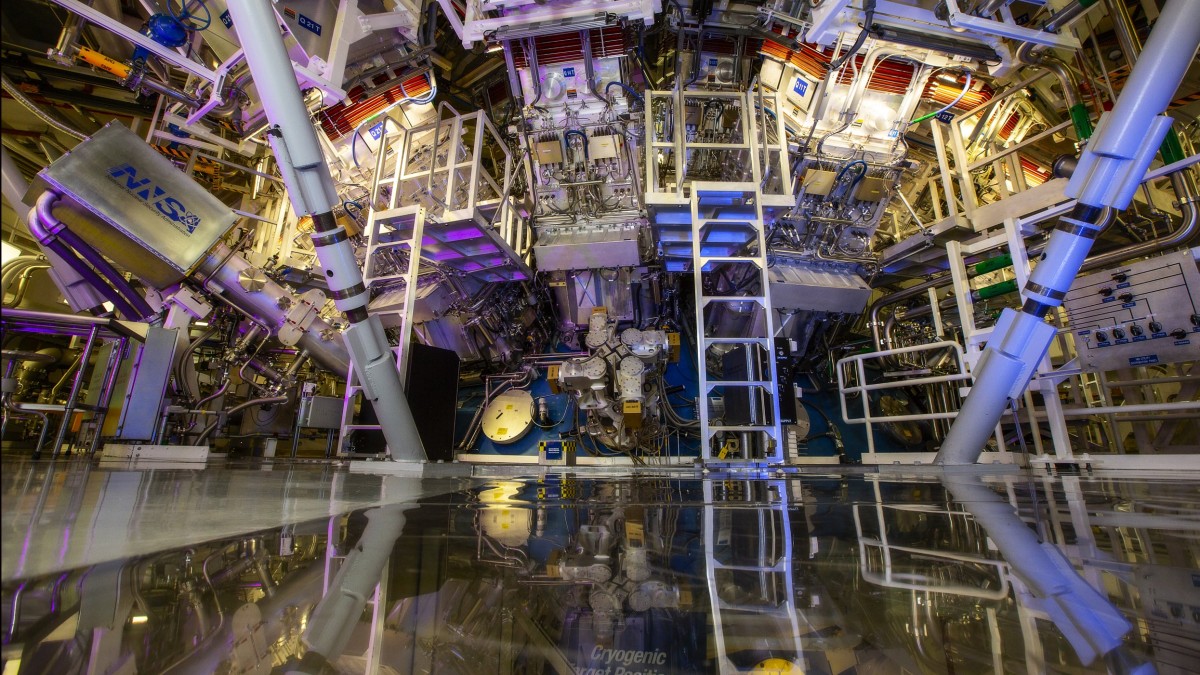
As nuclear fusion technologies move towards commercialization, the industry will need hundreds of millions, if not billions of dollars of new capital, either from public or private sources, in order to grow. Two nuclear fusion companies have chosen to access the public capital markets via special purpose acquisition corporations. (SPACs).which are often referred to as “blank check companies” because investors give money to a sponsor, typically an investment bank, to find a good business to invest in, without knowing in advance where the money will go.
Before going into specifics, we should explain how a SPAC works. It is an equity vehicle that affords the issuer both advantages and disadvantages over a conventional equity offering via an initial public offering (IPO). There are two principal advantages to SPACs from an issuer’s perspective. They can be offered more quickly than an IPO, and they also do not require pesky financial details like earnings forecasts and cash flow projections. SPACs are a financing vehicle for companies with big ideas, lots of potential, but zero revenues. There are two major downsides to this financial structure, though. First, the sponsor takes a big chunk of the equity as its fee, so there’s a lot of equity dilution right at the outset, like 30%+ dilution. The sponsors typically also receive warrants, which, when exercised, further increase the stock float and exacerbate dilution. And then there’s the phantom equity problem. SPAC investors can demand their money back from the sponsor, typically $10 per share if no investment has been made. However, the outstanding shares are not retired, and this also exacerbates a stock dilution problem.
We think equity investors should regard SPACs the way fixed income investors differentiate between junk bonds and investment-grade securities. They’re both bonds except that the risk profile of the former is much greater than that of the latter. It would not be completely inappropriate to think of SPACs as the equity market equivalent of “junk” bonds, that is, a security that affords investors far fewer protections (and entails higher risks) than higher quality equity investments.
As if to prove our point, one of the first nuclear fusion companies to form a SPAC, TAE Enterprises, formerly Tri Alpha Energy, did so in a 50-50 merger with the President’s Trump Media and Technology Group, the owner of Truth Social. The CEO of TAE, and Truth Social’s CEO, former congressman Devin Nunes, were to be co-heads of this new venture. Mr. Nunes has been fired. Nevertheless, TAE is a real technological competitor in the nuclear fusion race. Its newest reactor, called Copernicus, uniquely uses hydrogen-boron fuel (versus deuterium-tritium in more conventional systems). The advantage is a great diminution in radioactive waste, but the extreme temperatures needed, 1-5 billion degrees Celsius, pose ignition challenges. TAE previously raised over a billion dollars from Google, Chevron, and others and, like everyone else, expects to have a commercial reactor operating in the early 2030s. TAE’s field-reversed configuration of magnetic confinement loosely resembles a tokamak, but with a much simpler, cheaper architecture.








Leave a Reply