
April 22, 2026
2 min read

Key takeaways:
- A study of nearly 9,000 participants showed how oral care cuts NV-HAP by more than half.
- A researcher said the study demonstrated “importance” of oral care.
MUNICH — Brushing your teeth can prevent cavities — and pneumonia — a team of Australian researchers found.
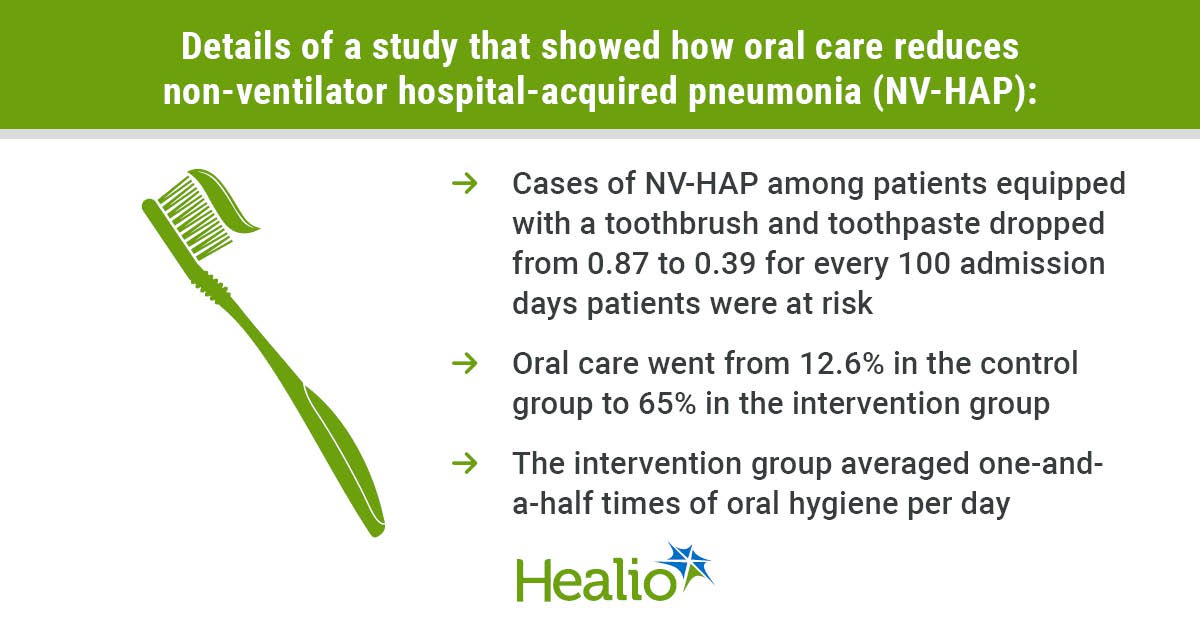
According to a study of nearly 9,000 participants, cases of non-ventilator hospital-acquired pneumonia (NV-HAP) among patients equipped with a toothbrush, toothpaste and educational materials on oral hygiene dropped from 0.87 to 0.39 — or 55% — for every 100 admission days patients were at risk.

Data derived from Mitchell B, et al. Abstract O0611. Presented at: ESCMID Global; April 17-21, 2026; Munich.
“This study shows the importance of oral care which is often deprioritized,” researcher Brett Mitchell, PhD, professor of health services research and nursing at Avondale University in Cooranbong, Australia, told Healio.
Mitchell and colleagues, who presented their findings at ESCMID Global, oversaw the Hospital Acquired Pneumonia Prevention (HAPPEN) study, a randomized controlled trial (RCT) across three Australian hospitals over a 1-year span, ending in August 2025. In total, 8,870 patients joined the trial, with 4,567 in the intervention group.
In addition to providing the oral hygiene care products and resources to patients in the intervention group, health care staff in this group also received onsite training, access to online resources and practical support to enhance the delivery of oral care to patients.
The study noted that the proportion of oral care increased 12.6% (95% CI, 8.98%-17.3%) in the control group and 65% (95% CI, 56.1%-73%) in the intervention group, which averaged 1.5 times (95% CI, 1.4-1.7) of oral hygiene per day. Overall HAP risk decreased 57% in the intervention group (HR = 0.42; 95% CI, 0.21-0.91).
Mitchell said the study demonstrates a clear and statistical decrease of pneumonia linked to the intervention group.
“It shows value in demonstrating why oral care needs to be improved and it’s relatively simple to do,” he said.
NV-HAP is estimated to make up 65% of all health care-acquired pneumonia cases in the United States, according to the CDC, which points out that about 1.6% of hospitalized patients experience NV-HAP with mortality rates between 15% to 30%.
That’s why a toothbrushing regimen is so critical, Mitchell said.
“Brushing teeth and oral care reduces bacterial load,” he said. “Micro-aspiration is thought to be the main mechanism for NV-HAP. So, reducing bacteria load, when someone aspirates, is likely to reduce risk.”
Mitchell expects the study to bolster guidelines, which already advise using oral care in a hospital setting.
“Guidelines currently recommend that oral care be done,” he said, “except the problem being that it’s grounded in observational studies. This is the largest RCT conducted to date and it will help strengthen evidence-based guidelines.”
For more information:
Brett Mitchell, PhD, can be reached at infectiousdisease@healio.com.
Perspective
Back to Top

Aaron E. Glatt, MD, MACP, FIDSA, FSHEA
Disclosures: Glatt reports no relevant financial disclosures.
Sources/Disclosures
Source:
Mitchell B, et al. Abstract O0611. Presented at: ESCMID Global; April 17-21, 2026; Munich.
Reference:
Disclosures:
Mitchell reports the Medical Research Future Fund funded the study.

Ask a clinical question and tap into Healio AI’s knowledge base.
- PubMed, enrolling/recruiting trials, guidelines
- Clinical Guidance, Healio CME, FDA news
- Healio’s exclusive daily news coverage of clinical data
<












Leave a Reply