
February 02, 2026
2 min read

Key takeaways:
- Subcutaneous anifrolumab improved over placebo in BICLA response at 52 weeks.
- The drug’s subcutaneous form offers patients new delivery system with the same efficacy.
Subcutaneous anifrolumab is superior to placebo in multiple systemic lupus erythematosus disease activity measures at 52 weeks, according to data published in Arthritis & Rheumatology.
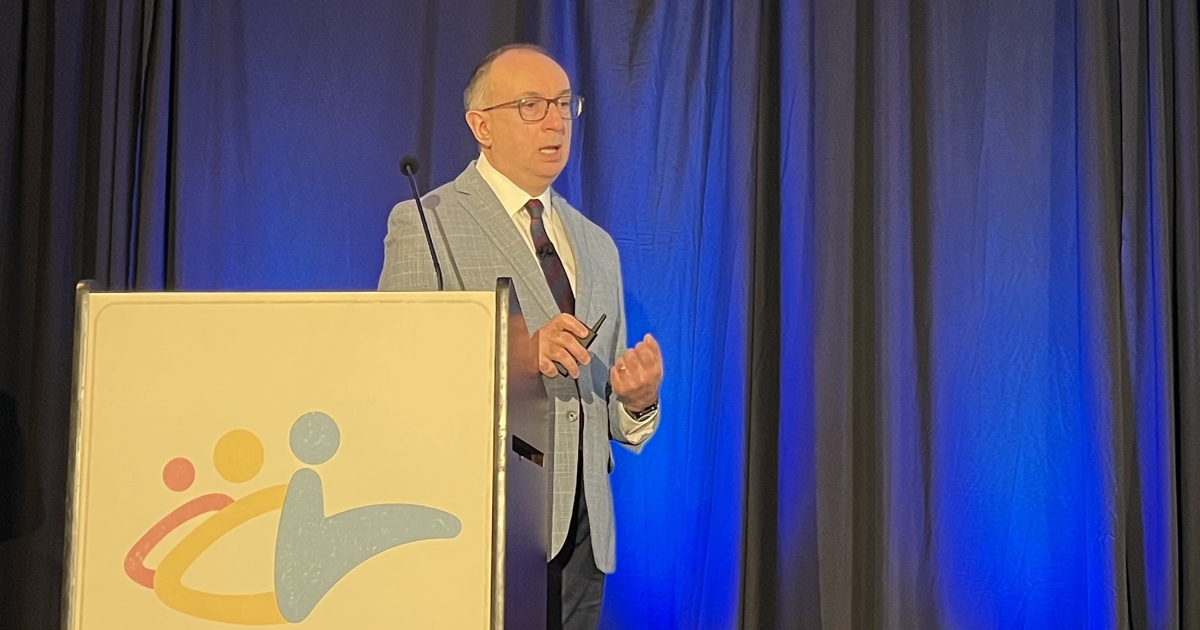
“As a first-in-class biologic, Saphnelo (anifrolumab, AstraZeneca) IV has made a significant impact on the treatment of SLE, and has been shown to help patients achieve DORIS remission and lower disease activity while reducing oral corticosteroid use,” Susan Manzi, MD, MPH, chair of the Allegheny Health Network (AHN) Medicine Institute in Pittsburgh, director of the Lupus Center of Excellence at the AHN Autoimmunity Institute, and principal investigator of the TULIP-SC trial, told Healio.

“We chose to study the subcutaneous administration of Saphnelo because we wanted to see if we could help even more patients achieve the benefits of DORIS-defined remission and lower disease activity in a more flexible and convenient way,” she added.
The multinational, phase 3, double-blind, placebo-controlled TULIP-SC trial assessed subcutaneous anifrolumab for efficacy and safety in adults with moderate to severe SLE. Eligible participants had received standard SLE therapy.
“Patients with SLE have a higher risk for early death and an estimated 50% have irreversible organ damage within 5 years of diagnosis due to disease activity and chronic oral corticosteroid use,” Manzi said.
The interim analysis included 109 adults with SLE assigned anifrolumab 120 mg and 111 adults with SLE assigned placebo on the same schedule for 52 weeks. Treatment difference in BILAG-based Composite Lupus Assessment (BICLA) response at 52 weeks served as the primary endpoint for the interim data set. Meanwhile, the full analysis assessed key secondary and other endpoints.
Results at the interim timepoint showed that anifrolumab bested placebo as assessed by the primary outcome measure, 59.4% vs. 43.9% (BICLA response difference =15.5%; P = .0211), according to the researchers.
The full analysis included 184 patients assigned anifrolumab and 183 assigned placebo.
According to the results of that assessment, 56.2% of participants in the anifrolumab group, and 34% participants in the placebo group, achieved BICLA response while patients maintained low or reduced doses of oral glucocorticoids through 52 weeks (P < .0001). Moreover, time to sustained BICLA response was reduced in the anifrolumab group, compared with placebo (HR = 2.2; P < .0001).
Further assessment at 52 weeks showed that anifrolumab bested placebo in terms of both DORIS remission (treatment difference = 14.2%; P = .0012) and Low Lupus Disease Activity State (treatment difference = 14.1%; P = .0038).
Serious adverse events occurred in 11.9% of patients assigned active therapy, and in 10.4% of those assigned placebo. Herpes zoster was reported in 3.8% of participants in the anifrolumab group and 1.1% of those in the placebo group.
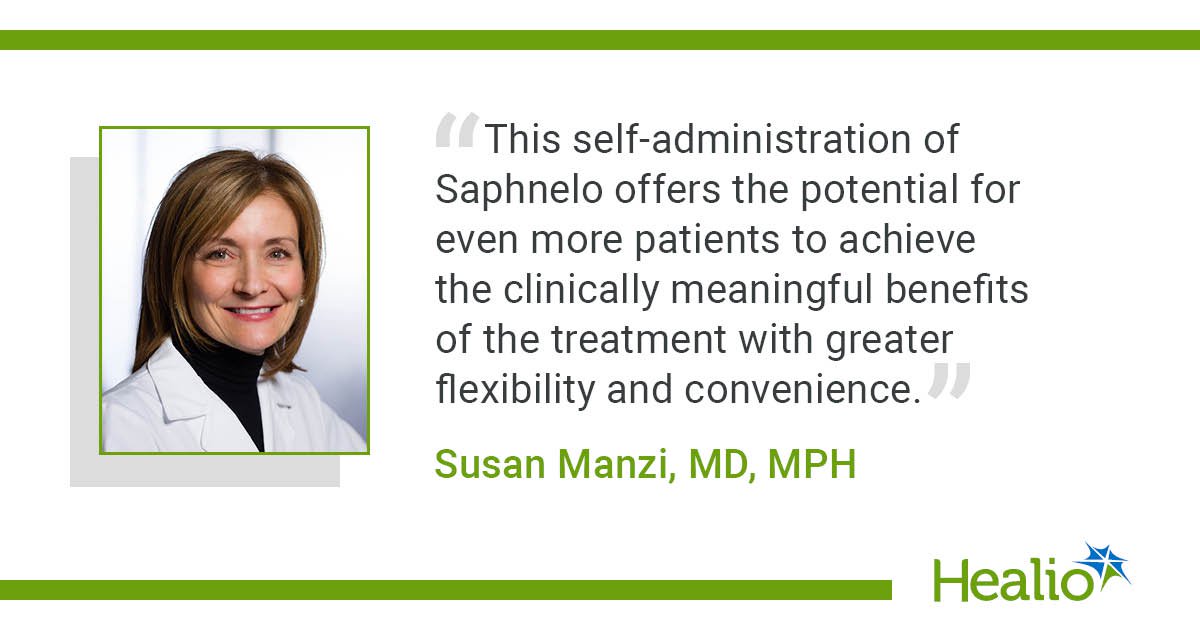
“The TULIP-SC results are clinically meaningful and provide confidence that the efficacy and DORIS-defined remission rates that we have seen with Saphnelo IV can be achieved in a new subcutaneous administration,” Manzi said. “This self-administration of Saphnelo offers the potential for even more patients to achieve the clinically meaningful benefits of the treatment with greater flexibility and convenience.”
For more information:
Susan Manzi, MD, MPH, can be reached at Sonali.Ranasoma@edelman.com.

Ask a clinical question and tap into Healio AI’s knowledge base.
- PubMed, enrolling/recruiting trials, guidelines
- Clinical Guidance, Healio CME, FDA news
- Healio’s exclusive daily news coverage of clinical data
<






Leave a Reply