
January 17, 2026
1 min read

Key takeaways:
- VISA assesses vision, inflammatory findings, strabismus and appearance.
- Prioritize smoking cessation and endocrine status while avoiding treatment with radioactive iodine in patients with active disease.
WAIKOLOA, Hawaii — The VISA classification system is a helpful tool for monitoring disease progression in patients with thyroid eye disease, according to a speaker here.
At Hawaiian Eye 2026, Mark J. Lucarelli, MD, FACS, said that the VISA system assesses thyroid eye disease (TED) progression by primarily focusing on vision outcomes, inflammatory findings, strabismus and appearance.

Image: Eamon N. Dreisbach | Healio
“First and foremost, we want to know if there is visual compromise,” he said. “Is there thyroid optic neuropathy, or exposure keratopathy? Second, we’re looking at inflammatory findings.”
VISA implements a 10-point inflammation scale designed to allow ophthalmologists to track whether the patient’s symptoms have improved, remained the same or progressed at the end of their visit. For example, the presence of minor chemosis or lid edema would add one point on the scale, while more severe cases would add two points. Lucarelli shared a case in which patient scored a six out of 10, “that would usually be at the level that would trigger some more advanced therapy,” he said.
“It gives us a way to very rapidly understand that the patient is not having immediate visual compromise, but that they are rather inflamed,” he said. “They have moderate to severe strabismus, and very severe proptosis. We have one quick classification, and a pretty good understanding of this patient’s condition, at least at one point in time.”
In addition to implementing the VISA system, Lucarelli stressed the other “big three” modifiable steps for treating every patient with TED: Smoking cessation, managing the endocrine status and avoiding treatment with radioactive iodine while disease is active.
“Cycling between hyperthyroidism and hypothyroidism is terrible for these patients,” Lucarelli said. “We need to stabilize their endocrine system. Most endocrinologists understand this, but it doesn’t hurt for us to encourage them.”
For patients with more severe, active TED, Lucarelli recommended that they consider undergoing thyroidectomy, which has been associated with lower incidences of orbital decompression and optic neuropathy.
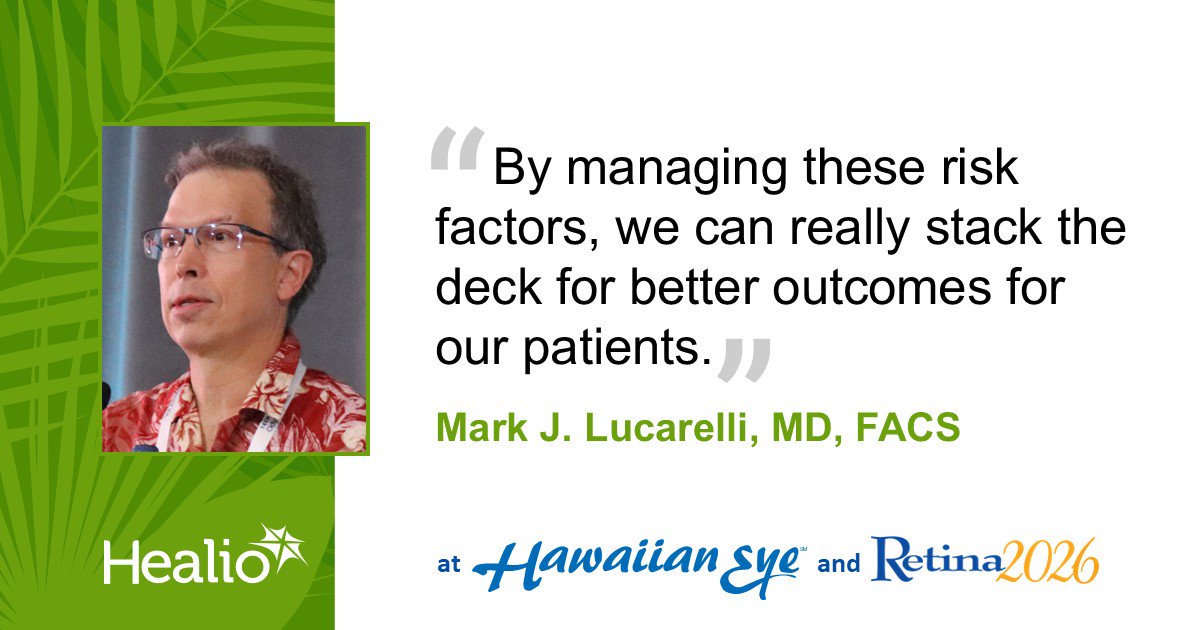
“By managing these risk factors, we can really stack the deck for better outcomes for our patients,” he said.
Sources/Disclosures
Source:
Lucarelli MJ. Thyroid eye disease. Presented at: Hawaiian Eye 2026; Jan. 17-23, 2026; Waikoloa, Hawaii.
Disclosures:
Lucarelli reports being an investigator for Immunovant and Sling Therapeutics as well as a consultant for Amgen and Viridian Therapeutics.

Ask a clinical question and tap into Healio AI’s knowledge base.
- PubMed, enrolling/recruiting trials, guidelines
- Clinical Guidance, Healio CME, FDA news
- Healio’s exclusive daily news coverage of clinical data
<











Leave a Reply