
January 26, 2026
2 min read
Key takeaways:
- At 8 weeks, active treatment led to better HDRS-17 improvement vs. sham.
- The device demonstrated a favorable safety profile with no serious adverse events.
The FDA has approved the first prescription, at-home neuromodulation therapy for individuals with major depressive disorder who have failed at least one prior antidepressant, according to the manufacturer.
In a press release, Neurolief Inc. said it developed ProLivRx to deliver focal, multichannel, external non-invasive Combined Occipital and Trigeminal Afferent Stimulation (eCOT-AS) via gentle electrical pulses aimed at mood-influencing neural networks.

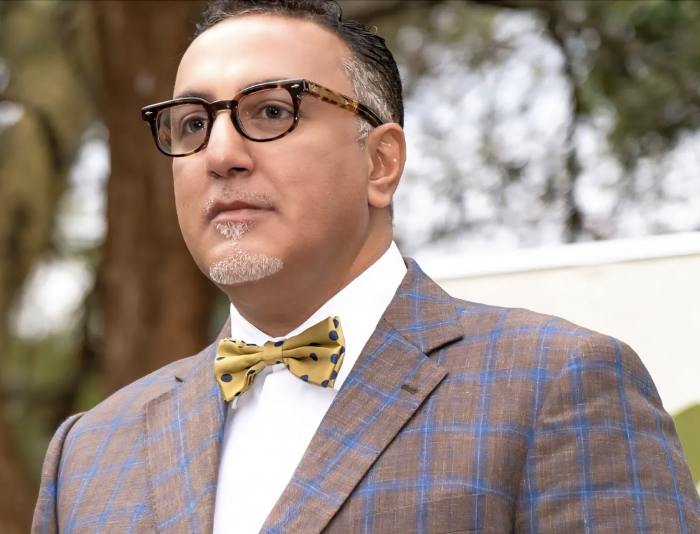
“ProLivRx offers new hope,” Owen S. Muir, MD, DFAACAP, chief medical officer at Neurolief, told Healio. “Not only did ProLivRx lead to relief of MDD with a large effect size, it did so with high adherence and limited adverse effects.”
Neurolief’s application was filed under the Class III Premarket Approval (PMA) pathway, and was supported by data from the MOOD study, a randomized, double-blind, sham-controlled, multicenter clinical trial, conducted at 13 sites in the United States and Israel between September 2021 and June 2024. The study examined safety and efficacy of the novel therapy.
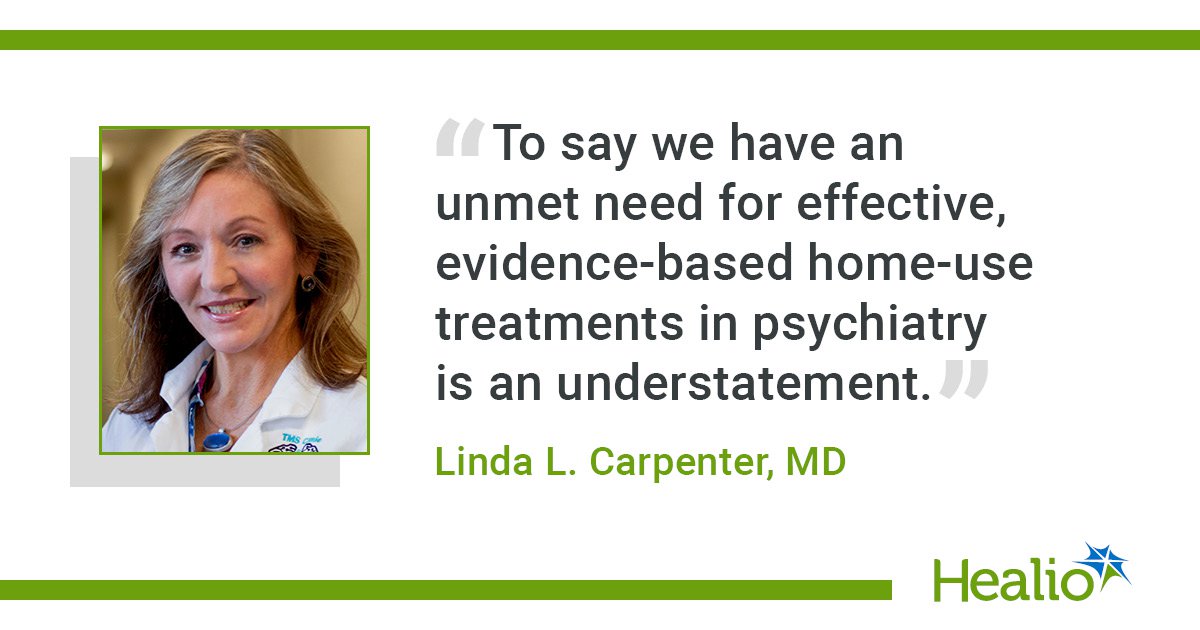
“To say we have an unmet need for effective, evidence-based home-use treatments in psychiatry is an understatement,” Linda L. Carpenter, MD, lead study author and professor of psychiatry and human behavior at Brown University, told Healio.
In the MOOD study, ProlivRx was examined in 124 adults with MDD and inadequate response to antidepressant medications.
Participants were randomized on a 1:1 basis to receive either self-administered active eCOT-AS or sham treatment, lasting 40 minutes per session twice daily, 5 to 7 days per week, across the 8-week double-blind phase. An 8-week active open label phase followed. The primary outcome was the mean change from baseline in the Hamilton Depression Rating Scale (HDRS-17).
At 8 weeks, results showed active treatment led to greater mean HDRS-17 improvement compared with sham, 8.62 vs. 6.01. In addition, those receiving active treatment recorded significantly higher remission rates (21.3 % vs 6%), while also achieving more demonstrable shifts to lower HDRS-17 depression severity categories.
A downward shift of two or more HDRS-17 categories was observed for 45% of active and 20% of sham participants at week 8, a trend that continued up to week 16, where 56% of MDD severities among the treatment group were categorized as either “remission” or “mild.”
Participants reported a total of 51 adverse events that may be related to the device, including 25 in the active group, six in the sham group and 20 during the open-label phase. No unanticipated serious adverse events were reported, no enrollees discontinued the study due to elevated suicide risk and there were no additional recorded unanticipated serious adverse device-related effects.
“This is a huge advance for the field, because there are so many patients out there that cannot, for many different reasons, get to specialty clinics every day to access treatments like transcranial magnetic stimulation,” Carpenter said.
Neurolief expects ProlivRx to become commercially available in the U.S. in early 2026 through authorized prescribers, with initial deployment focused on health systems and behavioral health programs.
“Standard of care adjuvant treatments like antipsychotics have serious adverse effects like obesity and tardive dyskinesia, none of which were seen in our study,” Muir told Healio.
“ProlivRx is among the safest treatments for difficult to treat depression and the most accessible in the privacy of home.”
For more information:
Linda L. Carpenter, MD, and Owen S. Muir, MD, DFAACAP, can be reached at psychiatry@healio.com.
Sources/Disclosures
Source:
Press Release
Reference:
Carpenter LL, et al. Brain Stimul. 2025;doi:10.1016/j.brs.2025.08.022.
https://neurolief.com/. Accessed Jan. 14, 2025.
Disclosures:
Carpenter reports receiving income as a consultant from Cyclerion, Kintsugi, Magnus Medical, Neurolief, Neuronetics and Universal Brain; serving on a data safety monitoring board for Pharpoint Research and Syneos Health; receiving research support from GrayMatters Health, Janssen Pharmaceuticals, Neumarker, Neuronetics, Neurolief and Nexstim. Muir is employed by Neurolief.

Ask a clinical question and tap into Healio AI’s knowledge base.
- PubMed, enrolling/recruiting trials, guidelines
- Clinical Guidance, Healio CME, FDA news
- Healio’s exclusive daily news coverage of clinical data
<






Leave a Reply