
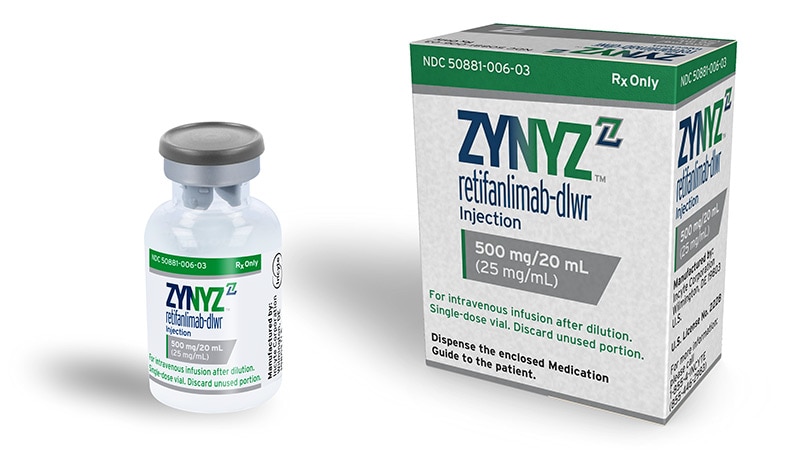
The European Medicines Agency’s (EMA’s) Committee for Medicinal Products for Human Use has recommended extending the therapeutic indication of retifanlimab-dlwr (Zynyz, Incyte Biosciences Distribution B.V.) to include treatments of adults with squamous cell carcinoma of the anal canal (SCAC) that cannot be removed by surgery and is metastatic or locally recurrent.
SCAC, while rare, is primarily driven by the human papillomavirus (HPV) and accounts for about 85% of all anal cancers. There has been a steady increase in incidence across Europe in the past few decades, largely due to the spread of specific HPV strains.
Globally, in 2020, more than 30,000 people were diagnosed with SCAC, with two-thirds of cases occurring in Europe and North America.
Retifanlimab is a monoclonal antibody, a protein that blocks the PD-1 receptor found on the surface of T cells. By blocking PD-1, retifanlimab prevents tumors from switching off the activity of T cells, increasing the immune system’s ability to destroy malignant cells. It is used in combination with the chemotherapy drugs carboplatin and paclitaxel.
There are currently no medicines specifically authorized for use in the EU for the treatment of SCAC, highlighting the unmet need for new treatment options for patients with advanced disease. For cancer that has not spread, treatment options are limited to chemotherapy and radiation, with up to 60% of patients seeing their cancer return within 5 years. For metastatic cancer, treatment primarily focuses on palliative care.
The EMA’s recommendation is based on the results of a randomized , double-blind clinical trial that included 308 adults with metastatic or locally recurrent SCAC that could not be removed by surgery. It took place across 70 centers in 12 countries in the EU, in addition to Australia, Japan, the UK, and the US. It was the first phase 3 trial of a systemic therapy for recurrent or metastatic SCAC.
Participants were given six cycles of carboplatin on day 1 and paclitaxel on days 1, 8, and 15. They also received treatment with either retifanlimab or placebo every 4 weeks.
Half of the patients treated with retifanlimab in combination with chemotherapy lived for 9.3 months or longer without their cancer worsening compared with 7.4 months for those receiving the placebo in combination with chemotherapy.
While there is uncertainty about the extent to which retifanlimab prolongs life in these patients, EMA concluded that these findings alongside data on how long patients lived without their cancer worsening indicate that the medicine has a beneficial effect. The authors of the trial said that “retifanlimab with carboplatin plus paclitaxel should be considered the new standard of care for this difficult-to-treat disease.”
Retifanlimab has a manageable safety profile when used in combination with chemotherapy medicines, with the most common side effects including neutropenia, pruritus, rash, lymphopenia, hypothyroidism, and increased levels of the liver enzyme alanine aminotransferase, which may be a sign of liver problems.
EMA’s decision will now be sent to the European Commission for the adoption of a decision on an EU-wide extension of the therapeutic indication.
<











Leave a Reply