
TOPLINE:
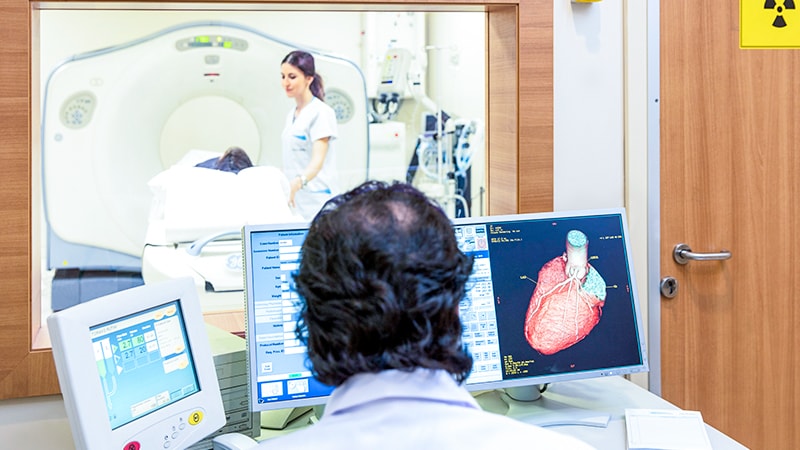
Cardiovascular magnetic resonance (CMR) demonstrated diagnostic discordance with transthoracic echocardiography (TTE) in 74% of patients, identifying heart failure with preserved ejection fraction (HFpEF) in 46% of patients with normal TTE findings. CMR markedly improved diagnostic precision by identifying specific cardiac conditions that TTE frequently missed or incorrectly diagnosed.
METHODOLOGY:
- Researchers analysed data from the prospective PREFER-CMR registry between February 2022 and July 2024, including 261 “all-comer” patients who underwent standard TTE followed by clinically indicated CMR.
- The analysis included only individuals with CMR-derived left ventricular filling pressure exceeding 14 mm Hg; all CMR examinations were conducted using a 1.5 Tesla Magnetom Sola system.
- Imaging protocols incorporated late gadolinium enhancement and T1 mapping techniques for myocardial tissue characterisation.
- The primary outcome was the rate of diagnostic discordance between TTE and CMR.
TAKEAWAY:
- Among patients with normal TTE findings, CMR identified HFpEF in 46% (n = 25) and ischaemic heart disease (IHD) in 19% (n = 10).
- Among patients with nonspecific left ventricular hypertrophy on TTE (n = 47), CMR revealed HFpEF in 45% (n = 21) and hypertrophic cardiomyopathy (HCM) in 34% (n = 16), highlighting CMR’s key role in refining diagnoses in this cohort.
- In patients with nondiagnostic TTE findings (n = 15), CMR provided diagnostic clarity, identifying HFpEF in 53.3% (n = 8) and IHD in 26.7% (n = 4).
- In patients with suspected HCM on TTE (n = 20), CMR confirmed the diagnosis in 75% (n = 15) and identified HFpEF in 10% (n = 2) and valvular heart disease in 10% (n = 2) of patients.
IN PRACTICE:
“CMR markedly improves diagnostic precision and subphenotyping in patients with elevated LVFP [left ventricular filling pressure], identifying key conditions like HFpEF, IHD, and specific cardiomyopathies that [echocardiography alone cannot detect],” the authors wrote.
“These findings underscore the essential role of CMR in refining diagnosis and guiding clinical management,” they added.
SOURCE:
The study was led by Aradhai Bana, University of East Anglia, Norwich, England. It was published online on January 14, 2026, in BMJ Open.
LIMITATIONS:
The study cohort came from a single-centre prospective registry, a design that may have introduced referral bias by including only patients who underwent both TTE and CMR. The study focused on patients with elevated CMR-derived left ventricular filling pressure, limiting generalisability to populations with normal filling pressures or early-stage disease. The absence of an independent reference standard to adjudicate discrepancies between CMR and TTE may have biased the definition of diagnostic discordance in favour of CMR. Additionally, the lack of systematically collected clinical outcome data prevented the assessment of the findings’ impact on patient outcomes.
DISCLOSURES:
The study was funded by the Wellcome Trust. One author disclosed serving as a clinical advisor for Pie Medical Imaging and Medis Medical Imaging and working as a consultant for Anteris Technologies and Edwards Lifesciences. The other authors declared having no conflicts of interest.
This article was created using several editorial tools, including AI, as part of the process. Human editors reviewed this content before publication.
<













Leave a Reply