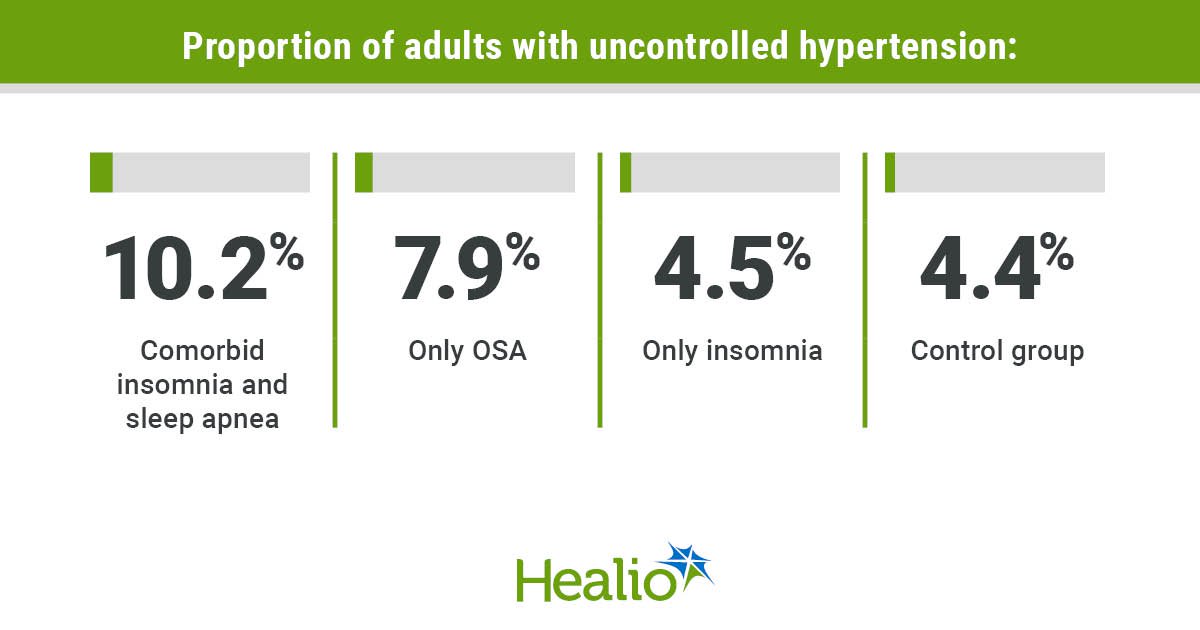
In our practice, we regularly work with COMISA. But as an independent study, this is a unique publication showing the interaction between insomnia and sleep apnea as a cause for uncontrolled hypertension. It will be very enlightening for us to sit down with our patients and cite research showing that if they do suffer from these two conditions together, the likelihood of having blood pressure issues tends to be much greater. This will give patients a broader view of what sleep apnea is and how it can relate to other areas of their health. This study is impactful, since it highlights COMISA as a strong risk factor that will hopefully bring awareness to patients and physicians about the broad spectrum of how pathologies interact with sleep disorders. Clinicians can improve care by not only focusing on optimization of sleep apnea therapy (positive airway pressure therapy, hypoglossal nerve stimulation, mandibular advancement devices or position modification) but by paying close attention to the sleep habits of patients and considering cognitive behavior modification therapy to the patients that come for sleep disorder breathing evaluation. Since insomnia is strongly associated with sleep disordered breathing, tackling sleep hygiene, proper bedtime, proper rise time, avoidance of electronics prior to bedtime, etc, are very important steps to consider at the initial evaluation and the follow-up visits. In future studies, the next step should focus on blood pressure outcomes when both conditions are treated. Is cognitive behavior modification and sleep disordered breathing treatment alone equivalent to cognitive behavior modification plus treatment for sleep disordered breathing plus a sleep aid? A lot of patients come to our clinic looking for an easy fix. Currently, people always want a magical tablet. Whether it’s for insomnia, weight loss, sleep disordered breathing or hypertension, everybody wants to take one drug and fix everything. Looking forward, we should ask if drugs are the solution for this, or if we are better off just focusing on the optimization of the sleep apnea with congruent cognitive behavior modification therapy. Will that give the same benefit for the treatment of uncontrolled hypertension related to COMISA? Additionally, we should be focusing on encouraging patients to get 7 or more hours of sleep on a regular basis since sleep deprivation contributes to several of today’s public health crises. We also need to de-stigmatize OSA. You don’t need to have obesity to have sleep apnea. In our patient population, there are a significant number of patients that have a normal BMI but have OSA and would benefit from screening. Another population that we need to focus on is women because they tend to underestimate their symptoms, and bed partners are less likely to report snoring. It’s also very important to mention that insomnia, by itself, is very predominant in the general population. About 35% of adults may have brief symptoms of insomnia. Further, about 10% of the population could have chronic insomnia, which is a significant amount and impacts family and health care. This is costly to both public health and resource utilization. A 2016 paper showed that health care spending for insomnia cost around $5.1 billion annually. In certain cases, over $100 billion a year is spent indirectly because of poor work performance, increased health care utilization and increased accident risk in patients with insomnia, according to Wickwire and colleagues. There is also a large number of patients in the U.S. that suffer from OSA that have been underdiagnosed. As physicians, it’s important that we discuss sleep with our patients regularly, regardless of specialty, as it plays a vital role in overall health and wellbeing. References:
Dieleman JL, et al. JAMA. 2016;doi:10.1001/jama.2016.16885. What is insomnia? https://sleepeducation.org/sleep-disorders/insomnia/. Published September 2020. Accessed Jan. 22, 2026. Wickwire EM, et al. Sleep Med Rev. 2016;doi:10.1016/j.smrv.2015.11.004.
Alexandre Rocha Abreu, MD
Spokesperson and Board Member, American Academy of Sleep Medicine
Disclosures: Abreu reports no relevant financial disclosures.














Leave a Reply