
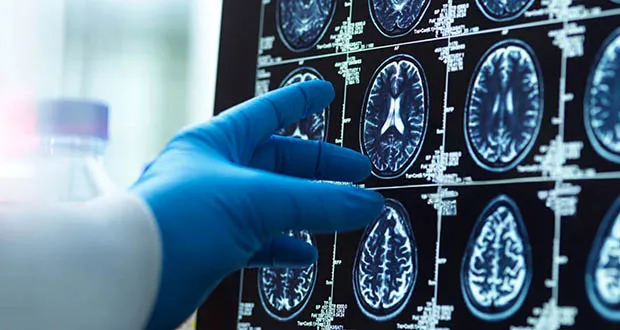
Summit to mark Brain Awareness Week highlights role Ireland can play in developing neurological care as it holds EU presidency later this year
Europe is on the ‘crest of a wave’ towards a neurological strategy as Ireland prepares to take the reins of the EU presidency in the second half of 2026, the head of the Neurological Alliance of Ireland (NAI) has said.
Magdalen Rogers was speaking at the European Brain Health Summit, an annual event run by the European Academy of Neurology (EAN) in Brussels to mark Brain Awareness Week.
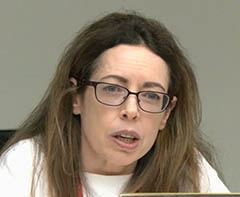
Magdalen Rogers
Referring to the last time Ireland held the presidency of the EU, in 2013, Ms Rogers said there has been ‘ever growing momentum’ towards a Europe-wide strategy around neurological conditions, which impact 300 million people across the EU.
“We feel we’re on the crest of a wave for an EU-wide neurological strategy,” she told the summit.
“Ireland brings significant strengths to that space… In Ireland, we’ve seen individual policies around stroke, neurology, epilepsy, neuro-rehabilitation, neurology. We’ve seen all of these learn from each other. We’ve seen a vibrancy around neurological conditions.
We also have seen neuroscience research advance incredibly in Ireland,” she added. “And we also have a really strong life sciences sector. So I think there’s a real momentum for Ireland to drive this forward.”
However, she warned that any neurological strategy should also be developed alongside other key health policies including digital transformation, prevention and life sciences.
“I would say not to lose sight of the rest of health policy, the rest of the strategic initiatives that are coming and being developed across Europe and that Ireland has sent a strong signal of in its presidency.”
“It’s really important not to lose sight of that – to keep our goal of having a neurological strategy for Europe, but also to keep an eye on the health policy space in the meantime and to make sure that neurology has a voice there.”
Ireland takes on the presidency of the EU – a position that is rotated among member states – for six months from this July.
Dr Seán O’Dowd, consultant neurologist at Tallaght University Hospital and Irish delegate to EAN, said that clinicians in his field would like to see fairness in how neurological disorders are addressed in Europe.
“It’s about seeking strategic parity for neurological disorders, the importance of access to treatment; of access to interventions beyond just medicines,” he said, “and neuro-rehabilitative interventions – for example, access to preventive strategies, both for those who are well, but for those who are also affected by neurological disorders in terms of secondary prevention.”
He said that, in discussions with other national neurological groups on the issue, fairness in how these conditions are treated across the EU was a key theme.
“I think that’s something that really can resonate with our policymakers – giving a fair chance and strategic equity to neurological disorders, both for people who are affected and living with neurological disorders and their families, but also in terms of fairness across the EU so that we reach kind of a more cohesive approach.”
Tomás Ryan, advocacy committee chair of the Federation of European Neuroscience Societies, said that he hopes Ireland can be a leader in neurological health and sciences during the presidency.
“The harmonisation of research and training – everyone agrees that this should happen,” he said. “Creating frameworks where that actually happens is much more difficult.
“When you look at the Irish situation, we send a lot of medical doctors and scientists abroad. If you go into MIT, Harvard or Columbia University in America, any given lab you’re going to find it full of people from Ireland. But we just don’t recruit them back. Many European countries have the same story.
He added: “I think part of it (the EU presidency) is about developing Ireland to be a leading competitive environment for doing brain health, doing brain research and crucially having collaborations between clinicians and researchers.
“But it’s also about using Ireland as a vessel to provide leadership for the European brain community over the next six months.”
<











Leave a Reply