
January 23, 2026
2 min read

Key takeaways:
- State health officials said they are investigating potential deaths.
- A source for the outbreak has not been identified.
At least 36 people have been sickened in a histoplasmosis outbreak in middle Tennessee, according to state health officials, who said they are investigating potential deaths linked to the cluster.
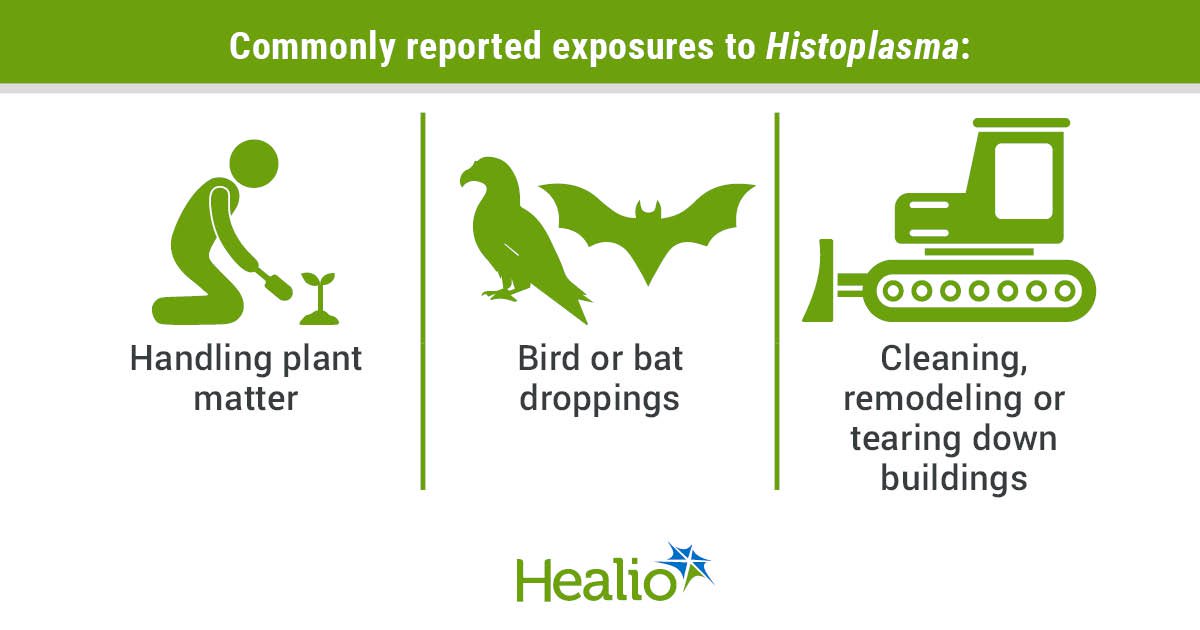
Histoplasmosis is a rare respiratory infection caused by inhaling spores of a fungus, Histoplasma capsulatum, that is commonly found in soil, especially if it is contaminated with bird or bat droppings. It can cause symptoms common to pneumonias, including fever, chills, cough, fatigue and chest pain, according to the CDC. Symptoms typically emerge within 3 to 17 days after exposure to the fungus.

Data derived from Smith DJ, et al. Emerg Infect Dis. 2024;doi:10.3201/eid3010.231700.
The illness, which is more common in rural areas, cannot spread between humans and is not transmitted from humans to animals. The CDC recommends early testing and antifungal treatment to help prevent severe infections.
It is critical for immunocompromised individuals to seek medical attention if they show symptoms consistent to the illness, according to Sandra R. Arnold, MD, MSc, chief of pediatric infectious diseases at Le Bonheur Children’s Hospital in Memphis, Tennessee.
“If you are immunocompromised … you should seek care promptly if you have a respiratory illness or just a fever that is not improving after a few days,” Arnold said in an email to Healio.
The fungus that causes histoplasmosis was historically most prevalent in the Ohio River and Mississippi River basins, which includes Tennessee, although its geographic range in the United States has expanded. A source of the Tennessee outbreak near Nashville in Williamson and Maury counties has not been identified.
“This is nothing new to Tennessee and we see this in patients across the state every year, but we’re trying to take a closer look in this instance to make sure that there is not something else people can do to protect themselves,” Mary-Margaret Fill, MD, MPH, interim state epidemiologist at the Tennessee Department of Health, told the Williamson County Board of Commissioners at a Jan. 12 meeting.
It can be tricky to investigate a histoplasmosis outbreak, Arnold said.
“Since histoplasmosis looks like so many other illnesses and there are many asymptomatic and mild infections, it will be difficult to assess the extent of the outbreak and to determine the source,” she said.
Last year, the Infectious Diseases Society of America began updating its clinical practice guidelines for managing histoplasmosis for the first time in 18 years.
“It’s really important to keep guidelines updated to address advances in what we know about diseases,” Arnold said. “I think that the guideline updates also serve to remind people of these diseases that are not as commonly diagnosed as others.”
For more information:
Sandra Arnold, MD, MSc, can be reached at sarnold5@uthsc.edu.
Sources/Disclosures
References:
Disclosures:
Arnold reports no relevant financial disclosures.

Ask a clinical question and tap into Healio AI’s knowledge base.
- PubMed, enrolling/recruiting trials, guidelines
- Clinical Guidance, Healio CME, FDA news
- Healio’s exclusive daily news coverage of clinical data
<













Leave a Reply