
January 20, 2026
1 min read

Key takeaways:
- Even 0.25 D of residual cylinder can lead to dissatisfied refractive cataract surgery patients.
- Surgeons should pay attention if patients say their eyes are dry.
WAIKOLOA, Hawaii — Minimizing residual sphere and cylinder is one method of ensuring patient satisfaction after refractive cataract surgery, according to a speaker.
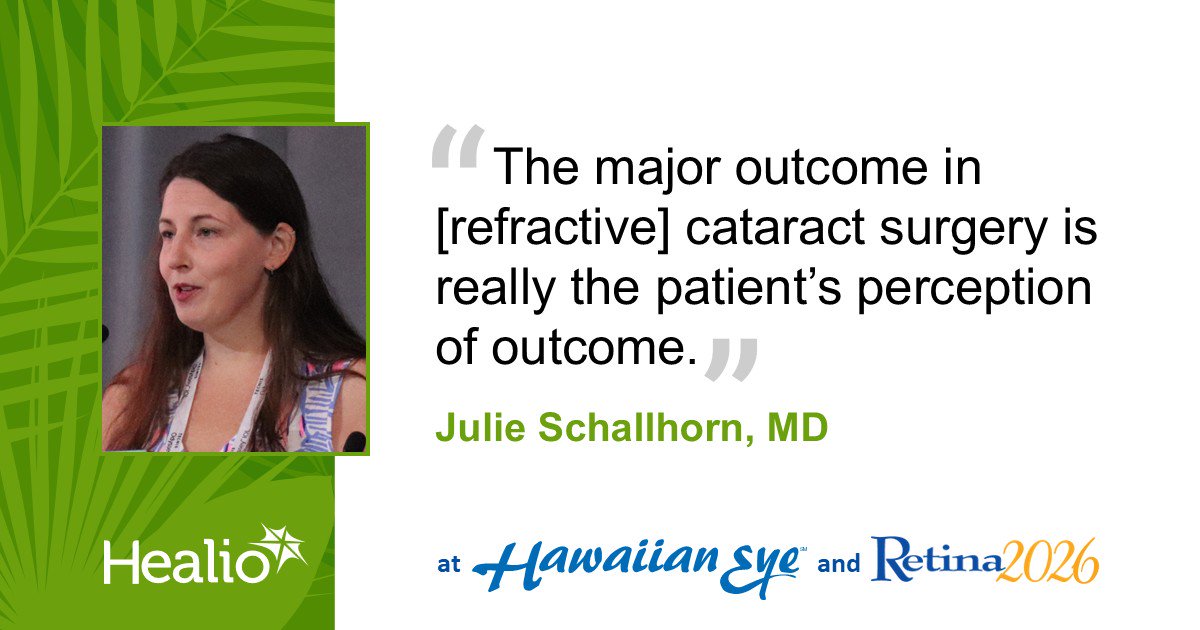
“The major outcome in [refractive] cataract surgery is really the patient’s perception of outcome,” Julie Schallhorn, MD, said at Hawaiian Eye 2026. “It’s not what you measure them at or their postoperative refraction. It’s how happy they are. That comes down to a very existential question: What makes people happy?”

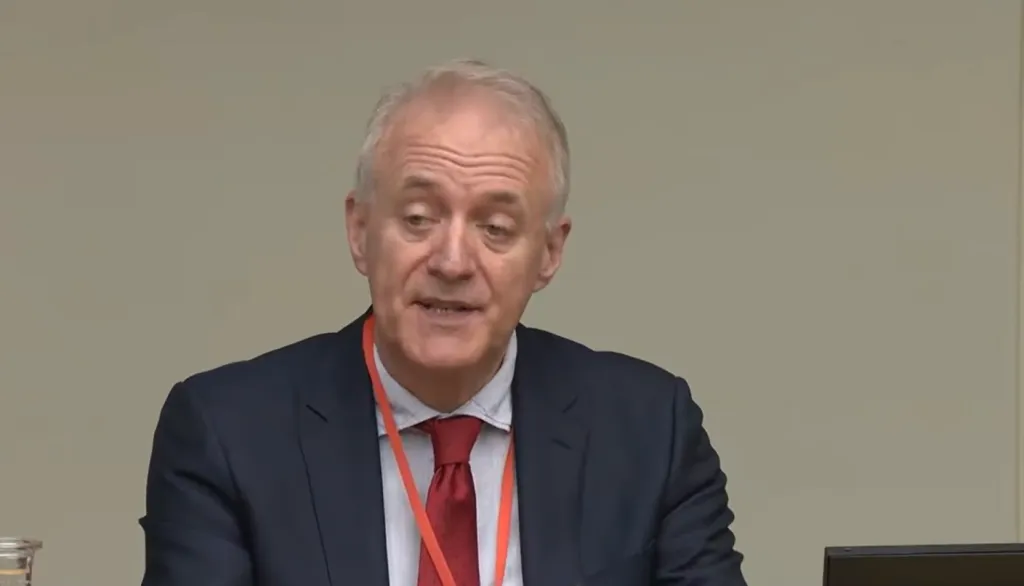
Image: Eamon N. Dreisbach | Healio
Schallhorn said patients are twice as likely to be unhappy in a monofocal lens if they have 0.5 D of residual sphere after surgery.
“If someone wants plano, and you’re putting in a monofocal lens, aim for the lens closest to plano,” she said.
Multifocal lenses are “exquisitely sensitive” to patient satisfaction, Schallhorn explained. Even deviations of 0.25 D in these patients can lead to dissatisfaction, so postoperative touch-ups should be considered.
“Nailing that refractive outcome really matters in multifocal lenses,” she said. “Residual cylinder is also associated with dissatisfaction. The interesting thing about this is that this effect starts even at 0.25 D of residual cylinder and really becomes pronounced at 0.5 D.”
Dry eye disease is the single largest modifiable factor influencing patient satisfaction, Schallhorn said.
“If somebody tells you their eyes are dry, listen to them,” she said. “In every study I’ve ever run, dry eye is a major predictor of dissatisfaction. Drive to make patients happy and drive for better uncorrected distance acuity.”
Sources/Disclosures
Source:
Schallhorn J. Aiming for plano: The role of refractive targeting in patient satisfaction. Presented at: Hawaiian Eye 2026; Jan. 17-23, 2026; Waikoloa, Hawaii.
Disclosures:
Schallhorn reports no relevant financial disclosures.

Ask a clinical question and tap into Healio AI’s knowledge base.
- PubMed, enrolling/recruiting trials, guidelines
- Clinical Guidance, Healio CME, FDA news
- Healio’s exclusive daily news coverage of clinical data
<










Leave a Reply