
April 27, 2026
4 min read
Key takeaways:
- Murad Alam, MD, MBA, MSCI, FAAD, starts his term as president of the American Academy of Dermatology.
- New AAD leadership outlines plans to address important issues that dermatologists face today.
The newly elected leadership for the American Academy of Dermatology intends to address the primary issues that plague dermatologists today, including low reimbursement and limited resources.
At the American Academy of Dermatology Annual Meeting, Murad Alam, MD, MBA, MSCI, FAAD, vice chair of the department of dermatology and professor at Northwestern University Feinberg School of Medicine, assumed his 1-year term as president of the AAD. His successor, Andrew H. Weinstein, MD, MPH, FAAD, dermatologist and Mohs surgeon in Boynton Beach, Fla., and associate volunteer professor at University of Miami, was installed as president-elect and will start his role as president in March 2027. Jane M. Grant-Kels, MD, FAAD, professor of dermatology, pathology and pediatrics, vice chair of the department of dermatology, director of the Cutaneous Oncology Center and Melanoma Program and assistant residency program director at UConn Health, will be installed as president-elect, with her term starting in March 2028.

Improved access to care, reimbursement
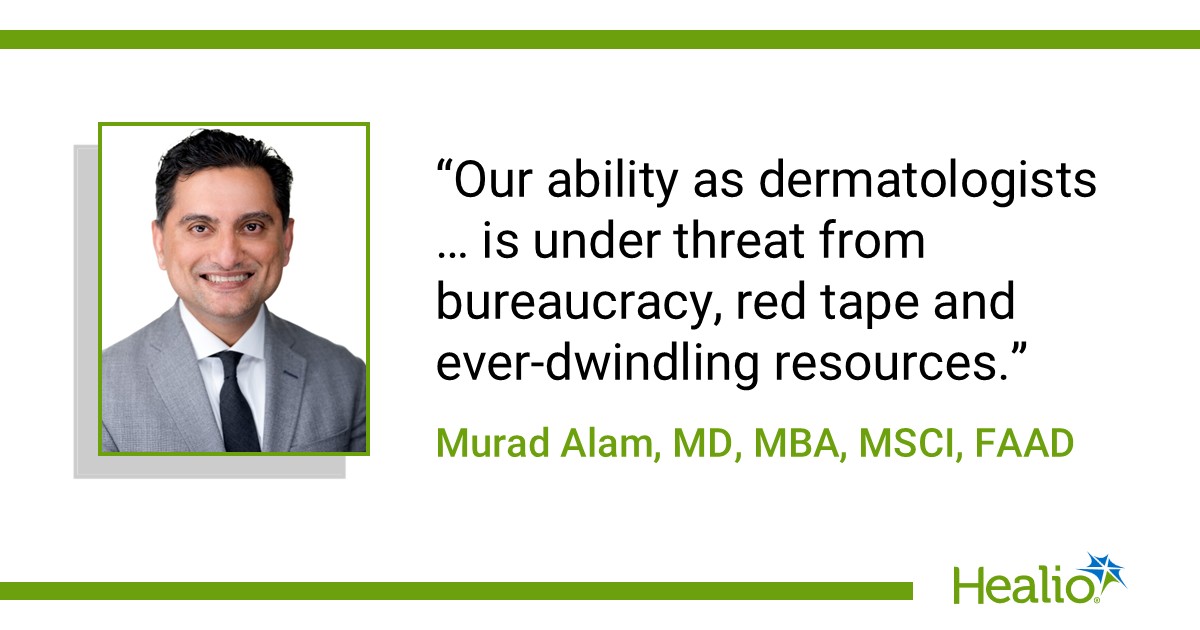
“At present, our ability as dermatologists to provide timely and effective care for our patients is under threat from bureaucracy, red tape and ever-dwindling resources,” Alam told Healio. As AAD president, Alam plans to “highlight these problems and then work with wonderful colleagues and patients to find ways to improve access to dermatologic care.”
When asked about other goals for his term, Alam said “the access to care model is broken,” noting that challenges such as insurance rules, declining resources and paperwork impact timely care and necessary treatment.
“We need resources to support dermatology practices, keep the lights on, pay nurses, schedulers and others, and buy the equipment required to care for patients,” Alam told Healio. “There is less money to provide the same care now than there was 20 years ago, which makes no sense. It is simply not workable, and Americans are paying the price in terms of reduced access to top-quality care.”
Medicare reimbursement through the physician fee schedule is the most challenging issue dermatologists face, according to Weinstein, who ran for president on the promise that his “immediate and only” priority would be stabilizing Medicare payment.

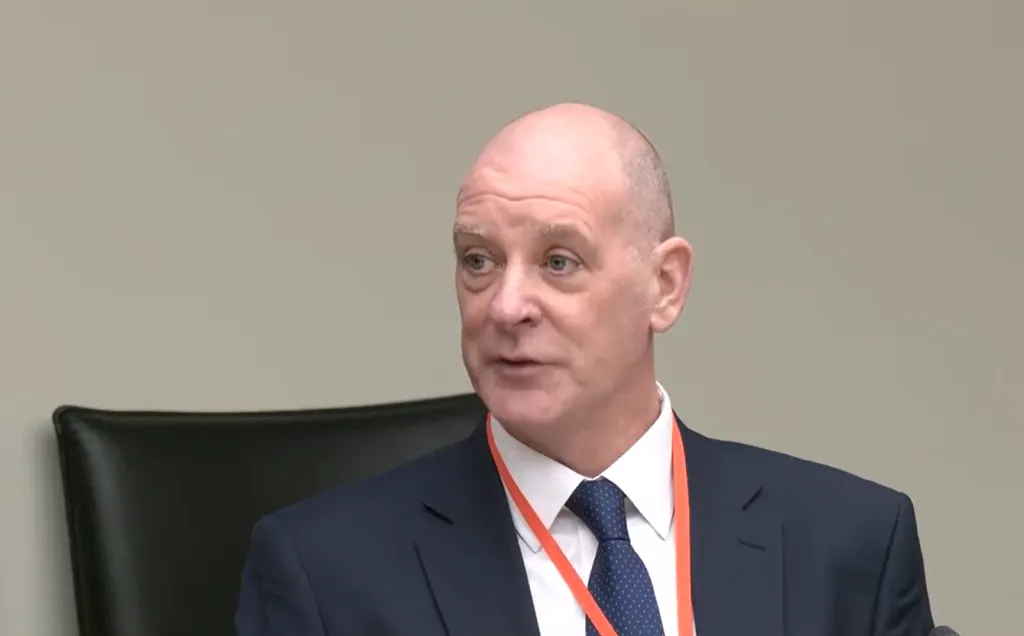
Andrew H. Weinstein
“You can trace every ill — physician burnout, access to care, the over-representation of doctors in urban areas and the under-representation of doctors for the underserved and all else — to this broken fee schedule,” Weinstein told Healio. “It is making it impossible for young doctors to leave residency and open an office. By ignoring an inflation-based adjustment to the physician fee schedule and cutting Medicare, Congress is playing a very dangerous game and making it impossible for these brilliant young doctors to go out and do what they were trained to do.”
As Healio previously reported, Medicare reimbursement for physician services declined 33% from 2001 to 2025, when adjusted for inflation. On Oct. 31, CMS issued the 2026 Medicare Physician Fee Schedule final rule, increasing the alternative payment model (APM) conversion factor by 0.75% and the nonqualifying APM conversion factor by 0.25% from the current APM conversion factor of $32.35. The final rule also included a 2.5% increase to the Medicare physician fee schedule conversion factor for services rendered in 2026.
Despite these increases, physicians are still reimbursed less than they were in 1998, Weinstein said.
“The conversion factor was about $35 in 1998,” Weinstein said. “If you adjust for inflation, the conversion factor should be $70 today. It is absolutely stunning.”

Jane M. Grant-Kels
“Dermatology and the house of medicine have many issues to confront, with one of the biggest being declining reimbursements and rising costs,” Grant-Kels told Healio. “My No. 1 advocacy goal would be to increase Medicare physician practice reimbursement.”
‘The most important goal before us’
During his term, Alam said the first step will be directing efforts toward tackling the access to care issue.
“We will assemble some of the smartest and best-informed AAD members and ask them to develop strategies to overcome the money problem and find resources to better support our patients,” Alam said. “This is the most important goal before us. … We need to understand what we are doing right and what we need to improve. We need to understand how to lobby the government more effectively, work in unison with others, have more physicians in positions where they can influence policy, involve patients and train ourselves to be better advocates.”
When he assumes the presidency, Weinstein said he plans to take steps to mobilize patients through national campaigns with Congress, boost public relations by utilizing news outlets and social media, limit political action committee funding to causes backing fee schedule updates and more, according to his campaign website.
“There is going to be a change in methods,” Weinstein told Healio. “We have an advocacy apparatus that can be honed to tackle this problem, but it hasn’t. Our organization, and our organization only, is capable of addressing this issue.”
Other initiatives
Alam said the AAD also plans to address AI’s role in dermatology.
“AI is obviously the motive force of our time, but we need to better understand what the AAD specifically can and should do in this area to support our members,” Alam told Healio.
Another goal is to “better understand how to involve and serve” all AAD members, including the rising generation of dermatologists, Alam said.
“Serving the next generation of dermatologists will allow them to get what they want from the AAD and, in return, the AAD will learn from their experiences and harness their energies to become better and more effective,” Alam told Healio.
For more information:
Murad Alam, MD, MBA, MSCI, FAAD, can be reached at president@aad.org.
Jane M. Grant-Kels, MD, FAAD, can be reached at grant@uchc.edu.
Andrew H. Weinstein, MD, MPH, FAAD, can be reached at andy4aadpres.com.
Sources/Disclosures
Source:
Healio Interviews
References:
- Vote Andy. https://andy4aadpres.com/. Accessed April 22, 2026.
- Andrew H. Weinstein, MD, MPH, FAAD, elected American Academy Of Dermatology president for 2027. https://www.aad.org/news/aad-president-2027-andrew-weinstein. Published March 31, 2026. Accessed April 22, 2026.
- Calendar Year (CY) 2026 Medicare Physician Fee Schedule Final Rule (CMS-1832-F). https://www.cms.gov/newsroom/fact-sheets/calendar-year-cy-2026-medicare-physician-fee-schedule-final-rule-cms-1832-f#:~:text=Oct%2031%2C%202025-,Calendar%20Year%20(CY)%202026%20Medicare%20Physician%20Fee%20Schedule%20Final%20Rule,innovation%20for%20all%20Medicare%20beneficiaries. Published Oct. 31, 2025. Accessed April 22, 2026.
- Murad Alam, MD, MSCI, MBA, FAAD, assumes presidency of the American Academy of Dermatology. https://www.aad.org/news/murad-alam-assumes-presidency-aad. Published March 27, 2026. Accessed April 22, 2026.
Disclosures:
Weinstein reports having financial relationships with Dermatology Times, Leo Pharma, MedX Health, NuVida Medical, Organogenesis, Regeneron, Sensus Healthcare, Sun Pharmaceutical Industries and Verrica Pharmaceuticals. Alam and Grant-Kels report no relevant financial disclosures.

Ask a clinical question and tap into Healio AI’s knowledge base.
- PubMed, enrolling/recruiting trials, guidelines
- Clinical Guidance, Healio CME, FDA news
- Healio’s exclusive daily news coverage of clinical data
<









Leave a Reply