
April 24, 2026
2 min read

Key takeaways:
- Individuals who received duodenal mucosal resurfacing maintained more than 80% of their weight loss after tirzepatide withdrawal.
- The sham group regained about 40% more weight than duodenal mucosal group.
CHICAGO — Duodenal mucosal resurfacing helped prevent weight regain following tirzepatide discontinuation, according to research presented at Digestive Disease Week.
Data from the randomized REMAIN-1 trial showed that individuals who did not undergo duodenal mucosal resurfacing (Revita, Fractyl Health) regained approximately 40% more weight than those who received the investigational outpatient procedure.

“This procedure could fundamentally change how we think about GLP-1 therapy, providing an off-ramp for patients who either can’t or don’t want to be on these drugs long term with a minimally invasive procedure to lock in the metabolic benefits,” Shelby Sullivan, MD, director of the endoscopic bariatric and metabolic program at Dartmouth Health Weight Center and professor of medicine at Dartmouth Geisel School of Medicine, said in a media briefing prior to the meeting.
GLP-1s are used by one in five adults with obesity, but nearly 70% of patients discontinue use within the first year, according to study background. Stopping the medications can lead to weight regain.
Interventions are needed to prevent weight regain following GLP-1 cessation.
“GLP-1 medications have been a genuine breakthrough for people with obesity,” Sullivan said. “When these patients stop, the impact is twofold: The metabolic benefits are lost and … they experience a weight rebound, with most regaining their lost weight within 18 months on average.”
Sullivan and colleagues conducted the randomized, double-blind, sham-controlled REMAIN-1 trial to assess efficacy and safety of duodenal mucosal resurfacing following tirzepatide withdrawal.
The trial included 45 adults (median age, 43 years; 80% women) with a BMI of 30 to 45 kg/m2 who achieved at least 15% total body weight loss with tirzepatide before discontinuation. Eligible participants had no prior GLP-1 use and did not have diabetes.
Researchers randomly assigned individuals 2:1 at least 1 week after tirzepatide withdrawal to duodenal mucosal resurfacing (n = 29) or sham procedure (n = 16). Both cohorts received structured lifestyle counseling.
At 3-month follow-up, individuals who underwent duodenal mucosal resurfacing lost an additional 2.1 kg on average, while patients in the sham group regained about 8.2 kg on average (treatment difference = 10.3 kg).
At 6 months, patients who received the sham procedure regained approximately 40% more weight on average than those in the investigative group.
Additionally, patients who underwent longer length tissue resurfacing maintained more than 80% of their weight loss. In comparison, patients in the sham group regained approximately twice the weight.
Researchers noted no definite or probable treatment-emergent serious adverse events related to the procedure.
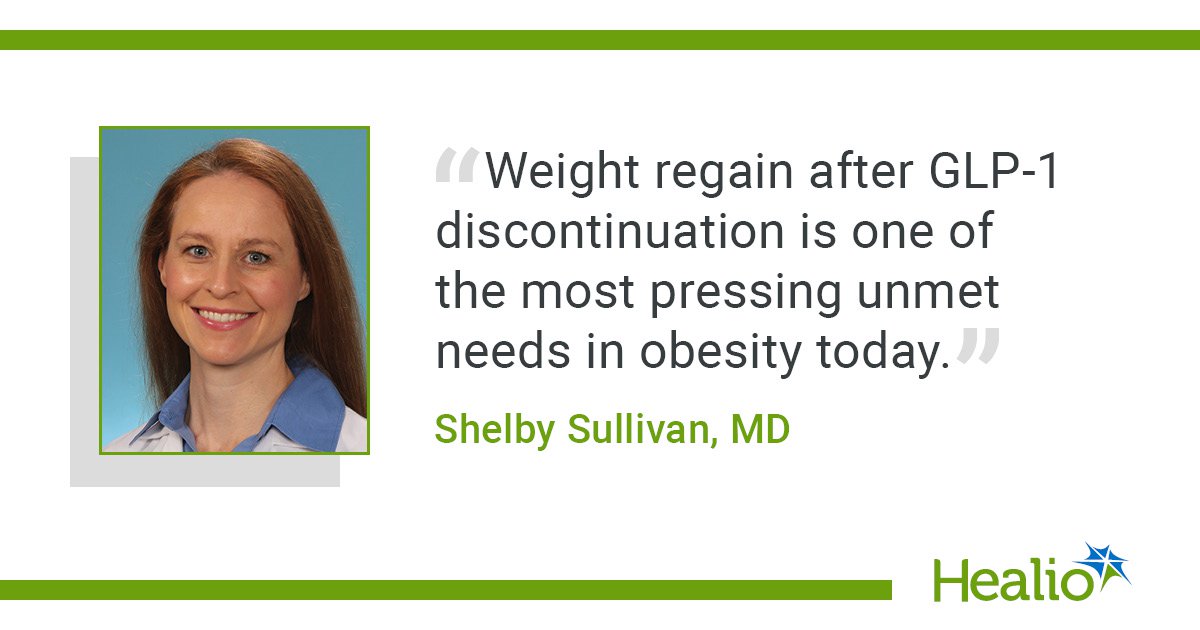
“We know that weight regain after GLP-1 discontinuation is one of the most pressing unmet needs in obesity today,” Sullivan said.
“These early findings suggest that duodenal mucosal resurfacing may offer a real long-term solution, one that resets the gut’s biology, rather than requiring lifelong pharmacotherapy,” she added.
Six-month primary endpoint data from the REMAIN-1 Pivotal Cohort is expected later this year.
Sources/Disclosures
Source:
Sullivan S, et al. Duodenal mucosal resurfacing prevents weight gain after tirzepatide withdrawal: REMAIN-1 multicenter, randomized, double-blind, sham-controller clinical trial – midpoint cohort results. Presented at: Digestive Disease Week; May 2-5, 2026; Chicago.
Disclosures:
Healio could not confirm relevant financial disclosures at time of publication.

Ask a clinical question and tap into Healio AI’s knowledge base.
- PubMed, enrolling/recruiting trials, guidelines
- Clinical Guidance, Healio CME, FDA news
- Healio’s exclusive daily news coverage of clinical data
<











Leave a Reply