
February 02, 2026
3 min read
Alex Pretti, an ICU nurse at the Minneapolis VA Medical Center, was shot and killed by federal agents while trying to protect a woman being pushed to the ground. For many in health care, this story hit hard. It felt immediate and personal.
In my medicine group chats, which usually focus on shift swaps, schedule screenshots and jokes after long nights, this story kept coming up. These are not places where people often discuss current events.

Yet this time, those who rarely post quietly shared the link. Sometimes they did not add any comments at all, just a simple note that read, “This one really got me.”
For those of us in health care, it was easy to understand why.
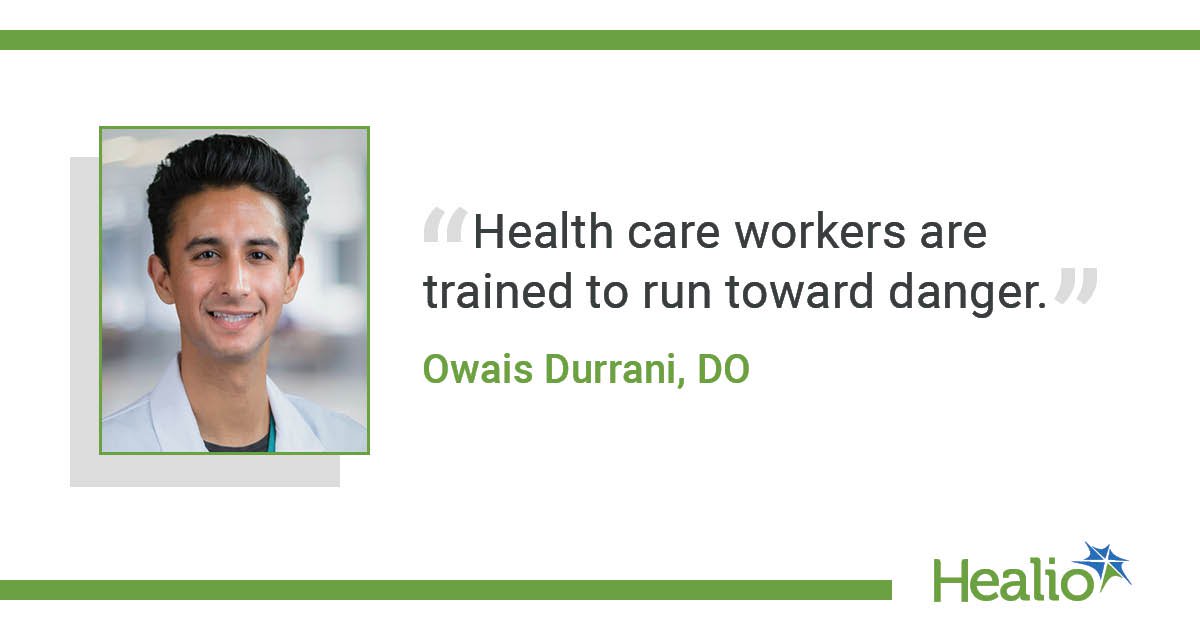
Health care workers are trained to run toward danger. It is not just a saying. It is ingrained in us. When an alarm goes off, we move. When someone collapses, we step in. When others hesitate, we act.
You can see this when a medical emergency happens at an airport and clinicians quickly identify themselves to help. It is clear when a code blue sounds in a hospital and staff rush toward the room instead of away from it. It is evident in disaster areas and war zones, where doctors and nurses work amid constant threats to care for strangers.
And yes, it happens in our own communities — on the streets, during protests and in public spaces — when someone looks vulnerable and a health care worker feels compelled to help.
This instinct is essential to our field. We are trained, both consciously and unconsciously, to notice when someone is in distress and to step in when we can do so safely. We assess. We advocate. We de-escalate. We protect. Often, we do this without knowing how things will turn out.
That context matters. When clinicians saw this story unfold, many recognized themselves, not just in the instinct to help, but in the vulnerability that comes with intervening. The fear that doing the right thing can escalate quickly. That good intentions can be misunderstood. That protection can be seen as a threat.
So, what is the solution?
The answer is not to tell health care workers to stop intervening. We should not ask clinicians to suppress the instincts they have trained for years to develop. The instincts to protect, to de-escalate, and to stand between harm and another person are strengths, not flaws.
Health care professionals spend years learning with restraint. We are taught to slow scenes down, not speed them up. To read body language. To recognize fear. To de-escalate before force is ever considered. We protect life even when emotions are running high and information is incomplete.
The principles that guide health care workers in moments of crisis like restraint, communication and de-escalation are relevant across all professions entrusted with public safety, including law enforcement.
In the ED, I work side by side with law enforcement every day. Officers bring in victims and suspects alike. They stand at the bedside during some of the most chaotic and emotionally charged moments of people’s lives.
Traditionally, that relationship has been one of teamwork. We each have a role. When it works well, it is built on communication, trust and a shared goal of keeping people safe.
We cannot allow that relationship to erode.
Because of that responsibility, training and accountability play a critical role in helping ensure restraint and clarity, especially in encounters with civilians whose instinct is to help rather than harm.
This is not about blaming individuals. It is about expectations. When someone steps in to protect another person, the response should begin with communication, clarity and restraint. The instinct to help should be recognized and assessed. Deescalation should be the norm.
Health care workers understand that mistakes carry consequences. We are reviewed, reported, retrained and held accountable. That accountability is part of what builds trust. It should not be unique to medicine.
The strong response to this story among clinicians is not political. It is professional. It reflects what happens when people trained to protect see that instinct collide with systems that appear to fail to meet the same standards of restraint, communication and care.
When clinicians who manage crisis every day recognize a shared concern, it should prompt reflection. Not to debate or assign blame, but to remind us that all professions charged with public safety should be supported and held accountable in ways that preserve trust rather than undermine it.
For more information:
Sources/Disclosures
Disclosures:
Durrani reports no relevant financial disclosures.

Ask a clinical question and tap into Healio AI’s knowledge base.
- PubMed, enrolling/recruiting trials, guidelines
- Clinical Guidance, Healio CME, FDA news
- Healio’s exclusive daily news coverage of clinical data
<







Leave a Reply