
April 21, 2026
3 min read
Key takeaways:
- A speaker talked about recent studies that were widely viewed and topical to clinical practice.
- Among the findings were a rise in nightmare bacteria and the Mediterranean diet showing effectiveness for IBS.
SAN FRANCISCO — A speaker at ACP’s Internal Medicine Meeting discussed several articles recently published in Annals of Internal Medicine that are of particular relevance to primary care providers.
During the presentation, Christina Wee, MD, MPH, FACP, senior deputy editor and vice president of Annals of Internal Medicine, highlighted articles that generated high views, almetric scores and attention from media, were topical to clinical practice, and are a priority area for ACP.
Aluminum-adsorbed vaccines and chronic diseases
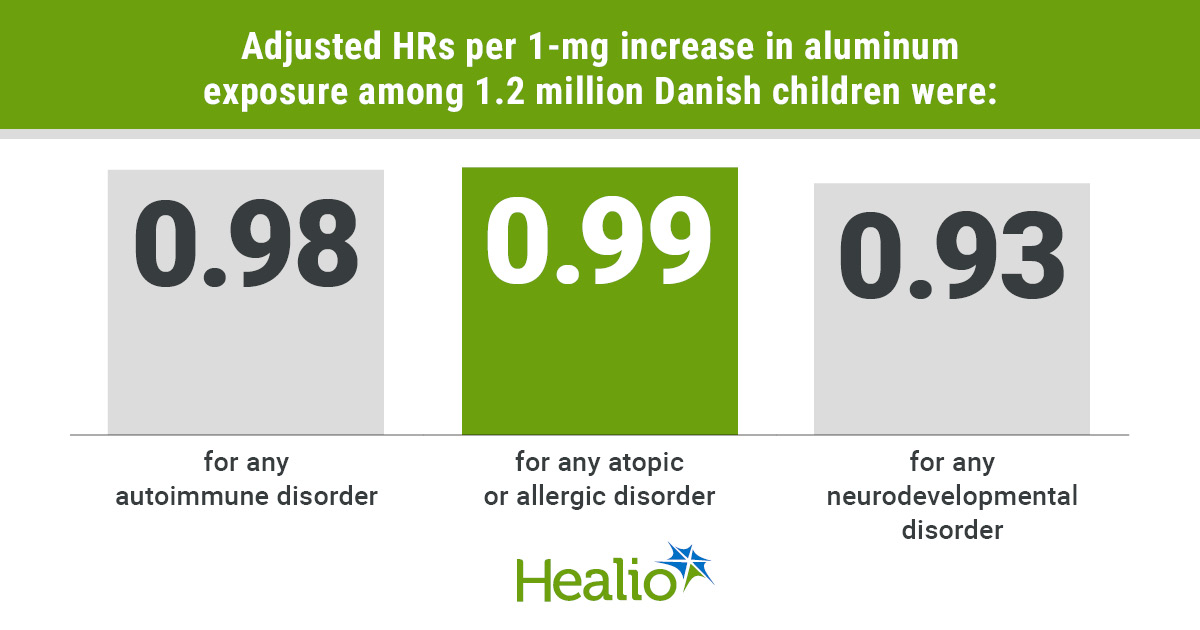
Among the articles was a Danish-based nationwide cohort study, where the researchers found that aluminum-adsorbed vaccines were not tied to 50 allergic, autoimmune or neurodevelopmental disorders among 1,224,176 youth.
The study drew further attention after HHS Secretary Robert F. Kennedy Jr. in an opinion piece criticized its limitations and called for Annals of Internal Medicine to retract it, which the journal did not.
Wee pointed out that the incidence of chronic diseases in youth was rare, with incidence rates ranging from 0.8 to 50.5 per 100,000 person-years.
Because some of the chronic conditions “had pretty wide CIs,” she said, the researchers “couldn’t exclude small relative increases in risk for some of the conditions.”

Wee also noted that “as with any observational studies,” the analysis possessed several limitations, including misclassification of outcomes, residual confounding and a shorter follow-up.
Still, “by and large, their findings were not compatible with a moderate or large increased risk associated with aluminum in vaccines and most compatible with no increase in risk for most of the outcomes,” she said.
Mediterranean diet promising as IBS treatment
Another analysis indicated that the Mediterranean diet has potential as a first-line treatment for irritable bowel syndrome.
IBS “is a complicated condition that’s managed via diet, medication and behavioral interventions,” Wee said, with American and British gastrointestinal societies recommending traditional dietary advice vs. the low fermentable oligosaccharides, disaccharides, monosaccharides and polyols diet.
But she pointed out that recent cross-sectional studies suggest the Mediterranean diet “may hold some promise” as a treatment strategy.
In the randomized controlled trial, 62% of 68 people with IBS assigned to the Mediterranean diet for 6 weeks achieved a 50-point or greater reduction in the IBS Symptom Severity Scale compared with 42% of 71 people assigned to traditional dietary advice.
The Mediterranean diet “primarily produces improvement through a reduction in abdominal pain,” Wee said.

She acknowledged there were several important limitations, as it “was a small study. It really only focused on adults, and there are a lot of kids with IBS, so whether this generalizes to children is not clear.”
She also added that the study’s length was small and “a fairly low-effort intervention. Clearly, these need to be replicated in a larger, more definitive trial, although I think it does show some promise.”
‘Nightmare bacteria’ surged from 2019 to 2023
A brief research report showed that cases of carbapenemase-producing carbapenem-resistant Enterobacterales, or CP-CRE, significantly increased in the U.S. between 2019 to 2023.
CP-CRE, known as the “nightmare bacteria,” “represents heterogenous resistance mechanisms,” Wee explained. “Historically, the primary mechanism is through the Klebsiella pneumoniae carbapenemase. However, there’s been data to suggest an uptake in some other mechanisms, and so these authors wanted to describe the incidence of this change over the 4-year period.”
The researchers assessed the trends using data from the CDC’s Antimicrobial Resistance Laboratory Network, which were collected from 24 states in 2019 and 29 states from 2021 to 2023.
They found that CP-CRE incidence rose by 69% during the study period, while New Delhi metallo-beta-lactamase-producing-CRE and OXA-48-like-CRE rose by 461% and 5%, respectively.

Wee noted that the study excluded large states including California, Florida, New York and Texas.
Still, the findings are important, she said, “because when you have a patient with a resistant organism, what you choose to treat as an alternative antibiotic really depends on what’s the underlying mechanism of the resistance because FDA-approved agents target these specifically.”
“One of the challenges is that these tests, these isolates, are not done in routine laboratories. If you send it to the CDC, there’s somewhat of a delay,” Wee said. “So, this is worrisome and something to be addressed from a public health standpoint.”
Sources/Disclosures
Source:
Wee C, et al. Annals of Internal Medicine: Recent articles that you should know about. Presented at: ACP Internal Medicine Meeting; April 16-18, 2026; San Francisco.
References:
Disclosures:
Wee reports no relevant financial disclosures.

Ask a clinical question and tap into Healio AI’s knowledge base.
- PubMed, enrolling/recruiting trials, guidelines
- Clinical Guidance, Healio CME, FDA news
- Healio’s exclusive daily news coverage of clinical data
<














Leave a Reply