
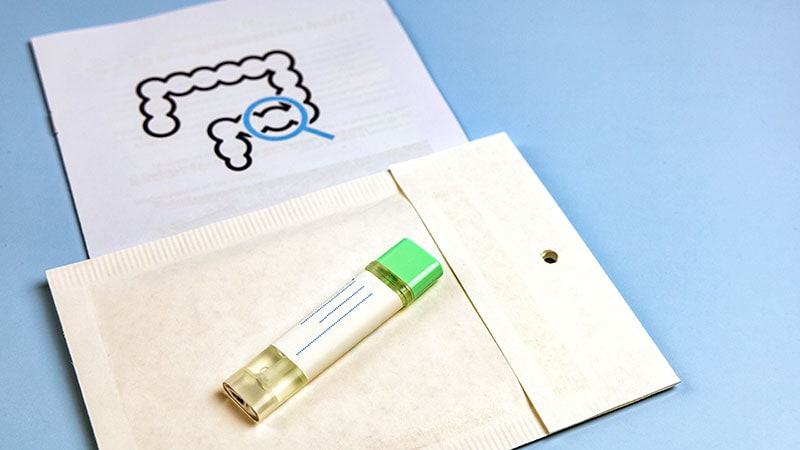
The threshold at which traces of blood in a fecal immunochemical test (FIT) trigger further investigation for possible bowel cancer will be lowered from February.
The level will be reduced from 120 to 80 µg of blood per gram of stool. This is expected to lead to a 35% increase in screening colonoscopies each year, NHS England said.
Currently, around 2 in 100 people who take part in bowel screening require further testing. This is expected to increase to 3 in 100 once the new threshold is in place.
The change could allow earlier detection of about 600 additional bowel cancers a year in England, an increase of around 11%. It could also identify about 2000 more people with high-risk polyps.
“This change marks an important moment for bowel cancer screening,” said Genevieve Edwards, chief executive of Bowel Cancer UK.
For patients, the test itself will not change. It will continue to be completed at home and returned by post to the NHS for analysis.
Describing the move as a “major step forward,” Peter Johnson, national clinical director for cancer at NHS England, said testing at a lower threshold would provide a better early-warning system for bowel cancer.
Reduce Late-Stage Diagnoses and Deaths
Bowel cancer is the fourth most common cancer in the UK, accounting for 11% of all new cancers. It is the third most common cancer in both men and women, with around 24,500 and 19,600 new cases each year, respectively.
The FIT home-testing kit is offered to all people aged 50 and over. The national rollout of bowel cancer screening began in 2021, and its expansion to everyone aged 50-74 was completed last year.
Once fully implemented, the lower threshold is expected to reduce late-stage diagnoses and deaths from bowel cancer by about 6%. Earlier detection and prevention could save the NHS £32 million a year.
Digital Alerts
To improve uptake, new digital alerts through the NHS App will notify people when a test is “coming your way,” said Dr Zubir Ahmed, MP, health innovation minister.
The move forms part of a new National Cancer Plan due to be published by the government next week and is linked to efforts to shift the NHS from analogue to digital systems.
People who need letters sent by post, including those newly eligible for screening, will continue to receive them, NHS England said.
In line with recommendations by the UK National Screening Committee, the NHS will now roll out the lower threshold across the country by March 2028.
Rob Hicks is a retired National Health Service doctor. A well-known TV and radio broadcaster, he has written several books and has regularly contributed to national newspapers, magazines, and online publications. He is based in the United Kingdom.
<








Leave a Reply