
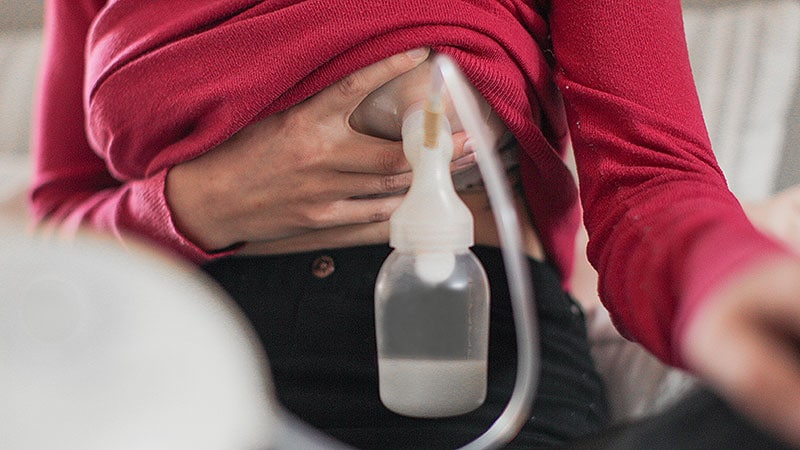
A comprehensive clinical report in Pediatrics has issued a call to action to promote human milk for vulnerable very-low-birthweight (VLBW) newborns weighing ≤ 1500 g at delivery. But many barriers to access remain.
The need for human milk is critical because growth velocity in this population can be slow; at discharge more than half of the VLBW infants demonstrate extrauterine growth failure, with weight for gestational age less than the 10th percentile. A quarter exhibit severe growth failure.
Preterm birth in general affects 10.4% of US newborns; 8.6% have low birthweight and 1.4% have VLBW. The VLBW rate has fluctuated, with driving factors such as pregnancy complications and social determinants of health, according to Mandy B. Belfort, MD, MPH, a neonatologist and epidemiologist in the Department of Pediatric Newborn Medicine at Brigham & Women’s Hospital and an associate professor of pediatrics at Harvard Medical School in Boston. Belfort did not participate in the report.

“Addressing social inequities in provision of human milk at the local level requires access to [pasteurized human donor milk], peer lactation support, maximizing use of interpreter services as appropriate, and implementation of standardized approaches to identify and address unmet basic needs,” wrote researchers led by Margaret G. Parker, MD, MPH, a professor of pediatrics and academic chief of neonatology at UMass Chan School of Medicine in Worcester, Massachusetts.
Part of the impetus for this report is recent lawsuits won by families whose babies developed necrotizing enterocolitis (NEC), said lead report author Parker. “Human milk is linked to reductions in NEC and late on-set sepsis and is associated with improved brain development.”
“The risk for NEC is cut in half for babies fed human milk as their base diet as compared with those fed infant formula as their base diet” added Belfort.

Dawnette A. Lewis, MD, MPH, director of the Center of Maternal Health at Northwell Health in New York City, noted that while the benefits of mother’s milk for these babies have been established for decades, “The report serves as an updated reminder that mothers of VLBW babies need extra help. We’ve found that if mothers have lactation consultation before delivery, they’re more likely to breastfeed.”
Lewis, who was not involved in the report, strongly advised that discussions about lactation be a routine part of prenatal care and preparation for childbirth. “But most patients won’t have this conversation until after delivery.”
Preterm Birth and Nutrition

At preterm birth, the normal transfer of nutrients from mother to baby is abruptly interrupted, Belfort explained. “VLBW infants weigh 3 lb or less and need to sustain a high rate of growth and they have higher nutrient requirements than full-term infants. Milk fortification is a way to provide all the benefits of human milk while also meeting the high nutrient requirements.”
Base milk, the combination of human milk (maternal and/or donor) as the base boosted with an appropriate fortifier is indicated for this population. “The report affirms the importance of pasteurized donor human milk when maternal milk is not available or is in short supply,” Belfort added. “Further system-level implementation is still needed to ensure that all VLBW infants have access,” she said.
Unlevel Playing Field
Social inequities in human milk provision persist despite advances in overall lactation support in the US. Racial/ethnic disparities in mother’s milk provision at NICU discharge result in lower rates of human milk provision among non-Hispanic Black mothers compared with non-Hispanic White mothers.
Although breastfeeding initiation rates are similar across sociodemographic groups, non-Hispanic Black, low-income, and publicly insured mothers are less likely to express milk throughout the NICU stay and are more likely to stop expressing milk before NICU discharge.
Parker noted that round-the-clock milk expression via pumping for weeks to months and being present in the NICU to directly breastfeed is particularly hard for low-income families that must shoulder financial stressors related to transportation back and forth, competing childcare priorities, and lost wages from work.
“In addition, low-income families also have less access to high-quality breast pumps that maximize lactation, and their work environments can be less supportive of pumping and milk storage.”
Other report recommendations:
- Maximal lactation support should be prioritized as a fundamental component of comprehensive care in the NICU. Technical assistance with early milk expression should be available to mothers within 6-8 hours of VLBW infant delivery.
- Because supply maintenance requires milk expression every 3-4 hours, efficient electric double breast pumps should be available for in-hospital training and home use.
- Written protocols and family education should address safe milk collection, storage, and transport.
- Pasteurized human donor milk is recommended when mother’s own milk is unavailable, insufficient, or contraindicated and should be available in NICUs. For parents that decline donor milk a preterm formula is indicated.
Solutions
Postdischarge plans should factor in the family’s goals for breastfeeding or bottle feeding with expressed milk or formula as well as the infant’s growth status and anticipated need for postdischarge milk fortification, the report’s authors stressed.
“In addition to evidence-based practices to support lactation at the local hospital level, neonatal providers can advocate for lactation more broadly,” they said.
Also needed are more supportive policies for families, including paid family leave and other financial assistance that allow families to spend more time with their infants and invest time in providing milk. “Notably, Colorado just passed a law to support a special kind of leave for mothers of hospitalized infants. It would be great to see this spread to other states,” Parker said.
After an infant’s discharge from the NICU, the input of primary care physicians is essential, said Belfort. “Mothers may require support in transitioning from bottle feeding to feeding at the breast and adjusting the level of fortification as the infant grows and matures,” she said. “The primary care provider can provide medical input to guide that transition, for example through frequent weight checks.”
This report received no external funding. Parker and other coauthors had no financial conflicts of interests relevant to this work. Co-author Lisa Stellwagen disclosed nonfinancial advisory and committee relationships with Medela and is the president of Human Milk Bank Association North America. Mark L. Hudak disclosed nonfinancial advisory relationships with IBP Therapeutics and Aerogen. Belfort reported receiving research funding from the National Institutes of Health and serving as a volunteer member of the advisory board for the Mother’s Milk Bank Northeast. Lewis had no conflicts of interest.
<











Leave a Reply