
April 23, 2026
2 min read
Key takeaways:
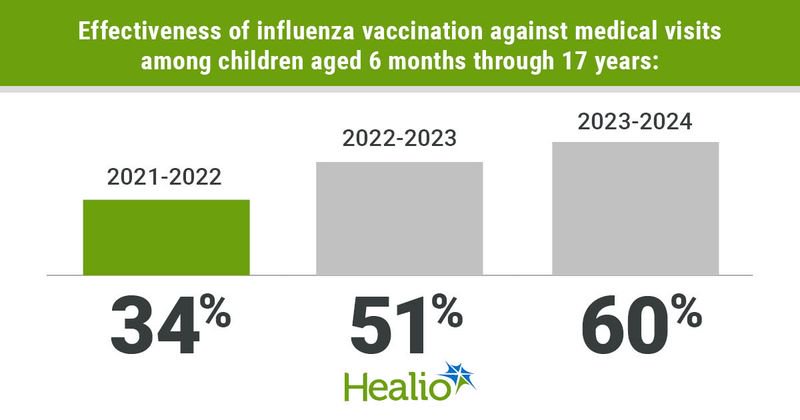
- Flu vaccine effectiveness ranged from 34% to 60% among children and adolescents from 2021 to 2024.
- The effectiveness from 2022 to 2024 was comparable to pre-pandemic effectiveness.
Influenza vaccination continues to protect children from influenza-related outpatient visits and hospitalizations, according to post-pandemic data published in Pediatrics.
“We have had really severe recent seasons for flu, particularly in children,” Samantha M. Olson, MPH, an epidemiologist in the CDC’s influenza division, told Healio in an interview. “This study really adds to the growing body of evidence showing how protective flu vaccines can be for infants, children and adolescents, and this includes even the most severe outcomes.”

Olson and colleagues used data from seven pediatric medical centers that are part of the New Vaccine Surveillance Network for the 2021-2022, 2022-2023 and 2023-2024 influenza seasons to estimate vaccine effectiveness against influenza-related outpatient and hospital visits among children. The study included 19,917 children aged 6 months through 17 years who received outpatient care or were hospitalized for acute respiratory illness across three seasons.
Researchers reported an overall vaccine effectiveness of 55%, with varying effectiveness each season, ranging from 34% to 60%.
Following a season with very low influenza circulation, the 2021-2022 season had the lowest vaccine effectiveness (34%). Out of 3,247 children included in the study during this season, 339 tested positive for influenza. According to researchers, 37% of children with influenza were vaccinated, compared with 51% of children without influenza.
“Since we didn’t have any data at a global level to look at which flu strains were circulating, it was really hard to predict which would be in the 2021-2022 season,” Olson said. “So, we ended up with a season where we had a flu virus that was different from the vaccine.”
During the 2022-2023 season, 832 children tested positive for influenza. According to the study, only 22% of children who had influenza were vaccinated, compared with 44% of the 5,926 children without influenza. Similarly, out of the 1,660 children who tested positive during the 2023-2024 season, 24% were vaccinated, compared with 45% of the 8,225 without. Vaccine effectiveness rose to 51% in 2022-2023 and to 60% in 2023-2024.
Overall, vaccine effectiveness was 57% against outpatient visits and 50% against hospitalizations among children and adolescents during the study period, according to researchers.
“[Among] all of the different ages, outcomes and types of influenza, we see really good protection,” Olson said. “These findings are very similar to what we saw in seasons prior to these years.”
For more information:
Samantha M. Olson, MPH, can be reached at pediatrics@healio.com.

Ask a clinical question and tap into Healio AI’s knowledge base.
- PubMed, enrolling/recruiting trials, guidelines
- Clinical Guidance, Healio CME, FDA news
- Healio’s exclusive daily news coverage of clinical data
<










Leave a Reply