
April 24, 2026
2 min read
Key takeaways:
- Hair loss among women is an increasing concern, affecting millions across the U.S.
- But PCPs can use an expanded toolbox to treat the issue.
SAN FRANCISCO — Primary care providers can help diagnose and treat hair loss in women, according to a speaker here.
“In my practice, hair loss is an increasingly mentioned patient concern, and I believe that is probably also reflected in the patients that you see as well,” Ashley B. Wentworth, MD, a dermatologist affiliated with Mayo Clinic practicing in Jacksonville, Florida, said in her presentation.

According to the Cleveland Clinic, female-pattern hair loss impacts 30 million people in the U.S., and more than 50% will “experience noticeable hair loss.” So, Wentworth offered a case-based presentation on women’s hair loss at the ACP Internal Medicine Meeting.
“I believe for many years, for most dermatologists and providers and other specialties, hair loss could be a somewhat challenging topic to take on, because our treatment options were more limited, our measures for evaluation, our diagnostic procedures were also few and far between,” Wentworth said. “However, over the past several years to decades, we’ve made incredible strides in the diagnosis, evaluation and management of hair loss. So, I’m hoping that this will be a discussion and a diagnosis that you’ll now look forward to taking on with your patients.”
Healio spoke with Wentworth to learn more about the presentation, causes of hair loss in women, treatments and more.
Healio: Why did you decide to present on this topic? Why is it important for primary care providers to know about?
Wentworth: Hair loss is a common concern among my patients as a dermatologist. Discussing the best means of diagnosing and treating hair loss is important so all health care providers can be aware of how to assist patients with hair loss.
Healio: What are some of the causes of hair loss in women?
Wentworth: Hair loss can be caused by changes in hormones over time, genetics (family history), autoimmune disease, inflammation, medications and stress, among other causes.
Healio: What are the corresponding treatments PCPs need to know about?
Wentworth: There are many different treatments for hair loss specific to the cause of hair loss. Female pattern hair loss, the most common cause of hair loss in women, can be treated with topical or oral minoxidil, spironolactone, finasteride, dutasteride, platelet-rich plasma injections, low-level laser therapy and hair transplant.
Healio: What is the benefit-risk ratio with the treatments? Are there any risks that should be noted?
Wentworth: Every medication or procedure comes with some level of risk specific to the treatment and to the individual patient, which should be discussed with the patient at the time of the prescription or procedure. Topical minoxidil, for example, is an over-the-counter treatment but may still cause scalp irritation (such as itch and flaking) for some patients when first applying.
Healio: Do you have any advice or resources for PCPs who are navigating a sensitive topic like this?
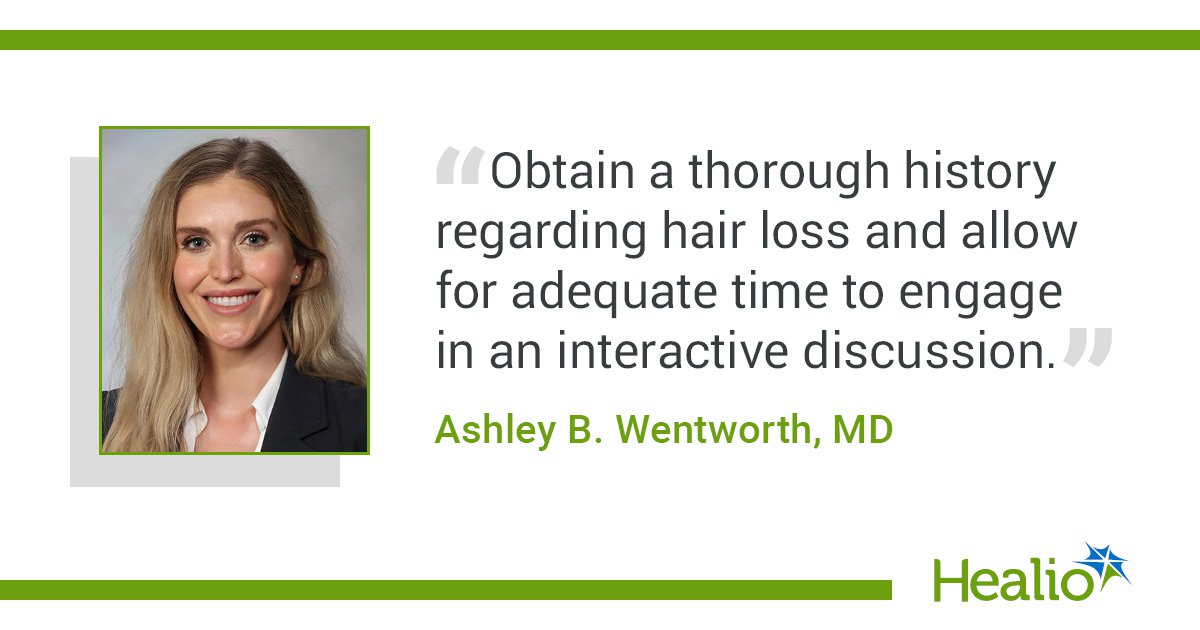
Wentworth: I would recommend PCPs obtain a thorough history regarding hair loss and allow for adequate time to engage in an interactive discussion. It’s often helpful to have a visit just dedicated to hair loss so that enough time and attention can be given.
Healio: What is the take-home message here? If nothing else, what would you like readers to get out of this article?
Wentworth: The ways in which we are able to evaluate hair loss to more accurately diagnose different types of hair loss are expanding, and the treatment options are also increasing, which allows us to take better care of our patients.
For more information:
Ashley B. Wentworth, MD, can be reached at primarycare@healio.com.
Sources/Disclosures
Source:
Healio Interviews
References:
Disclosures:
Wentworth reports no relevant financial disclosures.

Ask a clinical question and tap into Healio AI’s knowledge base.
- PubMed, enrolling/recruiting trials, guidelines
- Clinical Guidance, Healio CME, FDA news
- Healio’s exclusive daily news coverage of clinical data
<








Leave a Reply