
April 29, 2026
13 min read
Key takeaways:
- Public interest for psychedelics as mental health treatments has reached a new high.
- An expert broke down the real science behind various psychedelics, the associated risks and more.
SAN FRANCISCO — Psychedelics in mental health treatment is a rapidly changing landscape, but it is important for primary care providers to keep up, according to a speaker here.
On April 20, President Donald J. Trump signed an executive order to increase access to psychedelics for mental illness treatment. As Healio previously reported, under the executive order, appropriate psychedelic drugs with Breakthrough Therapy designation will receive National Priority Vouchers from the FDA to reduce review times for drug applications.

On April 24, HHS announced new regulatory actions and funding to support the development of psychedelics, and that the FDA will issue national priority vouchers to three companies that are studying psilocybin for treatment-resistant depression and major depressive disorder, as well as methylone for posttraumatic stress disorder.
Walter S. Dunn, MD, PhD, an assistant clinical professor at UCLA’s Semel Institute for Neuroscience and Human Behavior’s department of psychiatry, offered a presentation on the potential role psychedelics can play in mental health treatment at the annual ACP Internal Medicine meeting.
Healio spoke with Dunn to learn more about the presentation, the risk-benefit balance behind psychedelics, common misconceptions and more.
Healio: Why did you decide to present on this topic?
Dunn: I think this is a conversation that patients are already having with their physicians — asking about psychedelics, perhaps accessing some of them already. And there are varying degrees of understanding and awareness among internists/primary care doctors, so this was really designed to bring them up to speed in terms of where the field is and what we mean by psychedelics. It’s a little bit confusing as far as which compounds we’re actually referring to, because what’s being called a psychedelic in the research literature vs. what commercial entities are referring to as psychedelics and then what’s out there in the media is very different. So, I think the goal here is to really ensure that PCPs/internists understand and know enough about the topic to ask the right questions when a patient comes to them and asks them about it or tells them that they’re already accessing psychedelic treatments.
Healio: What does the science say about psychedelics as mental health treatments? (Who is eligible? What can it really treat? Are there potential harms?)
Dunn: A good place to start is to define what we mean by psychedelics. If you were to ask somebody 10 or 20 years ago what a psychedelic is, they would have said lysergic acid diethylamide (LSD), psilocybin, dimethyltryptamine (DMT) — compounds that the mechanism of action is that they’re agonists at the 5-HT2A receptor. Those are kind of traditional or classical psychedelics. But more recently, I think within the last 5 or 10 years, that term has really grown to encompass a lot of drugs that people would never have considered psychedelic — ketamine and esketamine, for example. For a while, the field was trying to figure out the correct nomenclature we should be using, so people were throwing out terms like “psychoplastogen,” just trying to be more precise about these drugs. But, at the end of the day, because the term “psychedelic” is out there, this is what the public is using. I think we’ve settled on the term classical and nonclassical psychedelics. So, classical psychedelics are the ones I referred to a little bit earlier — psilocybin, DMT, LSD — and nonclassical psychedelics are kind of like everything else. Midomafetamine (MDMA), for example, is technically, mechanistically, not a classical psychedelic, but that’s been kind of swept under that umbrella term. And even things like ketamine and esketamine — these are dissociatives. They’re anesthetics. And these are things that we discovered back in the 1970s, so there’s not a long history of these things. In fact, if you go on the internet and look at some of these home ketamine companies that will send ketamine to your house, it says very clearly in the front “psychedelic medicine is here.” That’s not something that I think people in the field would necessarily have agreed on in terms of how to use the term.
Using the most general kind of definition of a psychedelic, the FDA-approved drugs have the most evidence just because they’ve run the large phase 3 trials. There is a lot of real-world evidence about their use. Esketamine — if you consider it a psychedelic — has the “best evidence.” Now that’s not to say it has the largest effect sizes, the most robust effects — it’s just that it has the most people exposed to the drug and studied under research conditions, so I think we can be fairly confident about how “safe” these drugs are. Esketamine is the only “psychedelic” that actually has an FDA approval for psychiatric conditions: treatment-resistant depression.
Second to that, I would say, is ketamine. It was originally developed as an anesthetic, and it wasn’t until the 2000s that we discovered they actually had these rapid-acting antidepressant properties. There have been a whole slew of smaller studies run for the last 20, 25 years. Again, no large phase 3 trials to get FDA approval, and that’s just because companies can’t make money off of it if they patent it, because it’s not patentable — it’s generic. But there’s a lot of small studies out there, and I would say that it’s probably in second place as far as the reliability of the evidence out there.
And then you’ve got your Schedule 1 psychedelics — things like MDMA, psilocybin, DMT. MDMA has two large phase 3 trials. Psilocybin doesn’t have any published yet. They’re in the process of being wrapped up. But at least in the phase 2 trials, there’s some preliminary evidence that’s been released in company news reports suggesting that they’re fairly promising. But fewer people have exposed these things. I would say, at the end of the day, it’s about when these drugs are FDA approved and released out into the real world. Because as most people appreciate, the clinical trials are in a very rarefied population of subjects — very strict inclusion/exclusion criteria, no comorbidities. They’ve shown some benefit in this very kind of narrow population, but the proof in the pudding is when it gets released out there — “real patients” with multiple comorbidities get exposed to these things to find out if they really are effective and safe. So there’s a whole kind of spectrum of science and data supporting these things, but the ones that I think people are most talking about are still the Schedule 1 drugs, which are still in late phase 2, completing some phase 3 studies.
And then I do make a point in my talk to discuss microdosing. I don’t know if anybody doesn’t know a friend or a friend of a friend who has not microdosed and talked about how helpful it has been. We see a lot of these anecdotal stories about how beneficial microdosing has been. But interestingly, if you actually look at the peer-reviewed literature and the data, very few microdosing studies are out there, and the majority of them have not shown separation from the control condition — they haven’t been shown to be more effective than a caffeine pill or placebo. So, it’s interesting that there’s a big disconnect between what people are reporting in terms of personal experience and what’s actually in the literature out there. We’re not exactly sure why, but one of my hypotheses is that when people talk about microdosing, they’re probably taking larger doses than what is technically considered a microdose and what’s been used in these studies. That may be one explanation. The other explanation may be that this is all driven by placebo effect and expectation. Maybe the drug is actually not doing anything, but just the fact that you have heard all these good stories about it and you’ve got a lot of enthusiasm, maybe that’s enough to show some clinical benefit.
At the end of the day, every patient is different. Every time we prescribe a medication, it’s an n = 1 trial. We certainly see studies where, across the active group and the control group, you average everything out, it’s like, “OK, there’s really no difference.” But then you look at these individual patients and cases, and there are compelling results. Good results and bad results cancel each other out, and you really don’t see an effect. So, I think we still have to be humble about the limitations of what our current clinical trials can do, especially in the field of psychiatry, where we have the least understanding of the organ that we’re dealing with — the human brain. We’re still figuring it out. And so many different factors play into how someone will respond to a drug or a treatment, and that’s something that we don’t understand. It’s hard to parse out when we’re running these trials, but that’s the limitations of what we can do at this point. So, I think it’s important to understand the peer-reviewed literature, but also understand the limitations of what it can tell us.
Healio: Are there any misconceptions about psychedelics you’d like to clear up?
Dunn: So, No. 1 I think I’ve kind of highlighted already — they’re not all the same. These are all different molecules, different mechanisms of action, very different subjective effects, very different patient populations being looked at. Ketamine is very different from psilocybin, which is very different from MDMA.
No. 2, these are not cures. I’ll be the first to say that I hope these things maybe cure mental illness, but nobody’s saying these are cures for mental illness. But when you read some of the stories out there and even the published literature, it’s almost suggestive of such. So, the standard model for these late-phase clinical trials is that you have one dosing of the drug — maybe one to three dosings. The MDMA model has three dosings of the drug over 2 to 3 months. The psilocybin ones have a single dosing, or maybe two dosings, and that’s it. These are not drugs you’re taking on a daily basis. It’s not like the Prozac model where you wake up in the morning and you take a pill. That’s not how these work. It’s even different from esketamine. Esketamine is something that you’re not taking every day, but you’re doing on a regular basis — two times a week for a month, once a week for a month, and then you’re on it indefinitely for maintenance to prevent the depression from coming back. But the studies that have been published so far for these psychedelics are a single administration, and then we watch you for 3 weeks, 12 weeks — some of them have gone into 6 months. What they’re really kind of promoting out there is that after 3 weeks, if there’s a single dose, patients are still better. After 12 weeks, there’s still a separation from the control condition. And the most recent phase 3 data — again, not peer reviewed, but released by the company — is that for some patients at 14 weeks, patients are still better after the single administration. For somebody maybe not well versed in the space, they may think, “The depression is cured. You got a single dose. It’s like taking an antibiotic and you’re done.” I wish that were the case, but unfortunately that’s probably not the case, especially with treatment-resistant populations, where they have relapsing forms of the illness. Even after successful treatment, you should be followed long term by someone looking after your mental health. They’re not cure-alls; they’re not for everybody. One thing I always tell my trainees and residents is that there’s no free lunch in medicine. So, if it can be helpful, there’s potentially going to be a downside. If it can be really, really helpful, then the downsides could be fairly significant. In the studies that we’re seeing, we’re looking at very “clean populations” with not a lot of comorbidities — certainly no folks with a history of psychosis. It’s really kind of limited to unipolar depression, either non-treatment resistant or treatment resistant.
Healio: What role should PCPs be playing in psychedelic treatment?
Dunn: Given the complexity of some of these treatment models, I think most PCPs will probably not be delivering this modality of intervention, although I will have to say that I’ve done some of these psychedelic trainings, and I’ve seen a good amount of non-mental health physicians participating in this, and they talk about how they had an interest in mental health, and they see it rampant amongst the population, and for one reason or another. Now, they’re actually getting the formal training for this. But there is something unique about this type of intervention that really kind of speaks to folks. But that aside, you may have some primary care folks who may want to get into this space, and may want to dedicate a day or two of other practice just to do this. If not, I still think it’s important to learn about because PCPs are often the entry point for any discussion about any medical treatment. I think they should understand enough to have that initial conversation, to understand what the patient is telling them, to ask the right questions, and then also to kind of keep an eye on things. Because, traditionally, if you’ve got a patient with a treatment-resistant mental health disorder, they require a higher level of care. They refer to a psychiatrist who will follow them and deliver those more complex interventions, and you’ve got someone else kind of monitoring things.
So, you have these interventional, procedural-based practices out there that are not designed or willing to follow patients long term. They’re there to deliver the intervention, and when they’re done, they’re done. It’s entirely possible that the only person following the patient long term — before, during and after treatment — is going to be the PCP. The other thing I emphasize is to look out for long-term side effects, even potentially some of the psychiatric sequelae that may result from exposure to these drugs.
So, I think understanding enough so that if they do make a referral to an interventional, let’s say “clinic”, they know enough to refer to a good one. Because, unfortunately, there’s a lot of practices out there, especially within the ketamine clinics, that are not run by mental health professionals. They’re run by pain physicians, anesthesiologists, ER docs who are well versed with the use of ketamine. But beyond that, they actually don’t have a formal training for mental health, so the way they’re delivering some of these drugs actually may not be optimal or standard-of-care as far as mental health treatment is concerned. So, I think the PCP should also know enough to appreciate how should this be done and not automatically assume that, “If I’m sending you to an interventional clinic, they’re the experts; they know what they’re doing.”
Healio: What do PCPs need to know about the legal status of different psychedelic options?
Dunn: Ketamine and esketamine are the only legal options, at least at the federal level. Esketamine is the only FDA-approved and ketamine is off-label use for mental health disorders, but completely legal to use. If the patients are talking about accessing LSD, MDMA, psilocybin, that is, at this point, strictly Schedule 1, so no recognized medical use, and it’s only legal under research settings. But patients are going to access them. Under some state programs, such as in Colorado and Oregon, you are able to access psilocybin. That’s kind of a state-based program. A lot of patients are going out of the country to do these things. People have heard of Ayahuasca retreats. Ibogaine centers have been growing in popularity. And, again, these are things that are not legal within the U.S., so people are going out of the country to access these.
I think with anything that is black market, you never know what’s in there. It’s not being regulated. The production is not being overseen by the FDA. So, I always caution my patients like, “Well, yeah, you’re getting it from a friend. But do they actually know what it is?” And we’ve unfortunately heard stories about everything under the sun being adulterated with fentanyl, or whatever is in there, so you can’t really trust what you’re ingesting. So, understand that some psychedelics are legal, but most are not.
Healio: Do you have any advice or resources for PCPs who want to learn more about psychedelics?
Dunn: There are actually a lot of good review articles out there that are accessible to non-mental health professionals about understanding the landscape of psychedelics. For patients who really want to try a psilocybin treatment or LSD treatment, I think also referring to clinical trials — clinicaltrials.gov is the kind of the main clearinghouse that has all the studies in one place, and you can search for the compound, the disorder, even geographical locations, and they’ll tell you which ones are still recruiting.
Healio: What is the take-home message here?
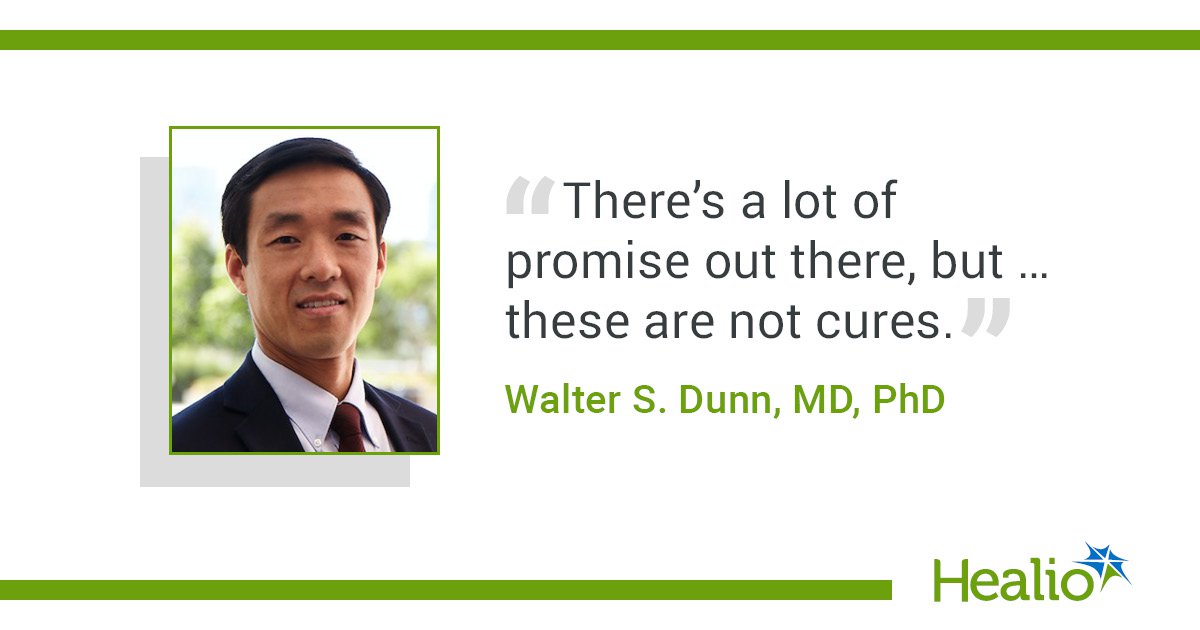
Dunn: I think there is a big disconnect between the media-driven enthusiasm and where we are as far as the peer-reviewed literature. There’s a lot of promise out there, but it’s certainly being hyped up by the media. So, certainly these are not cures. And then, we have a lot of good treatments that are already available, that have been around for decades, and at least for patients who may be presenting with bipolar depression or things that are not treatment resistant yet, we should go through that algorithm. The selective serotonin reuptake inhibitor (SSRI), the second trial, the SSRI augmentation strategies, transcranial magnetic stimulation. All those things probably should be tried before a psychedelic is considered.
I would love to find a treatment that works for everybody, but even psychedelics aren’t going to work for everybody. Hopefully, patients will not put everything on “either I respond to this or I’m calling it quits.” So, understanding that this is another tool in the toolbox. It’s a fairly powerful one, but it’s just another option. And every patient is still different, so having that conversation to understand that chronic mental illness will require long-term follow-up and a systematic trial of our evidence-based, long-established treatments, and if and when those aren’t working, perhaps psychedelics can be an option is important.
Healio: Is there anything else you would like to add?
Dunn: The space is evolving very rapidly. There is some talk that maybe before the end of the calendar year, there may be a psychedelic approved by the FDA. The preliminary data is out there. The sponsor is talking about a rolling admission. If everything lines up, and then the final review of the data looks good, there is the possibility. I think I’m hopeful but cautious, not seeing one way or the other, but I think people should be aware that things are moving rapidly, and at the end of the year, we could have something available, but it really depends on how the data turns out and the final review by our regulatory agencies.
For more information:
Walter S. Dunn, MD, PhD, can be reached at primarycare@healio.com.
Sources/Disclosures
Source:
Healio Interviews
Reference:
- Dunn WS. The role and risks of psychedelics in the management of resistant mental health disorders. Presented at: ACP Internal Medicine Meeting; April 16-18, 2026; San Francisco.
Disclosures:
Dunn reports no relevant financial disclosures.

Ask a clinical question and tap into Healio AI’s knowledge base.
- PubMed, enrolling/recruiting trials, guidelines
- Clinical Guidance, Healio CME, FDA news
- Healio’s exclusive daily news coverage of clinical data
<









Leave a Reply