
There is a good case to be made that all Irish citizens might be offered an end of life planning consultation at their general practice on reaching 70 years of age, writes Dr Brendan O’Shea
Given that approximately over 34,000 of us are dying each year in Ireland, it’s always good to pose the question – could we do better with this? There is, on one hand, a broad altruistic reason to consider this – could we do this better for everyone in households where an individual is dying?
Of course, on the other hand, there is the narrow selfish perspective which is how can this be made better for me and/or any of my own loved ones? Is it as good as it reasonably could be? Are there any reasonably costed (or better again absolutely zero-cost) steps which could be taken to enable our benighted healthcare system and the people who rely on it for essential care to do better?
Firstly…
Let’s consider the people who are dying and their households. Repeated studies going back to the 20th century consistently indicate that most people’s preferences relate to dying at home in close proximity to their loved ones, and with the undoubted comfort of homely, private and familiar surroundings. This does not immediately bring to mind the noise and hustle of a busy ED Department or an Acute Hospital ward where many still die.
 It’s good also to remind ourselves that Sláintecare remains the guiding policy framework for our healthcare system, and as such, it supports transfer of care where possible from the expense of our somewhat chaotic secondary care system into primary or community care. Why is the proportion of people dying in the acute hospital sector remaining stubbornly high, and particularly given international precedent elsewhere, why aren’t we enabling more people to die in their communities.
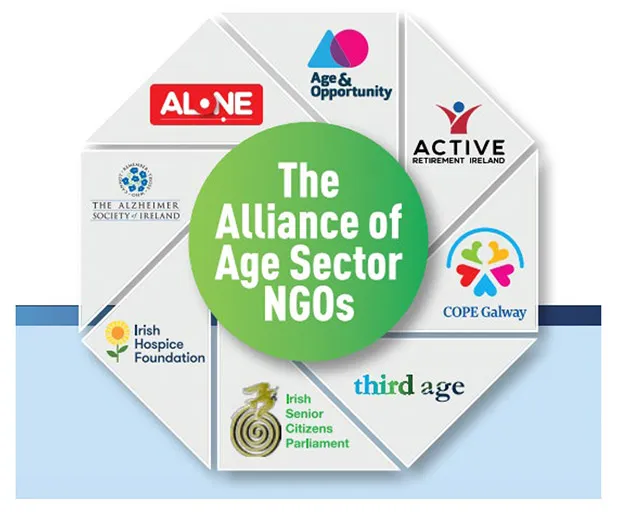
Paula O’Reilly, CEO at the Irish Hospice Foundation draws our attention to the findings of The Experiences of Older People at End of Life Study, just published, which was conducted jointly by the Alliance Age Sector NGOs, comprised of the Irish Hospice Foundation, the Alzheimer’s Society of Ireland, ALONE, COPE Galway, Age and Opportunity, the Irish Senior Citizen’s Parliament, and Third Age Ireland. The report is available at Experiences of Older People at End of Life.
If you’re time-poor you could skip ahead to the key recommendations, Final-Summary-TILII3-Experiences-of-Older-People-at-End-of-Life-Oct-2025.pdf which are excellent, except nowhere is it stated how these recommendations are to be funded.
This is a nationwide survey that asks bereaved relatives and friends about the care their loved ones and friends received at end-of-life. The results are disturbing.
The report identifies a number of areas that are key to the experience at end-of-life for older people, including better communication around their medical care and prognosis, access to key people and timely help, care in the community, and bereavement support.
 A significant finding in the report, that is relevant and the importance of which we need to be aware relates to the lack of availability of GPs to visit older people at end-of-life in the out-of-hours. As many as 39 per cent of respondents said that a GP was not available to visit, if their loved one required a home visit for help with urgent problems outside of normal working hours, with notable geographical variation.
Donegal is the best served county, with just 22 per cent of people noting that a GP was not available to them out-of-hours, whereas in Westmeath almost two-thirds of people (64 per cent) responded that a GP was not available to them out-of-hours. While some degree of geographical variation is reasonable, this is a bit of a stretch.
Communication at end of life is important. Most respondents reported that their loved one was not told that they were likely to die. There was a higher proportion of individuals not informed in the older age groups, with fewer than one-in-five individuals over 90 years of age being told they were likely to die. How good are you at this?
It is important, because people largely wish to have these discussions, which are relatively easy to have, once you decide to be good at them. Are you having them on your service now ? Taking a legal perspective, both international law and our own legislation (2022 Assisted Capacity (Decisions) Bill) clearly state that people have a right and doctors have a duty to engage in this consultation.
Older people and their loved ones have a right to be kept fully informed at end-of-life. Knowing what to expect when their loved one is dying is important to people. For 29 per cent of respondents, neither they nor their loved one who was dying reported that they were told what to expect. Of the 29 per cent who were not told by healthcare professionals about what they could expect when their loved one was dying, 72 per cent said that a discussion about this would have been helpful.
One of the key recommendations in the report reflected the importance of initiatives that promote and support these conversations across society. They concluded that they will help families to feel more prepared, involved and confident. ‘I hope we can agree that this report is an important reference point in terms of understanding what matters to older people at end-of-life,’ observed Paula O’Reilly, CEO at the Irish Hospice Foundation.
Ireland is fortunate in having an active and excellent NGO Sector in Health
Back in the Practice
My own impression is that increasingly, practices are pulling back from primary care palliative care, and having those important conversations that are part of this. The pullback relates to burgeoning workload in General Practice, and particularly in relation to work which is either unpaid for, or the pay for the work is inadequate.
There is the quirky little anomaly where many people approaching end-of-life are appropriately provided with medical cards, which is fine and proper for them, but this severely limits their general practice from engaging in a range of relevant consultations essential for their proper care in the face of advancing frailty and medical complexity, as the medical card/PCRS has little or no funding for these activities.
In practical terms, there is little or no provision for reasonable payment for this essential work, which is arguably at the heart of humane healthcare. Primary care palliative care is of course far less expensive, and largely as effective as specialist palliative care, but it will not be properly delivered if it as an actual cost to the practice.
My understanding is that the spend on healthcare in the last year of life in Ireland per patient is in the order of €65,000. This almost certainly is largely consumed by the avaricious hospital sector, and we are very much getting the thin end of the wedge for ourselves and our patients in general practice.
How to effect a turnaround
There is a good case to be made, that all Irish citizens might be offered an end-of-life planning consultation at their general practice on reaching 70 years of age, or on receiving a life limiting diagnosis before that.
Further, once an individual enters a pre-terminal phase, with reducing independence and escalating care needs, it would be very enabling if the practice could be supported by an End-of-Life Care Package, to include six to eight consultations, so that the practice could engage more proactively with the individual and their household, could formulate and record end-of-life planning wishes in the electronic medical record, and communicate these appropriately to the GP co-operative, and to the relevant specialist services.
Apart from the essential social and psychological support inherent in this, there is the almost inevitable desired and practical outcome that the wishes of people to be supported to die in the community would be heard and acted upon, and a substantial volume of hospital-based capacity would thus be freed up.
Any thoughts? (Consider taking a quick five-question survey on the key issues).
IMT Poll on Improving End of Life Care in the Community
<








Leave a Reply