
TOPLINE:
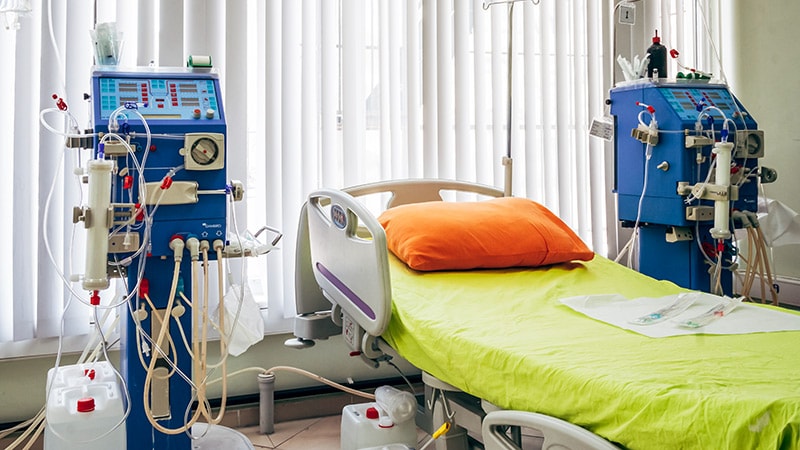
An Italian study found that more than 50% of children on chronic dialysis required hospitalisation, with dialysis-related infections being the most common cause. Children who underwent peritoneal dialysis experienced a higher and increasing risk for hospitalisation than those who underwent haemodialysis.
METHODOLOGY:
- Researchers conducted a retrospective observational study between 2000 and 2019 to compare rates and causes of hospitalisation between children undergoing peritoneal dialysis and haemodialysis.
- They included 847 children undergoing dialysis, of whom 493 (median age at the start of treatment, 5 years; 59.6% girls) underwent peritoneal dialysis and 354 (median age at the start of treatment, 13 years; 54.8% girls) underwent haemodialysis.
- Hospitalisations were defined as admissions involving at least one overnight stay, excluding those for dialysis initiation and kidney transplantation; complete data on hospitalisations were available for 813 children.
- The primary outcome was the risk for hospitalisation, analysed as a recurrent event; the secondary outcome was the probability of switching dialysis modality during follow-up.
- Causes of hospitalisation were categorised as infectious and non-infectious dialysis-related complications, kidney failure-related complications, and others.
TAKEAWAY:
- Overall, 420 (51.7%) patients faced at least one hospitalisation while on dialysis, with a higher rate observed among those who underwent peritoneal dialysis vs haemodialysis (62% vs 32%).
- Dialysis-related infections were the most common cause of hospitalisation (24.3%), particularly in patients undergoing peritoneal dialysis, followed by non-infectious medical conditions (17.3%) and kidney failure-related complications (14.9%).
- Haemodialysis was associated with a lower risk for hospitalisation than peritoneal dialysis (adjusted hazard ratio [aHR], 0.75; 95% CI, 0.65-0.87).
- The risk for hospitalisation decreased with an increase in age (aHR, 0.95; 95% CI, 0.93-0.96) and increased with the number of comorbidities (aHR, 1.19; 95% CI, 1.05-1.35); haemodialysis was linked to a lower likelihood of treatment changes after 1 year than peritoneal dialysis (aHR, 0.29; 95% CI, 0.10-0.81).
IN PRACTICE:
“Dialysis-related infections, especially peritonitis in PD [peritoneal dialysis] patients, emerged as a major contributor to this elevated risk. These findings underscore the critical need for enhanced infection prevention measures and an integrative care approach to improve outcomes and quality of life for pediatric patients with kidney failure,” the authors wrote.
SOURCE:
This study was led by Rachele Spagnol, University Hospital of Padua, Padua, Italy. It was published online on January 19, 2026, in Pediatric Nephrology.
LIMITATIONS:
This study relied on retrospective registry data, and information on some variables was incomplete or missing. The registry only recorded inpatient admissions and did not capture outpatient treatments. Changes in practice patterns over the 20-year observation period may have influenced the results.
DISCLOSURES:
This study did not receive any relevant financial support. The authors declared having no competing interests.
This article was created using several editorial tools, including AI, as part of the process. Human editors reviewed this content before publication.
<











Leave a Reply