

Welcome to this week’s issue of The Week in Medicine – a round-up of all the happenings in the world of Irish medicine
A major new all-island radiotherapy trial aimed at reducing the side effects of prostate cancer treatment is launching this spring.
The INSPIRE trial, sponsored by Cancer Trials Ireland and supported by the Irish Research Radiation Oncology Group, will recruit more than 130 patients across the island. It will focus on men with localised prostate cancer eligible for Stereotactic Ablative Radiotherapy (SABR), an advanced treatment delivered in just five sessions over two weeks.
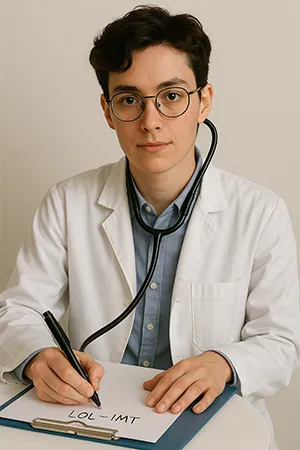
Dr Leslie O’Looney
More than 5,000 men are diagnosed with prostate cancer annually across Ireland, underlining the need to improve treatment while minimising long-term impacts on quality of life.
SABR has been shown in major international trials to provide strong cancer control outcomes comparable to conventional radiotherapy, but in a significantly shorter timeframe. Standard radiotherapy typically involves around 20 treatment sessions.
INSPIRE will build on this progress by focusing on reducing treatment-related side effects, particularly urinary complications, while also examining bowel and sexual health outcomes. The study will use advanced imaging and highly targeted radiotherapy techniques to better protect surrounding healthy tissue. A gel spacer will also be used to move the rectum away from the treatment area, helping to reduce bowel-related side effects.
Prof Brian O’Neill, radiation oncologist at St Luke’s Radiation Oncology Network and co-chief investigator, said the trial aims to maintain ‘excellent cancer results’ while lowering the risk of side-effects associated with newer high-dose treatments.
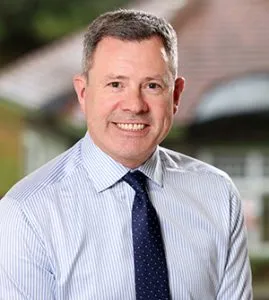
Prof Brian O’Neill
Researchers will also examine whether genetic and biological factors can help predict which patients are more likely to experience side-effects, potentially allowing for more personalised treatment in future.
INSPIRE is the first radiotherapy trial to link centres across the island, with sites in Dublin, Cork, Galway, Limerick, Waterford, Belfast and Derry. Patients will be followed for five years.
***************
It was dispiriting to see the disruption to patients caused by the recent fuel protests. However well-meaning, people who block the roads also block children on their way to or from chemo, elderly people with hospital appointments, and many others with real and important reasons to travel, such as first-responders.
Whatever the rights and wrongs of the issue in question, nobody has the right to do that harm to others. That’s not protest, it’s intimidation, and using illness as a weapon.
But you’ve got to laugh too at humanity in all its foibles. One woman’s patriotic protest is another man’s illegal road block, as it were.
With this in mind, I’m driving (crawling) through a rural Irish town on my way to the motorway, when a teenager shouts “You can’t go that way Mister, there’s a protest going on.”
“The fuels,” he added by way of explanation.
Ah the fuels, the fuels, the fuels. They have left us our tanks dry, and the dream of Ireland tax-free will never be at peace.
***************
We knew there were 39 pubs in my hometown when I was a teenager, and the reason we knew the exact number was not necessarily that you could count them, for many of them were hidden behind the shops with their own small clientele.
There were ‘back of shops’ for farmers who didn’t want to be seen drinking in the town, but would have a drink when they came to the great metropolis for grocery shopping, a place behind a newsagents where women could secretly drink (if they could afford it), and another attached to an undertaker’s parlour. Drink was ubiquitous.
We knew the exact number because of the recounting of local lore which told of a local man who was reckoned to have had a drink in every one of them, one particular, inebriated day. He was still walking around the town, so a local living legend, of sorts. He’d drank cider – a pint, of course – in the first 30 establishments, but – my favourite part of the story – he moved on to a glass of whiskey after that because he was feeling ‘quite full’. Quite the fuel, you might say.
Anyway, it seemed, given that context, that say five or six pints in a night couldn’t do us much damage. Ireland has always had an alcohol problem, and those seeking to change the dial on alcohol are often seen as the ones rocking the ‘normal’ boat. Even if the boat is swaying from side to side, soaked in drink so much it can’t even imagine land anymore.
This week it was the turn of the IMO, which gathered as they do almost ritually, annually, now to pass (this year a trio of) motions about alcohol. These are not wild or radical notions. They are, in fact, the sort of things that sound so reasonable you begin to wonder why they require motions at all. A modest increase in excise duty. More roadside breath testing. Labels on bottles explaining, in plain terms, that pouring fermented mind-altering liquids into your body may not be an unqualified health boost.

AAI CEO Dr Sheila Gilheany
Alcohol Action Ireland, who keeps a watchful eye on such matters, were understandably pleased. Their chief executive, Dr Sheila Gilheany, pointed out -quite sensibly – that raising prices tends to reduce consumption, that drivers might behave better if they believed there was at least a sporting chance of being caught, and that telling people what’s actually in a product is generally considered good manners.
All of this seems straightforward until you realise that, in Ireland, responsibility for alcohol is divided among an impressive array of government departments. Health wants you to drink less. Justice may wish to regulate how and when you drink. Finance keeps a close eye on what you pay for the privilege. Meanwhile, other arms of the State occasionally give the impression that a lively trade in drink is not entirely unwelcome.
The result is rather like having five people attempt to steer the same bicycle, each holding a different part and all pedalling with enthusiasm, but not necessarily in the same direction. Like a drunk person, you might say.
Dr Gilheany’s solution is the creation of an Office for Alcohol Harm Reduction, which sounds vaguely like the sort of place where everyone speaks in calm tones – “Don’t wake Father Jack!” and no one spills anything. The idea is to bring a bit of coordination – and possibly sanity – to proceedings, in much the same way that Ireland once did with tobacco, to some effect.
And that, in the end, is the curious thing. We are not short of ideas, expertise or good intentions. What we sometimes lacks is a single, steady hand on the tiller, and a co-ordinated approach to facing our denial about our alcohol problem.
Until then, the country will continue its long, complicated relationship with alcohol—raising a glass with one hand, while gently wagging a finger with the other.
The Pint and the Piety.
<




Leave a Reply