
April 15, 2026
2 min read

Key takeaways:
- Patients who had a BMI greater and less than 30 kg/m2 had no significant differences in complications.
- However, patients with a BMI of 30 kg/m2 or greater had worse patient-reported outcomes.
NEW ORLEANS — Patients with a BMI of 30 kg/m2 or greater who underwent medial patellofemoral reconstruction had similar complication rates to patients with a BMI less than 30 kg/m2, according to results presented here.
“BMI is a useful screening tool, but it is an imperfect measure of obesity and most physicians recognize its limitations,” Elizabeth R. Dennis, MD, MS, FAAOS, assistant professor in the department of orthopedics at Icahn School of Medicine at Mount Sinai Hospital, told Healio about results presented at the American Academy of Orthopaedic Surgeons Annual Meeting. “While BMI is widely used because it is a quick and easy measurement, it does not fully capture a patient’s body composition, musculoskeletal health, strength and functional status, all of which are important factors influencing surgical outcomes.”

Lasun O. Oladeji, MD, PhD, assistant professor of clinical orthopedics at the University of Miami, along with Dennis and colleagues utilized prospectively collected data from 713 patients who underwent MPFL reconstruction from the Justifying Patellar Instability Treatment by Early Results (JUPITER) cohort. Patients were categorized into groups based on whether they had a BMI of less than 30 kg/m2 (n = 603) or of 30 kg/m2 or greater (n = 110).
Outcome measures included patient demographics; complications, including patellar subluxation/dislocation or reoperation; and patient-reported outcome measures.
Overall, Oladeji said there were no significant differences in complications between the two groups.

Elizabeth R. Dennis
However, in terms of patient-reported outcomes, patients with a BMI of 30 kg/m2 or greater had significantly worse Kujala, Pediatric IKDC and Knee Injury and Osteoarthritis Outcomes Score for Joint Replacement scores at baseline, worse Pediatric IKDC and KOOS JR scores at 1 year and worse Kujala and KOOS JR scores at 5 years vs. patients with a BMI less than 30 kg/m2.
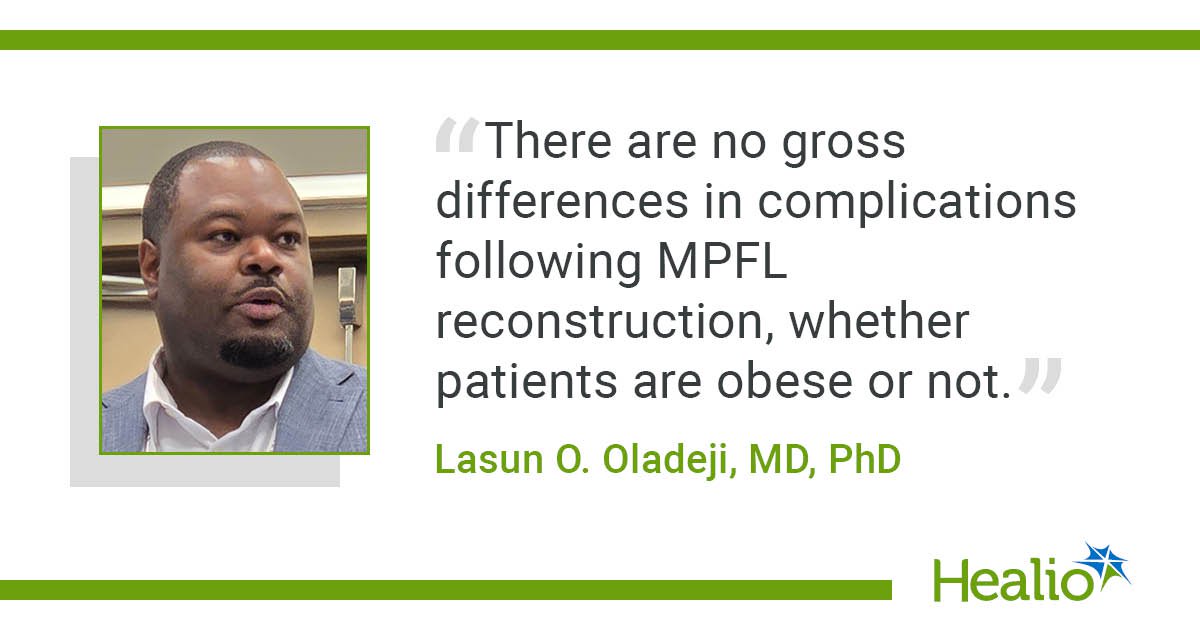
“This study is strengthened by the fact that we had large cohorts of patients, and the data was prospectively collected,” Oladeji said. “It supports previous work in the field, which has shown that there are no gross differences in complications following MPFL reconstruction, whether patients are obese or not.”
Based on these results, Dennis said surgeons should continue to offer stabilization procedures for recurrent instability regardless of their BMI, as these patients still have the potential to achieve meaningful clinical improvement with good surgical outcomes.
“These findings reinforce the importance of counseling patients on optimizing their modifiable risk factors and functional status at baseline, as preoperative improvements may translate into better postoperative outcomes,” Dennis said.
For more information:
Elizabeth R. Dennis, MD, MS, FAAOS, and Lasun O. Oladeji, MD, PhD, wish to be contacted through mediarelations@hss.edu.
Sources/Disclosures
Source:
Oladeji LO, et al. Paper 554. Presented at: American Academy of Orthopaedic Surgeons Annual Meeting; March 2-6, 2026; New Orleans.
Disclosures:
Dennis reports being a committee member for the American Orthopaedic Society for Sports Medicine and receiving consulting fees from Arthrex and ConMed. Oladeji reports no relevant financial disclosures.

Ask a clinical question and tap into Healio AI’s knowledge base.
- PubMed, enrolling/recruiting trials, guidelines
- Clinical Guidance, Healio CME, FDA news
- Healio’s exclusive daily news coverage of clinical data
<












Leave a Reply