
January 30, 2026
2 min read

Key takeaways:
- Out of all fabrics included in the study, fleece harbored the most bacteria.
- An epidemiologist said reducing contamination may be as simple as rolling up sleeves.
The long sleeves of health care workers were frequently contaminated with bacteria, and some sleeves harbored multiple pathogens, according to findings from a prospective observational study.
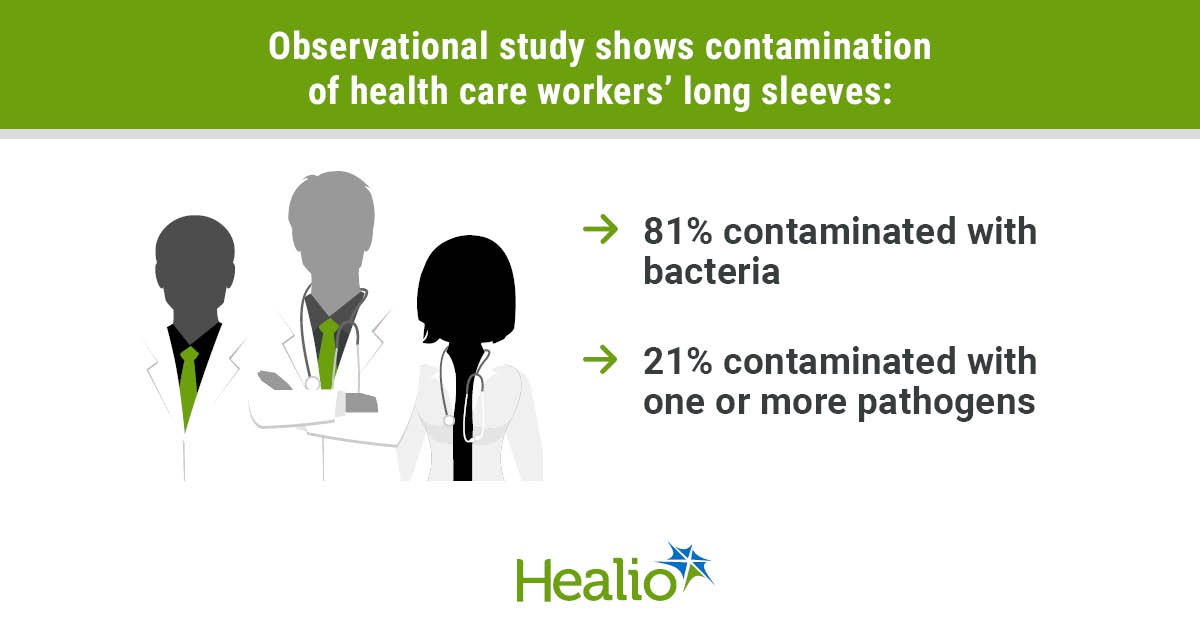
The study, which examined 280 samples from multiple inpatient hospital settings, showed that 81% of health care workers’ long sleeves grew bacteria and 21% contained at least one potential pathogen, such as alpha-hemolytic streptococci (28 instances), Bacillus species (20), Pantoea/Mixta species (eight), gram-negative bacilli (six), and Staphylococcus aureus (two).

Data derived from Sanes Guevara MF, et al. Infect Control Hosp Epidemiol. 2026;doi:10.1017/ice.2025.10378.
“The goal of this quality improvement investigation was to provide guidance about attire types and practices associated with contamination and transmission risk,” Maria F. Sanes Guevara, MD, an internal medicine resident at UPMC Presbyterian in Pittsburgh, and colleagues wrote in the study.
Out of all the fabrics tracked in the study, fleece harbored the most bacteria. Over 41% of sleeves made of fleece grew at least one potential pathogen compared with 32.8% of non-fleece synthetic sleeves and 24.1% of cotton sleeves (P = .004).
The study also found 69.6% of long sleeves sampled on non-intensive care units contained bacterial growth, whereas only 30.4% in the ICU did (P = .038).
Cindy Prins, PhD, MPH, an epidemiologist at the University of Central Florida, said reducing contamination may be as simple as rolling up sleeves.
“Let’s just make it so that [health care workers] give themselves a little bit more room to do good hand hygiene and go a little bit above the wrists with their hygiene. I’d be curious to see if that helps,” Prins, who was not involved in the research, told Healio.
The study did not find evidence of transmission from health care workers’ sleeves to a patient, or a “significant relationship” between laundry practices and the extent of sleeve contamination, with the researchers noting that “even freshly laundered garments become substantially contaminated within just a few hours of wear.”
The researchers noted the United Kingdom’s “bare below the elbows” policy, which encourages health care workers not to wear long sleeves. The Society for Healthcare Epidemiology of America has endorsed that policy for more than a decade, but it is not mandatory in the United States, where attire policies are driven by hospital preferences.
“I think, within the U.S., it’s just going to be dependent on where you are,” Prins said.
A study presented at IDWeek in 2017 that simulated patient care interactions showed that the cuffs of physicians’ long-sleeved white coats could contribute to the transmission of pathogens, leading researchers to recommend short sleeves.
Similar concerns have been addressed by other research projects. Beyond clothing, stethoscopes have been shown to be contaminated with S. aureus.
For more information:
Cindy Prins, PhD, MPH, can be reached at cindy.prins@ucf.edu.

Ask a clinical question and tap into Healio AI’s knowledge base.
- PubMed, enrolling/recruiting trials, guidelines
- Clinical Guidance, Healio CME, FDA news
- Healio’s exclusive daily news coverage of clinical data
<












Leave a Reply