
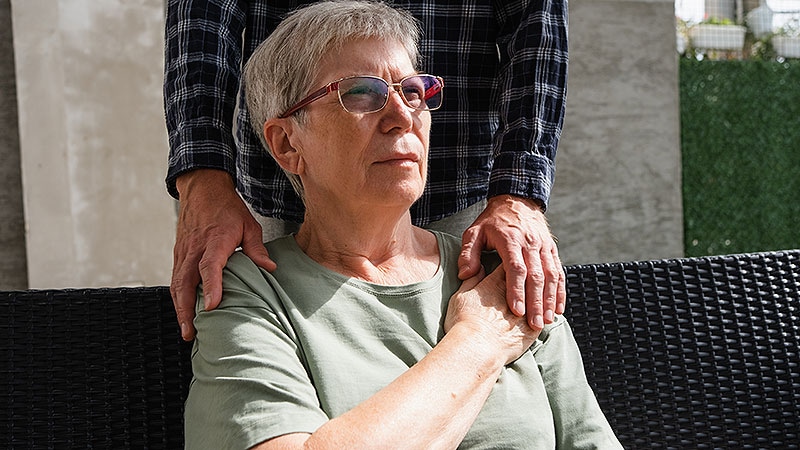
A National Institute on Ageing (NIA) survey revealed social isolation, financial stress, and a steep decline in positive feelings toward ageing among older Canadian adults.

The decline in optimism toward ageing is the steepest since the annual survey began 4 years ago, noted survey authors Talia Bronstein, director of Policy, and Samir Sinha, MD, director of Health Policy Research, both at the NIA.
“On the flip side, it was promising to see that more older adults reported having access to a regular primary care physician, and fewer reported that they were unable to access regular dental care,” they told Medscape News Canada. “This may be a positive reflection of the new policies and initiatives to improve access to primary care providers and the widespread rollout of the new Canadian Dental Care Plan, specifically supporting lower-income older adults.”
The survey was published online on January 20.
Key Findings
The “NIA Ageing in Canada Survey,” now in its fourth year, provides annual snapshots of the perspectives, experiences, and expectations of older Canadian adults. This year’s survey, conducted online from June to July 2025, included a representative sample comprising 6001 Canadians aged 50 years or older who were living in community settings across all provinces and territories. It highlights the “growing disconnect between how older Canadians want to age and the supports available to them,” according to NIA.
The report includes the following notable findings:
- About 43% of older adults remain at risk for social isolation, and 57% experience loneliness.
- Participation in social or recreational activities once or more per week fell from 39% to 33% over the past year, with affordability being the most significant barrier.
- About 20% of older adults are experiencing a poverty-level standard of living, based on the Materials Deprivation Index: a rate much higher than Canada’s official poverty line would suggest.
- About 68% of respondents reported having a regular primary care provider, up from 62% in 2022, but many face difficulties getting appointments and referrals.
- The proportion of respondents who can afford to retire at their desired time dropped from 35% in 2022 to 29% in 2025.
- While 81% of participants want to remain in their homes or in smaller homes as they age, 62% have made no plans or modifications to support ageing in place.
- About 70% of respondents reported facing ageism in their daily lives, with those in poorer health, lower-income households, or older than 80 years most affected.
‘Substantial Inequities’

“The survey highlights that a subset of older Canadians are healthy, socially connected, and financially prepared for later life, while also underscoring the substantial inequalities among older adults,” Natasha Lane, MD, PhD, assistant professor of geriatric medicine at the University of British Columbia in Vancouver, told Medscape News Canada. “The financial pressure many older Canadians are experiencing makes it difficult to maintain health, quality of life, and independence at home.” Lane, who did not participate in the study, also is associate editor of the Canadian Geriatrics Journal.
“Access to healthcare services alone is insufficient if older adults are struggling with basic needs such as housing stability, food security, or safe living conditions,” she added.
Notably, she said, “the findings likely underrepresent older adults experiencing the most severe forms of socioeconomic hardship, including those who are unhoused or living in extreme poverty, as these groups are less likely to participate in online surveys.”
Although dental care has become more affordable since the introduction of the Canadian Dental Care Program in 2023, she acknowledged, “awareness of the program remains limited, and many older adults are still forgoing dental care due to outdated assumptions about cost. Increased public awareness could help ensure that eligible individuals benefit from existing programs.”
The survey also reinforces evidence that many adverse socioeconomic and health outcomes disproportionately affect older women, who were more likely to report financial insecurity and barriers to accessing care, she said. “These findings underscore the value of routinely asking how health and social policies affect women and other groups differently as inequities cannot be addressed if they are not measured and acknowledged.”
What Clinicians Can Do

Clinicians can help by encouraging people of all ages to stay socially connected, Bronstein and Sinha said. “Social isolation and loneliness in particular can negatively impact people’s health and well-being and even increase their risk for dementia.”
Clinicians also can encourage older adults to find a primary care provider to help them prevent or manage chronic health conditions that become more common with age, they said. “Furthermore, clinicians can remind their patients that taking simple, healthy actions like staying socially connected, managing blood pressure, being physically active, and addressing their hearing and vision issues can not only prevent outcomes like dementia and other chronic health issues but also help improve their overall quality of life as they age.”
“Social isolation and loneliness have well documented impacts on health and raise the risk of premature mortality,” they added. “In fact, severe loneliness has been seen as being equivalent to smoking 15 cigarettes a day. It is critical that clinicians recognize this as a public health challenge.”
“Ageing in the right place requires coordinated action across all levels of government, alongside civil society, health and social care providers, and community organizations,” the report stated. “With deliberate, evidence-based policy reform, Canada can embrace its ageing population as an opportunity to create more inclusive, resilient, and compassionate communities for people of all ages.”
Funding for the report was provided by Manulife and the Waltons Trust. Lane reported having no relevant financial relationships.
Marilynn Larkin, MA, is an award-winning medical writer and editor whose work has appeared in numerous publications, including Medscape Medical News and its sister publication MDEdge, The Lancet (where she was a contributing editor), and Reuters Health.
<











Leave a Reply