
January 16, 2026
4 min read
Key takeaways:
- Participating in “Dry January” can benefit health, especially sleep and overall wellness.
- PCPs should ask patients about their intentions with alcohol in the new year to help personalize their care.
“Dry January” is an opportunity for primary care providers to open up a conversation around alcohol use, according to an expert.
Dry January is a trend that encourages cutting out alcohol — or cutting back — for a month after the holidays, when overindulging is much more common.

According to a survey conducted by Drive Research that included 1,000 adults in the U.S., one in three people over the age of 21 years participated in Dry January in 2025, with 72% successfully completing the challenge. Additionally, 15% of people participated in “Damp January,” where alcohol intake is reduced, which is up from 11% in 2024.
Healio spoke with Tracy Hendershot, DC, MD, FAAFP, a board member of the American Academy of Family Physicians, to learn more about Dry January, its health benefits and what PCPs need to know.
Healio: What are your thoughts on Dry January?
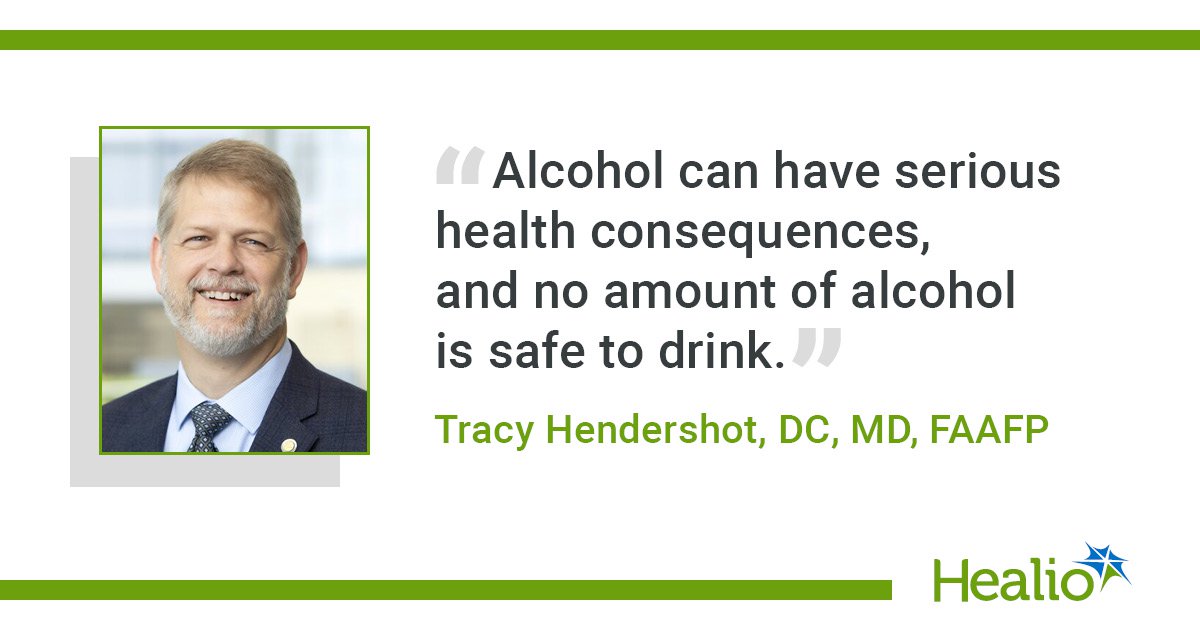
Hendershot: Dry January, Sober October and other challenges are a good way for people to examine their habits around alcohol. Science does not lie either — alcohol can have serious health consequences, and no amount of alcohol is safe to drink. Taking a break from drinking is a great way to revisit your limits and focus on your health, no matter what time of year that happens. I want my patients to practice moderation and look for ways to improve their health and habits year-round.
Healio: How does Dry January impact the body, especially if a patient is usually a heavy drinker? Could going cold turkey impact them differently? What about patients with certain chronic conditions like CVD or diabetes?
Hendershot: A more light to moderate drinker will usually feel good after the first few days of sobriety. If someone is a heavy daily drinker, they may experience withdrawal symptoms that worsen over 3 to 5 days. The withdrawal symptoms in this group can be serious. For that reason, a heavy drinker should discuss cessation with their physician before they start. Together, a comprehensive plan can be created that ensures good long-term outcomes. Regardless of the category of previous alcohol use, anyone experiencing severe withdrawal symptoms should reach out to their doctor to get support during this transition.
Healio: Since drinking behaviors can affect sleep cycles, how might Dry January affect sleep?
Hendershot: If you are a regular drinker, taking a break from alcohol can improve your sleep dramatically. When we drink, our resting heart rate rises and our body is under more stress as we process the drinks, leading to more restless nights. Cutting alcohol out of the equation and practicing good sleep hygiene can make sure your shuteye is high quality.
Healio: Alcohol and its impact on health was a huge topic in 2025, as there were conflicting reports from HHS and National Academies of Science, Engineering and Medicine. What is the truth? What are the pros and cons to alcohol intake?
Hendershot: The truth is that alcohol is a toxin, and repeated studies have shown that it contributes to many poor health outcomes. It was reported in early 2025 by the Surgeon General that it is the third leading preventable cause of cancer in the U.S., after tobacco and obesity. It also shows that the more alcohol a person drinks, the higher their risk is. For certain cancers like breast, mouth and throat cancers, evidence shows the risk may start to increase with only one or fewer drinks per day.
As a physician, I will never advocate that my patients should be drinking more alcohol — it is always the opposite. I want my patients to lead the healthiest lives possible, and the truth is simply that alcohol hurts that journey and can make it much harder to reach health goals.
Healio: How can PCPs help patients practice moderation and keep this energy throughout the year?
Hendershot: Every time a patient comes in for their annual checkup, I talk to them about their alcohol consumption and habits. By tracking these habits over time, I can point out trends and have hard conversations with patients. I may even be the first person to notice the change.
Even if a patient comes in and says they are participating in Dry January, we talk about what their typical alcohol habits are, what is recommended and any strategies for limiting their drinking.
Healio: Should PCPs ask their patients about Dry January if they come in this month? Is there anything they should specifically know about the practice and how it might affect their patients?
Hendershot: As a family physician, any time a patient comes in for their regular checkup, we talk about things like sleep, exercise and alcohol. Staying up to date on someone’s alcohol habits helps me tailor care to their goals. If a patient is looking to lose weight, sleep better or lower their risk for disease, cutting back alcohol is a great place to start.
Healio: What is the take-home message here?
Hendershot: I want to encourage physicians to open the dialogue around alcohol and to be honest about the dangers. Alcohol is such a normal part of life that it is easy to brush off how dangerous it can be. I will never shame my patients for their choices but instead will arm them with the knowledge to make the best choices for them.
Healio: Is there anything else you would like to add?
Hendershot: The first visit after the new year is a great time to reflect with your physician about your yearly health goals. Alcohol reduction or cessation is a common and worthwhile goal. Ideally, it should be folded into a yearly health plan that moves the patient close to optimizing their entire well-being.
For more information:
Tracy Hendershot, DC, MD, FAAFP, can be reached at primarycare@healio.com.
Sources/Disclosures
Source:
Healio Interviews
References:
Disclosures:
Hendershot report no relevant financial disclosures.

Ask a clinical question and tap into Healio AI’s knowledge base.
- PubMed, enrolling/recruiting trials, guidelines
- Clinical Guidance, Healio CME, FDA news
- Healio’s exclusive daily news coverage of clinical data
<







Leave a Reply