
A health care tool for an overlooked public health problem
January 29, 2026
5 min read
Key takeaways:
- Virtual reality transports patients into immersive landscapes — a coral reef, a forest, even a simple puzzle world — as the real-life medical procedure unfolds.
- Evidence supports its use for needle phobia.
Fear of needles is one of health care’s most common, and most ignored, barriers.
Millions of people experience anxiety or panic attacks at just the sight of a syringe. Some avoid routine vaccinations or postpone blood tests or IV treatments until symptoms worsen. Many who intend to donate blood never show up, held back by a fear they rarely admit aloud.

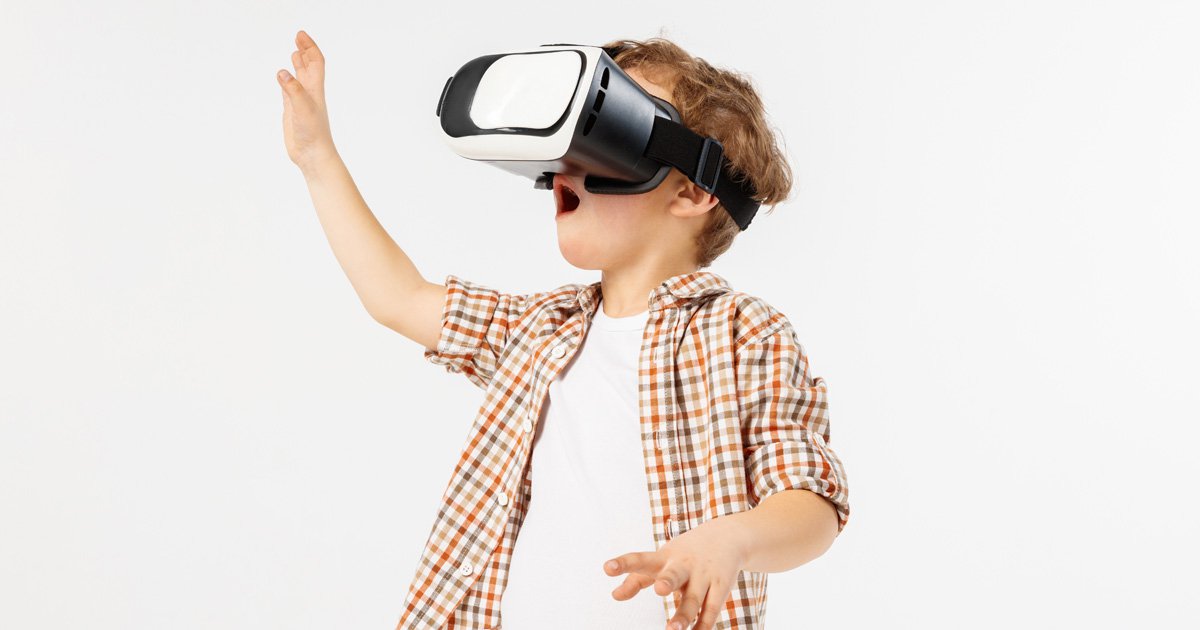
Virtual reality transports patients into immersive landscapes as the real-life medical procedure unfolds. Image: Adobe Stock
This is not only a personal struggle. It is a public health problem, too. Surveys show that young adults often cite needle anxiety as the top reason they do not donate blood. This extends to care in hospitals daily: the child who must be restrained for a simple injection; the adult who faints before donating blood; the patient who quietly cancels an appointment rather than face an IV. During the COVID-19 pandemic, many delays in vaccine uptake were driven not by ideology — but by fear. Fear of pain, fear of the procedure or fear of the needle itself.
Innovative technologies are beginning to change this pattern and its consequences. And they may reshape how we face everyday procedures and how prepared we are for future public health emergencies.
A different kind of escape
Virtual reality (VR), once the domain of gaming arcades, has found a surprising new home in clinics and hospitals. Using VR headsets, patients are transported into immersive landscapes: a coral reef, a forest, even a simple puzzle world, while the real-life medical procedure unfolds quietly in the background.
Does it actually work? The evidence is remarkably strong. VR has been used to comfort children affected by war and conflict. In a randomized trial of children undergoing IV placement, those who used VR reported significantly less pain and anxiety than those receiving standard distraction. Parents and nurses noticed, too: calmer behavior, more cooperation, resulting in smoother procedures. A systematic review of VR in pediatric care echoed these findings across multiple trials.

Robert Glatter
Adults benefit as well. In a multicenter randomized study, VR was tested against IV sedation during epidural steroid injections, a procedure typically performed using sedatives such as a benzodiazepine (midazolam) and an opiate (fentanyl). VR, surprisingly, was “noninferior” or provided equally good results for managing pain and anxiety. Patients remained alert, communicative and free of the side effects that accompany sedative and opioid medications.
A digital experience replacing sedation is not a small shift. It signals that for certain procedures, VR can reduce costs, eliminate risk and make care more humane. Yet despite this evidence, surveys show VR remains among the least implemented tools for managing needle-related distress. The gap between what works and what we use is wide and costly.
Treating the fear itself
VR is not just a distraction tool. It is also being explored as a treatment for needle phobia. In one pilot study, adults with severe needle fear participated in a single VR exposure session, immersed in controlled, virtual medical scenarios involving needles. The experience intentionally triggered anxiety, as exposure therapy requires, but participants found it tolerable, acceptable and even helpful. Some reported modest and lasting reductions in fear.
For those whose fear is so overwhelming they cannot face a real needle, VR may offer a safe initial step toward desensitization.
Reinventing blood donation
Nowhere is needle anxiety more visible, or more consequential, than in blood donation. Every country faces blood shortages, and every shortage is worsened by the simple fact that many would-be donors cannot overcome their fear.
In a recent multicenter U.S. pilot, mixed-reality headsets were offered to donors during the session. Among those who arrived with fear and anxiety, two-thirds said the experience reduced their anxiety, and nearly 90% said it made them more likely to donate again. First-time and young donors — the hardest groups to treat, support and retain — found the technology especially appealing.

Shreenik Kundu
VR is also helping to address another key barrier: lack of transparency. The UK National Health Service created a 360° VR tour that lets potential donors virtually “walk through” a plasma donation. They see the equipment, the needle insertion, the machine, and even meet a patient who depends on donated plasma. Myth-busting content is embedded along the way to improve trust. For many, seeing is believing. For others, seeing reduces fear enough to act.
A public health tool for future crises
Needle fear doesn’t just delay appointments — it impacts population resilience. Mass vaccination campaigns depend on rapid uptake. During a future pandemic, if millions fear the needle more than the disease, even the best vaccine will fail to protect the public at large.
VR could also help prepare communities before a crisis develops. Schools, community centers and clinics could offer short VR modules showing what a vaccination entails, why it matters and how simple it can be. During real-world outbreaks, VR stations at vaccination centers could calm patients and reduce vaccine refusal that is rooted in anxiety. This is not only about comfort — it’s about readiness.
Solving the physical problem
Needle fear is not only emotions. The fear is reinforced when needles inflict pain or when procedures fail. Many patients endure multiple IV attempts, each one escalating a patient’s fear response, leading to aversion and a stress response. Robotics may soon change that. Engineering teams, including at Stanford, have developed robotic vascular-access systems that use imaging to identify veins and guide needles with precision. Their goal is simple: make IV placement faster, safer and less painful. Picture a future clinic where a robot finds the vein on the first try, while the patient, wearing a VR headset, explores a serene digital world. Discomfort and fear are minimized as trust is restored.
A chance to build a resilient health care system
VR will not work for everyone. Some will prefer traditional coping methods; a few will experience cybersickness. But for many, VR offers something rare in medical settings: a sense of control.
Health care has long overlooked the emotional dimension of needle procedures. Children who cry are labeled “difficult.” Adults who faint are told to “look away.” But fear is not a weakness. It is a physiological response. And now, we finally have a tool that can help. VR offers a humane, evidence-based way to tackle one of health care’s most pervasive anxieties. It is time to take it seriously — not as a novelty, but as a public health asset.
For more information:
Robert Glatter, MD, is an assistant professor at the Zucker School of Medicine at Hofstra/Northwell and emergency medicine physician at Lenox Hill Hospital. He can be reached at rglatter@northwell.edu; Instagram rdglatter; LinkedIn https://www.linkedin.com/in/dr911/; and X @DrRobertGlatter.
Shreenik Kundu, MD, is a PhD student in the department of experimental surgery and surgical and interventional sciences at McGill University. He can be reached at shreenik.kundu@mail.mcgill.ca.
Sources/Disclosures
Source:
Expert Submission
References:
- Behind the scenes: NHS 360° healthcare video. https://spark-media.co.uk/behind-the-scenes-nhs-360-healthcare-video/. Published April 15, 2025. Accessed Jan. 22, 2026.
- Caltabiano A, et a. Front Psychiatry. 2025;doi:10.3389/fpsyt.2025.1642988.
- Cohen SP, et al. Lancet Reg Health Southeast Asia. 2024;doi:10.1016/j.lansea.2024.100437.
- Eijlers R, et al. Anesth Analg. 2019;doi:10.1213/ANE.0000000000004165.
- Gold JI, et al. JAMA Netw Open. 2021;doi:10.1001/jamanetworkopen.2021.22569.
- HaemoBot: Robotic IV catheter insertion. https://web.stanford.edu/group/sailsbury_robotx/cgi-bin/salisbury_lab/?page_id=265. Accessed Jan. 22, 2026.
- New study shows mixed reality technology for blood donation from Abbott and Blood Centers of America helps ease stress, encourages people to donate again. https://abbott.mediaroom.com/2024-02-01-New-Study-Shows-Mixed-Reality-Technology-for-Blood-Donation-from-Abbott-and-Blood-Centers-of-America-Helps-Ease-Stress,-Encourages-People-to-Donate-Again. Published Feb. 1, 2024. Accessed Jan. 22, 2026.
- Shock horror: Blood donation among top fears of 18-24 year olds. https://www.blood.co.uk/news-and-campaigns/news-and-statements/shock-horror-blood-donation-among-top-fears-of-18-24-year-olds/. Published Oct. 17, 2018. Accessed Jan. 22, 2026.
- Virtual reality offers escape to Gaza children wounded in Israel’s war. https://www.aljazeera.com/news/2025/12/13/virtual-reality-offers-escape-to-gaza-children-wounded-in-israels-war. Published Dec. 13, 2025. Accessed Jan. 22, 2026.
Disclosures:
Glatter reports holding membership on the board of directors of CaringKind. Kundu reports no relevant financial disclosures.

Ask a clinical question and tap into Healio AI’s knowledge base.
- PubMed, enrolling/recruiting trials, guidelines
- Clinical Guidance, Healio CME, FDA news
- Healio’s exclusive daily news coverage of clinical data
<







Leave a Reply