
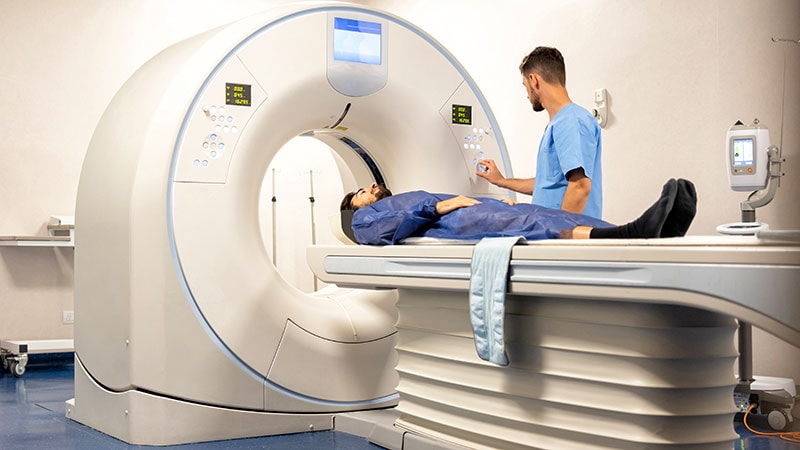
“Patients spend their own money getting the baseline scan,” said Dr Rohin Francis, a consultant interventional cardiologist in Essex. “But private companies want to earn from the easy part and take no responsibility for interpreting nor following up the results, so they make non-evidence-based recommendations and hedge their bets in their reports.”
Commercial full-body MRI or CT scans are becoming increasingly popular in the UK, marketed as a way to detect disease early or to provide peace of mind. Yet the growing demand is placing added pressure on doctors, as many people who undergo screening in this private sector turn to the NHS for help interpreting or acting on the findings.

“GPs are often left to try to interpret invalidated tests with a shopping list of recommendations, placing a large and entirely unnecessary burden on the health service, impacting patients who are in genuine need,” Francis told Medscape News UK.
People are increasingly opting for scans while asymptomatic, seeking reassurance that nothing is wrong while also hoping for early warning of disease.” The trend has been fuelled in part by endorsements from celebrities like Kim Kardashian and Paris Hilton. However, most medical experts do not recommend whole-body MRI or CT scans for people without symptoms, warning that such screening may in many cases do more harm than good.
Extra Work for Doctors
The Doctors Association UK has raised concerns about the rapid growth of the commercial scanning market. Co-chair Dr Matt Kneale told Medscape News UK: “These services are often marketed as reassurance or early detection, but for most asymptomatic individuals there is no good evidence that whole-body MRI or CT screening improves outcomes. What is clear is that it generates large numbers of incidental findings that have uncertain clinical meaning.”

He added: “In practice, this often complicates patient care rather than helping it. Incidental findings commonly trigger further tests, referrals, and follow-up within the NHS, shifting risk and workload onto an already stretched system. Clinicians then have to manage results they did not request, often with limited clinical context.”
Full-body scans frequently detect abnormalities that are not clinically significant, such as small cysts or benign tumours. These findings can lead to further imaging, biopsies, or specialist referrals, each carrying its own risks and costs, as well as anxiety for patients facing false alarms. The psychological stress of waiting for results can also be significant.
Increases Health Anxiety
“Whilst patients taking a more active interest in their health is a good thing, they need to be aware of the limitations and potential risks of these services, particularly where the evidence base for benefit is unclear,” said Professor Victoria Tzortziou Brown, chair of the Royal College of General Practitioners.

“With the risk of false positives and negatives, and in some cases no offer of an interpretation of the results or appropriate aftercare, self-testing or screening products can cause a significant amount of stress and anxiety for patients. As GPs, we have patients making appointments because they’re concerned about the results they’ve received or want us to explain them. This not only negatively impacts our patients, but it can also intensify the enormous pressures that GPs and their teams are currently under,” she told Medscape News UK.
Kneale said the emotional toll on patients is often underestimated, “Being told you have an abnormality, even one that is likely benign, can cause significant anxiety, investigation burden, and prolonged uncertainty. Many people end up labelled as patients despite feeling well, with no clear benefit and real psychological harm.”
The impact is felt beyond general practice, Francis said. “GPs are the ones dealing with this increasing trend most acutely, but in truth it is affecting all medical practitioners. In my line of work, I am booking several follow-up scans on the NHS every month to see how an incidentaloma in the chest looks several months down the line from a baseline private scan. Almost all end up requiring no treatment.”
Limits of the Technology
A full-body MRI may also be a blunt tool for detecting disease. While it provides an anatomical overview, it does not optimise imaging for each organ system. MRI scanners require specific sequences and parameters to answer specific clinical questions.
“Full-body scans by definition scan everything, but that’s not how MRI scanners work,” Francis explained. “You have dedicated sequences for different parts of the body and different questions.”
Dr Margaret McCartney, a GP in Glasgow and director of the Centre for Evidence and Values in Healthcare at the University of St Andrews, said the promise of prevention is not backed by evidence. “These scans tend to cost a lot of money but they are not proven to help people avoid becoming ill or getting diseases,” she told Medscape News UK. “Conversely, they can often pick up abnormalities that you would never have known about had you not had the scan, and lead to more scans, tests, and biopsies. But instead of doing you a favour, all they do is harm, because the ‘abnormality’ picked up was never going to do you harm.”

She added: “The difficulty is that everyone who has something found can end up thinking that they have benefited by something being found, rather than harmed by a scan that detected something that wasn’t going to harm them in the first place.”
Claims of lives being “saved” by early detection are also impossible to verify, Francis said. “We have no way of knowing the future of a nodule. Many would never have gone on to cause any problems. When there is doubt, the patient and doctor will err on the side of caution and suggest chopping the lump out or working on the assumption it is cancer. The customer, who has now gone from being a carefree person to a patient, may well have undergone treatment like an operation or chemotherapy, or in the case of the increasingly popular coronary CT scans, a stenting procedure. But the treatment might not actually have made any difference.”
Few Findings Are Clinically Serious
The Royal College of Radiologists does not advise people to undergo whole-body scans without a clear medical indication. Its president, Dr Stephen Harden, told Medscape News UK, “Whole-body scans such as MRI and CT are useful tools to help diagnose and monitor disease. However, we do not recommend getting one unless referred by a doctor, to investigate symptoms.”

He warned of “overdiagnosis and overtreatment of harmless irregularities”, which can cause “unnecessary anxiety” and even lead to “unnecessary treatment”.
Evidence suggests that serious findings are relatively uncommon. A systematic review of more than 27,000 MRI scans in apparently asymptomatic adults found that about 3.9% had potentially serious incidental findings, though limited follow-up data suggest relatively few of these proved clinically serious.
“It’s easy to only look at anecdotes of patients who had an unknown cancer picked up,” Francis said. “But they are vastly outnumbered by those who had an incidentaloma — some abnormal finding — that initiated what’s called a cascade of care, leading to other scans or tests, perhaps even invasive procedures, not to mention anxiety and cost. Some of this can cause direct harm.”
Who Should Take Responsibility?
The RCGP has said NHS doctors should not be expected to take on the interpretation and follow-up of commercially commissioned scans.
“We’re clear as a college that companies offering self-testing or screening services should not default to NHS general practice as the provider for next steps and aftercare, unless the test was initiated in primary care or as part of a commissioned NHS service,” Tzortziou Brown said.
“If patients do choose to proceed with a private test or scan, they should ask the provider for clear, independent information about accuracy, including false-positive and -negative rates, and confirmation that the provider will take responsibility for interpreting results and arranging any necessary aftercare.”
Is It Really Healthcare?
As preventive medicine and wellness gain prominence, the appeal of comprehensive scans is understandable. The experience itself can feel reassuring, Francis said.
“Having a day out to be pampered in a shiny-looking MRI scanner with unrushed and friendly staff — of course paying handsomely for the privilege — feels like you’re investing in your health. It’s a self-care day with a million-pound scanner instead of essential oils. Having a company produce a four-page report on your body feels like legitimate medical care, rather than a money-making scheme.”
Medscape News UK approached several private providers offering whole-body scans without NHS referral for comment. These included Vista Health, Neko Health, GetScanned, Scan.com, and Prenuvo. None had responded at the time of publication.
Siobhan Harris is an experienced health, medical, and news journalist. She works in broadcast media and online.
<









Leave a Reply