
 Column
Lewiss on Lifestyle Medicine
Lewiss on Lifestyle Medicine
Key takeaways:
- Poor sleep is associated with health issues such as CVD, metabolic diseases like diabetes and obesity, and mental health diseases like depression and anxiety.
- Most people do not talk to their doctor about sleep.
Why is sleep so important for our overall health?
Healthy sleep is critical for our well-being from infancy to old age. At an individual level, poor or inadequate sleep increases our risk for health issues, including CVD, metabolic diseases like diabetes and obesity, and mental health diseases like depression and anxiety. At a societal level, insufficient sleep and undiagnosed and untreated sleep disorders are underappreciated. And we all shoulder the burden of poor sleep because of costs related to accidents and decreased productivity.

Source: Katie Sharkey, MD, PhD
To learn more, I spoke with sleep medicine and circadian rhythm expert Katie Sharkey, MD, PhD, the inaugural director of the Center for Sleep and Circadian Rhythms at Wake Forest University School of Medicine in Winston-Salem North Carolina. She is also a professor of psychiatry and behavioral medicine at Wake Forest University School of Medicine.
Lewiss: You shared that obstructive sleep apnea (OSA) and insomnia are the two most common sleep-related complaints for which you counsel and treat patients. What should we know about these sleep disorders?
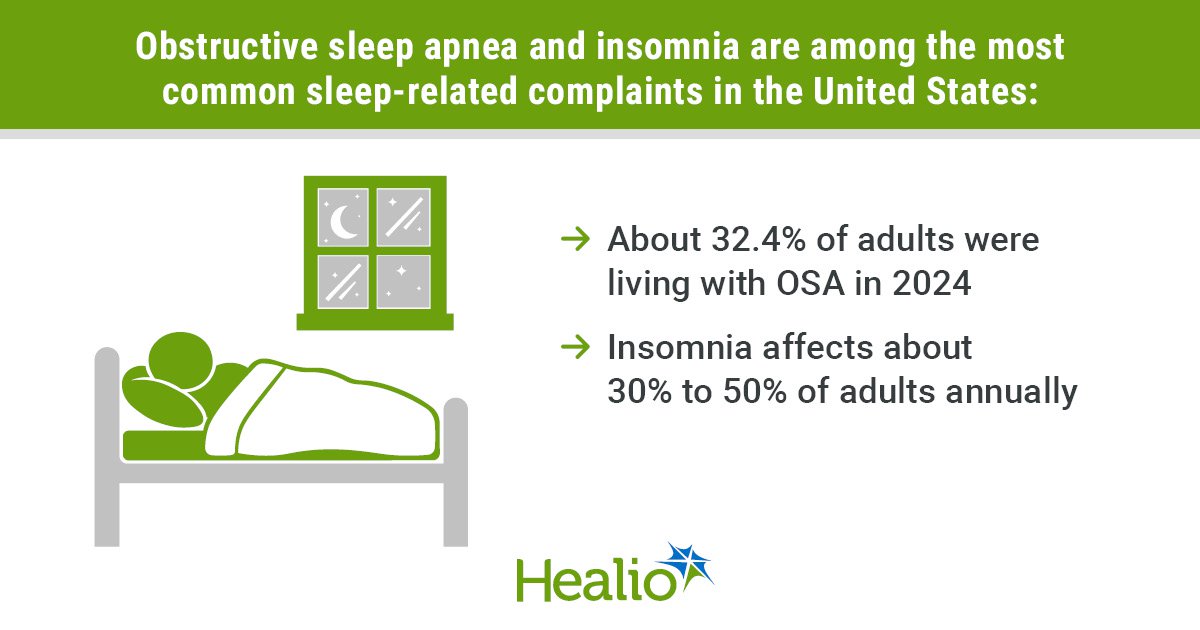
Sharkey: A systematic review published in 2025 concluded that 83.7 million U.S. adults ages 20 years or older are living with OSA, which is a staggering 32.4% of the population. Rates are higher among men (60%) than women (40%) and higher among those with obesity. I tell my patients that sleep apnea is bad for every part of the body that has blood vessels (ie, every organ system) because OSA causes intermittent hypoxia, which injures the delicate endothelial cells that line our vasculature resulting in inflammation. OSA results in damage not only at the cellular level, but also impacts critical neurobehaviors like attention, mood regulation, concentration and cognition. Despite the high prevalence and negative health effects, an estimated 80% of people with OSA go undiagnosed or untreated.
Insomnia annually affects an estimated 30% to 50% of adults. This is defined as sustained difficulty falling and/or staying asleep. Insomnia has the opposite sex-distribution as OSA — women have about two times the rate that men do. Women also are more likely to experience insomnia in the context of hormonal changes, such as during pregnancy, the postpartum period and menopause. As with OSA, insomnia is associated with a breadth of negative health outcomes. It too often goes unrecognized and untreated. Experiencing a poor night of sleep every once in a while is common; it is problematic when the bad nights start to outnumber the good ones. Paradoxically, insomnia can then take on a life of its own because in an attempt to overcome their sleep difficulties, people often employ strategies that make things worse, such as overusing caffeine, napping to “make up” for lost sleep, or going to sleep too early at night when the body clock is not ready for nighttime sleep. The majority of people suffering with insomnia don’t ask for medical help, and even when they do, their symptoms are not fully evaluated or treated. In my experience, many patients do not want to take “sleeping pills.” At the same time, clinicians are often reluctant to prescribe them because of the risks and side effects associated with older hypnotic medication classes. The good news is that in the majority of patients, insomnia can be treated successfully with behavioral treatments, such as cognitive-behavioral therapy for insomnia or brief behavioral therapy for insomnia. These treatments are delivered virtually and online. In addition, we are seeing patients helped by new medications, such as dual receptor orexin antagonists. They appear to have a more favorable safety profile than the older hypnotics.
Lewiss: One of the lifestyle medicine pillars is avoiding harmful substances, such as alcohol. Alcohol negatively contributes to over 200 health–associated conditions. What is your take on alcohol as a sleep aid?
Sharkey: The research shows that alcohol shortens the time it takes to fall asleep. And people often drink alcohol to help them sleep — for instance, the stereotypical “night-cap” beverage consumed before bed to help unwind and transition to sleep quickly. Alcohol works on gamma-aminobutyric acid (GABA) receptors, which is the same receptor system targeted by sleeping pills like zolpidem (Ambien, Cosette Pharmaceuticals) and eszopiclone (Lunesta, Waylis Therapeutics). However, alcohol disrupts deep sleep. It suppresses REM sleep in the beginning of the night, which leads to more REM at the end of the night and more sleep fragmentation. And just like the benzodiazepines and other GABA agonists, people can become tolerant to alcohol’s effects.
Other negative effects of alcohol include a decrease in total sleep time and an attenuation in the expected decrease in nighttime resting heart rate. Alcohol consumption decreases physical activity the following day and, importantly, women and younger adults are more susceptible to these negative effects. Finally, alcohol worsens sleep-disordered breathing. So, people with OSA should avoid drinking alcohol before bed.
Bottom line: alcohol does not help sleep and can be harmful.
Lewiss: People come to the ED frustrated and mentally exhausted, complaining of insomnia. They ask for a sleep medicine prescription. We are hesitant to prescribe sleep medications. To where and to whom should we direct them?
Sharkey: An unfortunate truth is that most people do not tell their doctors about their sleep symptoms. It’s incredibly disheartening as there are many effective treatments we can offer. So, the first step in counseling patients is to advise them to discuss their sleep problems with their doctor. One of the best parts of sleep medicine is that it is multidisciplinary — physicians can enter a sleep medicine fellowship from a range of primary specialties: neurology, internal medicine, pediatrics, psychiatry, family medicine and otolaryngology. In addition, many sleep medicine physicians are also trained in pulmonary and critical care medicine. That said, if people are having sleep problems, I would start with referring them to primary care and encourage people to advocate for themselves. For people to learn more about sleep and sleep disorders, I would encourage them to visit the following resources:
For more information:
Resa E. Lewiss, MD, DipABLM, is a lifestyle medicine and emergency medicine physician. She is an adjunct professor of emergency medicine at the Warren Alpert Medical School of Brown University. She produces and hosts The Visible Voices Podcast and is the co-author of the leadership book MicroSkills: Small Actions, Big Impact. She can be reached via her website resaelewissmd.com.
Katie Sharkey, MD, PhD, can be reached at primarycare@healio.com.
Lewiss on Lifestyle Medicine
Sources/Disclosures
Source:
Expert Submission
References:
Disclosures:
Lewiss reports no relevant financial disclosures. Sharkey reports receiving royalties from Up-To-Date and Wolters Kluwer and being a speaker for Pri-Med.

Ask a clinical question and tap into Healio AI’s knowledge base.
- PubMed, enrolling/recruiting trials, guidelines
- Clinical Guidance, Healio CME, FDA news
- Healio’s exclusive daily news coverage of clinical data
<










Leave a Reply