

Key takeaways:
- A transcatheter mitral valve replacement system improved symptoms in patients with severe mitral regurgitation at high surgical risk.
- The valve is designed to avoid left ventricular outflow tract obstruction.
A novel transcatheter mitral valve replacement system designed for left atrial fixation rather than subvalvular fixation improved mitral regurgitation and functional outcomes in patients at high surgical risk, a speaker reported.
The system (AltaValve, 4C Medical Technologies) is designed to avoid left ventricular outflow tract (LVOT) obstruction and enable implantation in patients otherwise ineligible for transcatheter mitral valve replacement (TMVR) due to large valve annulus or mitral annular calcification, according to data presented at the Society for Cardiovascular Angiography & Interventions Scientific Sessions & Canadian Association of Interventional Cardiology/Association Canadienne de cardiologie d’intervention Summit.

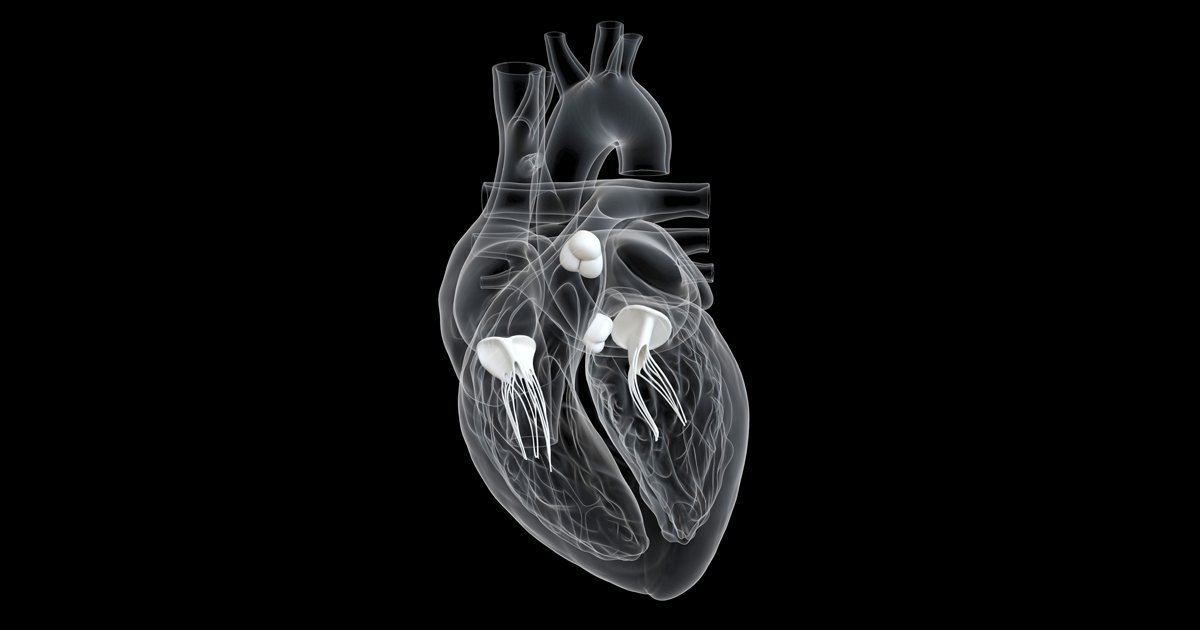
A transcatheter mitral valve replacement system improved symptoms in patients with severe mitral regurgitation at high surgical risk. Image: Adobe Stock
The novel TMVR system
“Many currently available TMVR technologies rely heavily on subvalve fixation, and as a result they use rigid anchoring mechanisms, whether that’s achieved by hooks, barbs, paddles or tethers,” Konstantinos Voudris, MD, PhD, FSCAI, director of the Center for Valve and Structural Heart Disease at Allina Health Minneapolis Heart Institute at Abbott Northwestern Hospital, said during a press conference. “This interaction can lead to increased risk for LVOT obstructions, limitation in complex mitral valve anatomy, large angular sizes and [mitral annular calcification]. Additionally, it usually interferes with the native mitral valve annular dynamics. As a result, screen failure rates for TMVR technologies go all the way up to 70%.”
High rates of screen failure results from three key exclusions including risk for LVOT obstruction, large mitral valve annulus and mitral annular calcification, according to the presentation.
The novel system is designed to avoid these exclusions by relying on left atrial fixation of the device rather than subvalve fixation to reduce risk for LVOT obstruction, increasing the size of the treatable mitral valve annulus and enabling use in patients with moderate to severe mitral annular calcification, according to the presentation.
“The AltaValve System is a bovine pericardium valve. It’s a 27 mm valve that’s caged inside a nitinol stent frame that conforms to the left atrial anatomy,” Voudris said during the press conference. “It’s delivered through a 29 [French] transseptal delivery system that allows for repositioning, as well as recapture at multiple stages, even after full deployment.”
Voudris presented the 1-year results of a prospective, multicenter, single-arm, global early feasibility study evaluating the safety and efficacy of the novel valve replacement system in patients with severe mitral regurgitation at high surgical risk.
1-year outcomes with novel TMVR
Thirty patients were enrolled, of which 43% were older than 80 years (mean age, 77 years; 63% women; 80% NYHA class III or IV). Mean left ventricular ejection fraction was 53.8% and moderate to severe mitral annular calcification was present in 23% of the cohort, according to the presentation.
Procedural technical success was reported to be 97%, with one patient being converted to surgery.
Mitral regurgitation grade improved from severe to none/trace after the procedure in 82% of participants at 1 year, and mitral valve gradient increased from 2.5 mm Hg at baseline to 4 mm Hg, with LVEF unchanged, according to the presentation.
At 1 year, in patients who underwent transapical valve replacement, the rate of all-cause mortality was 38% and the rate of cardiac mortality was 31%, whereas for those who underwent transseptal valve replacement, the rate of all-cause mortality was 12% and there were no cases of cardiac mortality, Voudris said.
There was no need for mitral valve reintervention at 1 year in the transapical and transseptal access groups, according to the presentation.
At baseline, 73% of patients were NYHA class III. At 1 year, researchers reported, 5% were NYHA class III, 64% were class II and 32% were class I.
LVOT diameter, LVOT gradient and LV end diastolic and systolic dimension were unchanged, whereas forward stroke volume increased from 52 mL at baseline to 60 mL at 1 year, according to the presentation.
Voudris reported these changes resulted in improved functional capacity, as measured by the 6-minute walk test, with average walk distance increasing by 45 m at 1 year. In the subgroup of patients who underwent transseptal mitral valve replacement, 6-minute walk distance increased by 65 m vs. baseline.
“Currently, the AltaValve system is being evaluated in the ATLAS pivotal study, which includes two arms. The primary cohort for moderate to severe or severe mitral regurgitation, as well as the [mitral annular calcification] cohort,” Voudris said during the press conference. “The AltaValve system early feasibility study showed sustained reduction in mitral regurgitation at 1 year with improved clinical outcomes. Left ventricular dynamics improved at 1 year. The atrial fixation system is designed to minimize LVOT interaction, and the pivotal trial is currently enrolling globally.”
Sources/Disclosures
Source:
Elmariah S, et al. Featured clinical science. Presented at: Society for Cardiovascular Angiography & Interventions Scientific Sessions & Canadian Association of Interventional Cardiology/Association Canadienne de cardiologie d’intervention Summit; April 23-25, 2026; Montreal.
Disclosures:
Voudris reports consulting for 4C Medical Technologies, Abbott and Medtronic and speaking for Edwards Lifesciences. The study was supported by 4C Medical Technologies.

Ask a clinical question and tap into Healio AI’s knowledge base.
- PubMed, enrolling/recruiting trials, guidelines
- Clinical Guidance, Healio CME, FDA news
- Healio’s exclusive daily news coverage of clinical data
<













Leave a Reply