
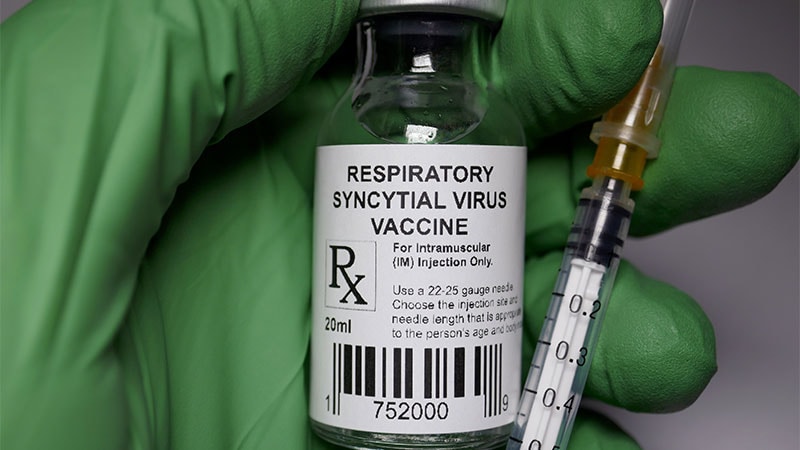
The nation’s largest pediatric medical society has released new vaccine guidelines that for the first time differ sharply from what the US government advises.
The American Academy of Pediatrics (AAP) recommended immunization schedule, released January 26, is endorsed by 12 other medical groups, including the American Medical Association and the American Pharmacists Association. The AAP recommends children and adolescents be vaccinated against 18 diseases. All children should receive the COVID-19, rotavirus, hepatitis A and B, meningococcal serogroups A, C, W, Y, and B, and respiratory syncytial virus (RSV) vaccines.
Earlier this month, the Advisory Committee on Immunization Practices (ACIP) at the CDC recommended these vaccines just for high-risk groups, a pivot from the agency’s previous universal recommendations.
“We recognize what is happening in ACIP and more broadly across HHS is not in the interest of the American public,” said Sean O’Leary, MD, MPH, chair of the AAP Committee on Infectious Diseases.
The AAP and six other medical and public health groups are suing the government in federal court to disband ACIP and invalidate its latest actions, claiming the panel now serves “as a megaphone for spreading misinformation about immunization and infectious diseases.” The American College of Physicians, American Public Health Association, and Infectious Diseases Society of America, among others, have joined the AAP in the lawsuit.
Published in the AAP Red Book Online, the AAP’s schedule is the same as what the organization published in August 2025. Those recommendations include universal COVID-19 immunization beginning at 6 months and the addition of clesrovimab (Enflonsia) — a RSV vaccine — to the list of options recommended for all infants under age 8 months during their first RSV season.
“Medical consensus has not shifted even if federal policy has,” said Peter Chin-Hong, MD,
an infectious disease doctor at the University of California San Francisco School of Medicine, who was not involved in the new recommendations. “The science hasn’t changed and what the AAP is doing with this statement is making that emphatic.”
The AAP first published formal vaccine recommendations in 1938, decades before the formation of ACIP in the 1960s. Since then, the groups have traditionally worked together with other professional medical organizations to create a “harmonized schedule” for childhood vaccines, O’Leary said.
“We’re going to continue to make recommendations based on what is in the best interest of children and what the science tells us,” O’Leary said. “Unfortunately what is happening at the federal government does not seem to be based in science.”
Both O’Leary and Chin-Hong said that, for now, all 18 vaccines the AAP recommends should be covered by insurance for anyone who chooses to get them.
“Under the Affordable Care Act, those should still be covered by insurance,” O’Leary said, adding that the larger effect of the CDC’s updates is sowing confusion among clinicians. “We are getting questions about this a lot from physicians.”
Chin-Hong said he expects confusion among parents about differences in the guidelines to affect rates of childhood vaccination.
“What is going to change is the confusion and the time it takes for clinicians to explain the changes to parents, which will probably lead to less uptake of vaccines regardless of whether insurance covers them,” he said.
O’Leary advises clinicians to continue to advise parents as they always have done.
“I don’t recommend, in general, changing how you talk about vaccines. The vast majority of parents still vaccinate their kids according to the national recommended schedule,” he said.
O’Leary also cautions against clinicians approaching parents with the assumption that they are skeptical about vaccine safety.
“You know they are the standard of care, so recommend them as you have, and then if parents have questions, understand that they aren’t trying to argue with you, they are concerned about the well-being of their kids,” he said.
Chin-Hong said he recommends focusing on what has not changed rather than what has.
“The provider hasn’t changed, the science hasn’t changed, we still have a lot of confidence, and the vaccines are still safe, and these recommendations are based in science, just like the other recommendations I give in my practice,” he said.
The AAP has created a parent-friendly immunization schedule at HealthyChildren.org.
<










Leave a Reply