
April 20, 2026
2 min read
Key takeaways:
- In the U.S., intramuscular vitamin K refusal was less than 1% in most hospitals.
- Parents who refused vitamin K had a higher likelihood for refusal of hepatitis B vaccination and ocular prophylaxis.
CHICAGO — The prevalence of intramuscular vitamin K refusal among parents of newborns is low but has risen in recent years, according to data presented at the American Academy of Neurology Annual Meeting.
“Our findings point to an urgent need for health care professionals to provide prenatal counseling to parents to ensure they understand that vitamin K can dramatically reduce preventable brain injury and its lifelong impact,” Kate Semidey, MD, assistant professor in the department of pediatrics at FIU Herbert Wertheim College of Medicine, said in an AAN press release about the presentation.

Data derived from De Faria Sousa B, et al. Rising parental refusal of newborn vitamin K: Implications for neurology and child development. Presented at: American Academy of Neurology Annual Meeting; April 18-22, 2026; Chicago.
Searching the databases of PubMed and Google Scholar, Semidey and colleagues assessed 25 studies published between 2005 and 2025 to uncover how the prevalences of intramuscular vitamin K refusal and vitamin K deficiency bleeding (VKDB) have changed over the years.
In the U.S., intramuscular vitamin K refusal was less than 1% in most hospitals. On a state level, the prevalence of refusal in California, Connecticut and Iowa in 2018 and 2019 was between 0.2% to 1.3%. Of the providers in these states, more than 50% said they perceived a rise in refusals.
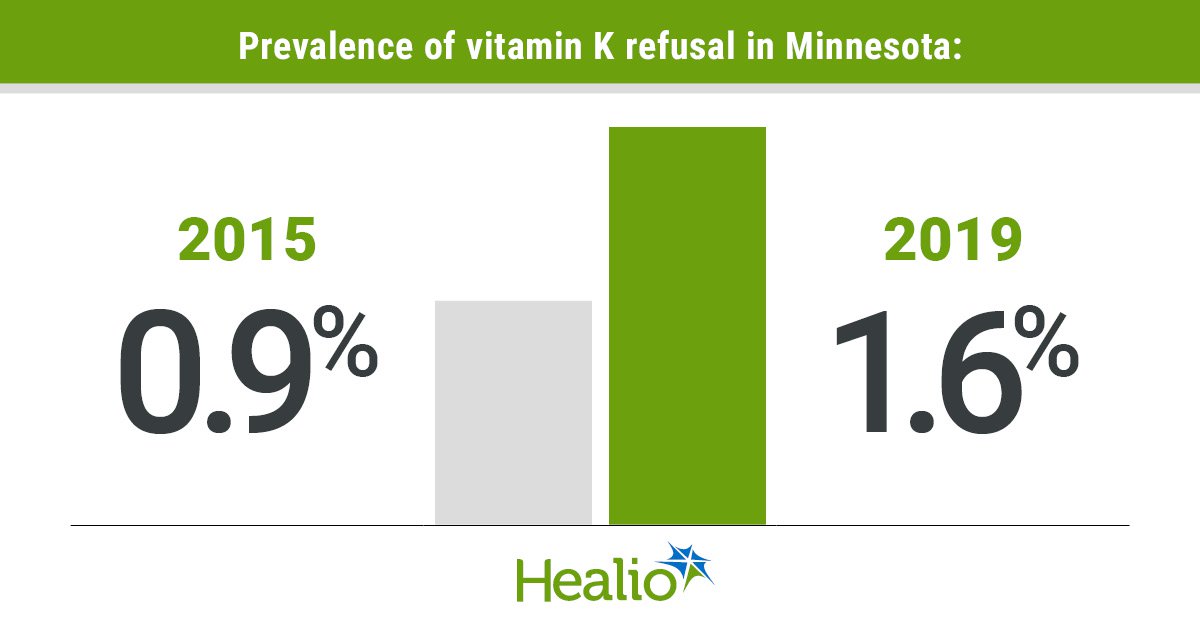
Researchers noted an increase in refusals between 2015 and 2019 in Minnesota from 0.9% to 1.6%.
In Canada, New Zealand and Scotland, the prevalence of vitamin K refusal was slightly above the U.S. (1%-3%). Additionally, in some birthing centers in these countries, prevalence was greater than 30%, according to researchers.
With regard to vaccines and immunizations, the likelihood for a baby being unimmunized at age 15 months was greater among those whose parents did vs. did not refuse intramuscular vitamin K in Canada (14.6 times higher) and New Zealand (14.1 times higher).
U.S. parents who did vs. those who did not refuse intramuscular vitamin K also had a higher likelihood for refusal of hepatitis B vaccination and ocular prophylaxis (90 times higher).
According to the study, pain, preservatives and belief in misinformation were the concerns cited by parents about vitamin K. Risk factors for vitamin K refusal included home birth, midwife care and “natural” philosophies.
Lastly, the likelihood for late VKDB development was 81 times higher among infants without vs. with intramuscular vitamin K prophylaxis. Among babies with VKDB, the evaluated case series reports revealed that more than half had intracranial hemorrhage (approximately 63%), more than one-third had a neurological disability (approximately 40%) and approximately 14% died.
“Vitamin K at birth is safe and effective, and while refusal is still uncommon with rates in the United States remaining under 1% in most hospitals, our review found in recent years, there have been increases in parents refusing this supplement for their newborns,” Semidey said in the release. “This trend is concerning because our review also found that babies who do not get the vitamin K injection are 81 times more likely to develop vitamin K deficiency bleeding.”
Sources/Disclosures
Source:
De Faria Sousa B, et al. Rising parental refusal of newborn vitamin K: Implications for neurology and child development. Presented at: American Academy of Neurology Annual Meeting; April 18-22, 2026; Chicago.
Reference:
Disclosures:
Healio could not confirm Semidey’s relevant financial disclosures at the time of publication.

Ask a clinical question and tap into Healio AI’s knowledge base.
- PubMed, enrolling/recruiting trials, guidelines
- Clinical Guidance, Healio CME, FDA news
- Healio’s exclusive daily news coverage of clinical data
<





Leave a Reply