
April 17, 2026
3 min read
Key takeaways:
- The survey included three scales about sexual health and questions about the effect of atopic dermatitis on sexual activity.
- When AD severity fell with treatment, the frequency of disorders fell as well.
Eighty-five percent of adults with atopic dermatitis also reported a sexual health disorder, but the frequency of these disorders fell with improvements in AD severity, according to data published in Clinical and Translational Allergy.
The vulnerabilities that patients with AD experience in their emotional and mental health as well as the potential of symptoms like eczema and pruritus to interfere with sexual activity may drive these disorders, Jorge Sánchez, MD, MSc, PhD, professor, group of clinical and experimental allergy, Hospital Alma Mater de Antioquia, University of Antioquia, Medellin, Colombia, and colleagues wrote.

Data derived from Sánchez J, et al. Clin Transl Allergy; 2026:doi:10/1002/clt2.70115.
Conducted at six health centers in two Columbian cities, the prospective observational study comprised 221 adults with AD (39.8% men) aged 18 to 50 years (median age, 28 years). Median AD severity scores included 34 based on the SCOre Atopic Dermatitis (SCORAD) scale and 14 on the Patient Oriented Eczema Measure (POEM) scale.
These patients completed surveys at baseline and again between 5 and 7 months after they began treatment for their AD recommended by an AD specialist.
The survey included three international scales that explored initiating and maintaining relationships (the relationship domain), feelings about sex and sexual stimulation (the sexual desire domain), and initiation, enjoyment and frequency of sexual intercourse (the sexual activity domain), as well as items about the impact of AD on sexual activity.
In addition to the 85% of patients overall reporting a sexual health disorder, as well as 57.4% reporting disorders in at least two domains, 60.6% reported a disorder in the relationship domain, 54.7% reported a disorder in sexual desire and 42% reported a disorder in sexual activity.
Based on severity as defined by SCORAD, 56.5% of those with mild AD (< 25 points), 96.4% of those with moderate AD (26-50 points) and 100% of those with severe AD (> 51 points) reported a sexual health disorder.
Men were more likely to report disorders in the relationship domain, including difficulties in maintaining relationships, and women were more likely to report disorders in sexual desire and activity, such as unpleasant and painful sexual activities and negative emotional impact, the researchers said.
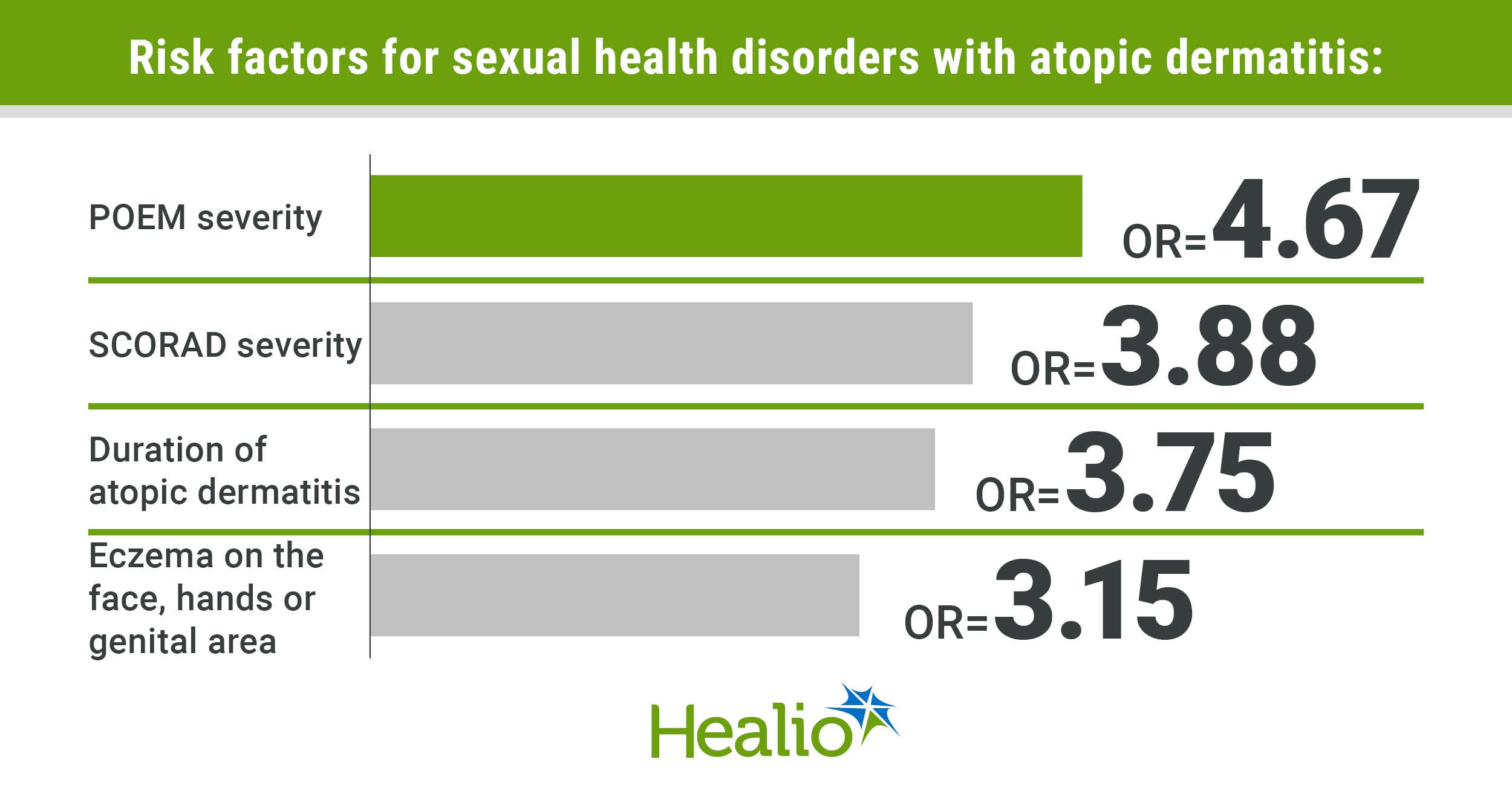
Risk factors for these disorders included POEM severity (OR = 4.67; 95% CI, 3.05-5.79), SCORAD severity (OR = 3.88; 95% CI, 2.68-4.73), longer disease duration (OR = 3.75; 1.88-4.91) and eczema on the face, hands or genital area (OR = 3.15; 95% CI, 2.88-5.19).
Improvements in AD severity and disorder frequency followed pharmacotherapy, the researchers said. Patients with mild AD had the largest improvements in relationships and sexual desire. Those with moderate AD had the biggest improvements in sexual activity.
Overall relative reductions in disorders included 60% for the mild group, 41% for the moderate group and 28% for the severe group.
Specifically, relative reductions included 62.5% for relationships, 68.8% for sexual desire and 48.6% for the mild group; 11.3% for relationships, 59% for sexual desire and 53.6% for sexual activity for the moderate group; and 34.5% for relationships, 35% for sexual desire and 14.3% for sexual activity for the severe group.
The researchers further noted a significant correlation between SCORAD score and quality of life based on these disorders at baseline (R = 0.814; P = .001) and after pharmacotherapy (R = 0.916; P < .001).
Based on these findings, the researchers said that even mild AD can have a negative impact on sexual health, but effective disease management can mitigate these risks, reduce the prevalence of these disorders and improve quality of life.
Although emotional, cultural and social factors make discussions about sexual health challenging, the researchers said, clinicians still should assess their patients for these disorders, particularly patients with chronic diseases and other risk factors.
For example, the researchers said that more than 98% of the patients in this study said that they had never been asked about their sexual health before this survey. But these findings can enable interventions that target these patients as well as holistic approaches for AD management, the researchers added.
Perspective
Back to Top

David Ghozland, MD
Gynecologist, Orange County, California
Disclosures: Ghozland reports no relevant financial disclosures.

Ask a clinical question and tap into Healio AI’s knowledge base.
- PubMed, enrolling/recruiting trials, guidelines
- Clinical Guidance, Healio CME, FDA news
- Healio’s exclusive daily news coverage of clinical data
<












Leave a Reply